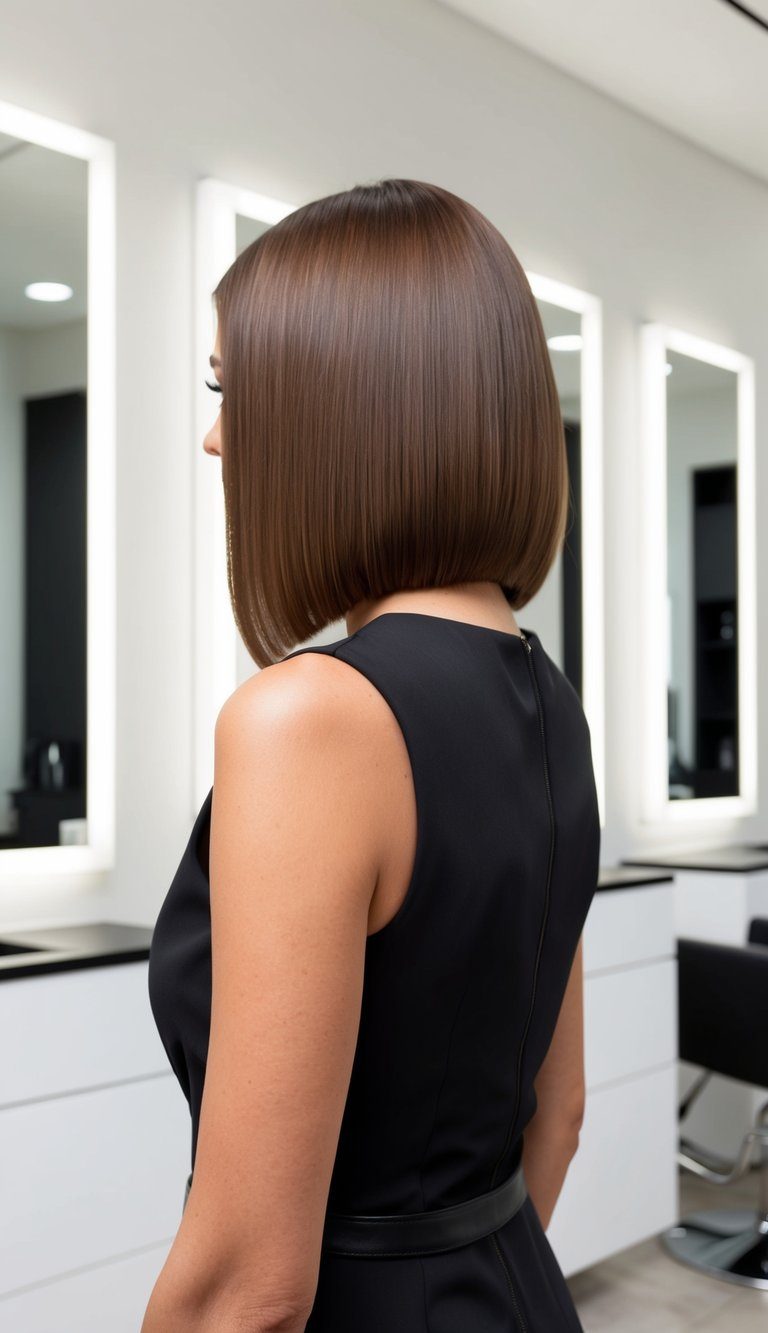
The Soft Contrast Rule: How to Get Natural-Looking Highlights
Natural-looking highlights are among the most universally sought-after results in professional hair color — the kind of dimensional, beautifully luminous color that reads as though the sun itself placed each lighter strand precisely where it would look most beautiful. Achieving that result is not simply a matter of choosing a lighter color and applying it throughout the hair. It requires an understanding of the relationship between highlight color and base color, between placement and hair structure, between technique and the specific characteristics of each person’s hair.
The soft contrast rule is the guiding principle behind all truly natural-looking highlight work: the idea that the most believable, most beautiful highlights are those that stay within a specific, carefully considered tonal range of the base color — close enough to read as naturally occurring, lifted enough to create genuine dimension and luminosity. Understanding this rule transforms how you approach highlight color selection, technique, and maintenance.
Understanding Highlights and Natural Hair Color

Natural hair color is never a single, uniform tone — it is a collection of many subtly different tones layered together, with natural variation in depth and warmth from root to tip, from the outer surface of the hair to the inner layers, from the sections that receive the most sun exposure to those that are more protected. This natural variation is precisely what gives uncolored hair its specific beauty: the dimensional quality that reads as genuinely alive and three-dimensional rather than flat and artificial.
Highlights work with this natural variation by amplifying and extending it — introducing lighter tones that catch light where natural variation would already create some lift, making the hair’s natural dimensional quality more visible and more beautiful. The most natural-looking highlights are those that read as an enhancement of what is already there rather than an addition of something foreign to the hair’s existing tonal character.
Defining the Soft Contrast Rule
The soft contrast rule states that highlights should stay within approximately two to three levels of the base hair color for a result that reads as genuinely natural. A level system in hair color describes the depth of color from darkest (level 1, black) to lightest (level 10+, palest blonde), with each step representing a significant shift in visible lightness.
Highlights that stay within two to three levels of the base create a soft, believable contrast: enough lift to create clearly visible dimension and luminosity, not so much that the highlighted sections read as dramatically, obviously different from the base. Highlights that exceed three to four levels of contrast — very light highlights on dark brown hair, for example — create a harder, more obviously artificial effect that reads as high-maintenance coloring rather than natural dimensional beauty.
The soft contrast principle applies equally to color selection and technique: the colors chosen should be close relatives of the base, and the application technique should create soft, diffused edges rather than sharp, clearly defined lines of demarcation.
The Importance of Haircut in Highlight Placement
Highlight placement does not happen in isolation from the haircut — the most skillfully applied highlights work with the structure of the cut, placed along the natural movement lines that the haircut creates. Layered cuts create natural light-catching zones at the ends of each layer; graduated bobs have specific movement contours that highlight placement can follow; long one-length cuts have their own structural qualities that inform where highlights will read most beautifully.
A colorist who understands the relationship between cut and highlight placement will always consider the haircut’s structure before beginning any highlighting work, using the cut’s natural movement as a map for where the lighter sections will be most visible and most beautiful. Highlights placed without regard for the haircut structure can create results that fight against rather than enhance the natural movement and form of the style.
Selecting the Right Highlight Colors

Color selection is where the soft contrast rule has its most direct and immediately practical application. The right highlight colors for genuinely natural results are those that are tonally related to the base color — sharing its underlying warmth or coolness, moving within the same color family, differing primarily in depth rather than in hue.
Your Hair’s Base Color
Understanding your true base color — including its underlying tone — is the essential starting point for selecting natural-looking highlights. Most natural hair colors have underlying warmth: brown hair often has warm red or golden undertones; dark blonde hair has warm honey or golden undertones; even some apparently neutral hair colors have subtle warm qualities that become visible when the hair is lightened. Highlights that match and work with these underlying tones will read as natural; highlights that ignore them and introduce a different underlying tone will create a result that reads as artificially cool or artificially warm against the base.
Finding the Perfect Match for Your Skin Undertone
Skin undertone plays a crucial role in determining which highlight tones will look most naturally beautiful. Warm skin undertones — golden, peachy, olive — look most beautiful with warm highlight tones: honey, golden, caramel, amber. Cool skin undertones — pink, rosy, bluish — are complemented most beautifully by cooler highlight tones: ash blonde, platinum, champagne. Neutral skin undertones have the greatest flexibility, looking beautiful with both warm and cool highlight tones depending on the specific combination.
The relationship between highlight tone and skin undertone is one of the most important considerations in achieving results that read as genuinely natural: when the highlight tone harmonizes with the skin’s natural undertone, the overall result reads as something that could have occurred naturally. When highlight tone fights against skin undertone, the result reads as artificially imposed regardless of how skillfully it was applied.
Highlighting Techniques for Natural-Looking Results

Balayage: A Technique for Softness and Depth
Balayage — the French freehand painting technique where color is applied directly to the surface of the hair without foils — is the highlighting technique most naturally suited to achieving soft contrast results. The freehand application allows the colorist to vary the amount of product applied, creating softer application at the roots that gradually intensifies through the midlength and ends. This graduated application is what creates balayage’s characteristic soft root and brighter ends — a result that reads as exactly the kind of natural lightening that sun exposure creates over time.
The absence of foils in balayage application also means that the highlighted sections do not achieve the same level of lift as foiled highlights — a characteristic that naturally keeps balayage results within the soft contrast range. The surface application, the graduated intensity, and the limited lift all work together to create results of genuine, believable natural beauty.
Babylights: Delicate Strokes of Color

Babylights are the finest, most delicate of all highlight techniques — extremely thin sections of hair isolated and lightened, creating a result of subtle, multi-tonal luminosity rather than clearly defined highlighted sections. The name refers to the quality of the result: the fine, barely-there lightness of a young child’s hair, where sun exposure has created a multi-tonal, softly luminous quality across many fine strands.
Because babylights are so fine, they blend seamlessly with the surrounding base color — the transitions between lightened and unlightened sections being too subtle to read as defined highlights. The overall effect is of hair that simply appears to have more luminosity and dimensional beauty than entirely single-toned hair, without any clearly visible colored sections. Babylights are the most natural-looking of all highlighting techniques and the most perfectly aligned with the soft contrast rule.
Lowlights and Their Role in Contrast
Lowlights — sections of hair colored slightly darker than the base rather than lighter — play an equally important role in natural-looking highlight results. Highlights without lowlights can read as uniformly lightened, losing the depth and shadow that give natural hair its dimensional quality. Lowlights restore depth and shadow between and beneath the highlighted sections, creating the full range of natural tonal variation that makes the result read as genuinely dimensional rather than simply brightened.
The soft contrast rule applies to lowlights as well as highlights: lowlights should stay within one to two levels darker than the base, creating depth without harsh shadow, dimension without dramatic color blocks. Lowlights that are too dark against a lightened base create the same hard, artificial contrast that overly light highlights create against a dark base.
Hair Color Maintenance and Care

Using Shampoo and Conditioners That Protect Color
Color-protecting sulfate-free shampoos are the most important daily maintenance tool for keeping highlights looking beautiful between salon appointments. Sulfates — the detergents found in conventional shampoos — strip color pigment from the hair with every wash, accelerating fade significantly. Sulfate-free formulas clean the hair effectively while preserving both the color and the hair’s natural moisture and condition.
Color-depositing shampoos and conditioners provide an additional maintenance benefit: small amounts of complementary color pigment are deposited with each use, counteracting the gradual fade that washing and sun exposure cause. A toning or color-refreshing product matched to your highlight tone keeps the color looking fresh and vibrant for significantly longer between appointments.
Timing Your Touch-Ups for Lasting Brightness
The soft contrast rule has a natural maintenance advantage: highlights that stay within two to three levels of the base color grow out beautifully and gracefully, the natural roots blending smoothly into the highlighted sections rather than creating obvious, harsh demarcation lines. This grow-out behavior means that soft contrast highlights can typically be maintained with appointments every twelve to sixteen weeks rather than every six to eight — a significant practical and financial advantage.
Touch-up timing should be guided by the specific technique used: balayage and babylights with soft contrast placement require the least frequent maintenance; traditional foiled highlights with more significant contrast require more frequent appointments to maintain their look as the roots grow.
Navigating the Transition to Gray Hair
The soft contrast rule is particularly valuable for those navigating the transition to gray hair — a process that involves managing the relationship between incoming gray, existing colored sections, and the overall tonal impression. Soft contrast highlights during the gray transition serve multiple purposes: they help blend the incoming gray into the existing color, create dimension that prevents the transitioning hair from reading as flat or monotone, and gradually shift the overall color toward a beautiful, multi-tonal gray blend that reads as intentionally lovely rather than simply grown-out.
The soft contrast approach to gray blending — using highlights and lowlights to create a gradual, dimensional transition rather than a sharp line of demarcation between colored and natural gray — produces the most beautiful and natural-looking gray blending results.
Заклучок
The soft contrast rule is not a rigid formula but a guiding principle — a framework for understanding why some highlight results read as genuinely, effortlessly natural while others read as clearly artificial, and how to stay consistently on the right side of that line. By keeping highlight color within a thoughtful tonal range of the base, choosing techniques that create soft transitions rather than hard lines, and maintaining the color with products and timing that preserve its specific, beautiful quality, the soft contrast rule delivers highlight results of lasting, genuine, naturally beautiful luminosity.