Hair Trends That Quietly Age You (And What to Do Instead)
Every haircut and color choice is a statement about where you are right now — but some styles are a statement about where you were fifteen years ago. The difference between hair that reads as current and hair that reads as dated is often surprisingly small: a texture choice here, a color technique there, a decision about where to place volume. The problem is that when a style becomes familiar and comfortable, it’s easy to miss the moment it stopped being chic and started being a timestamp.
This isn’t about chasing trends for their own sake. It’s about understanding which specific habits and choices are working against you — and what genuinely flattering, modern alternatives look like for each one.
Hair Trends That Quietly Age You
The Stiff, Set Volume Look (1980s Overhang)
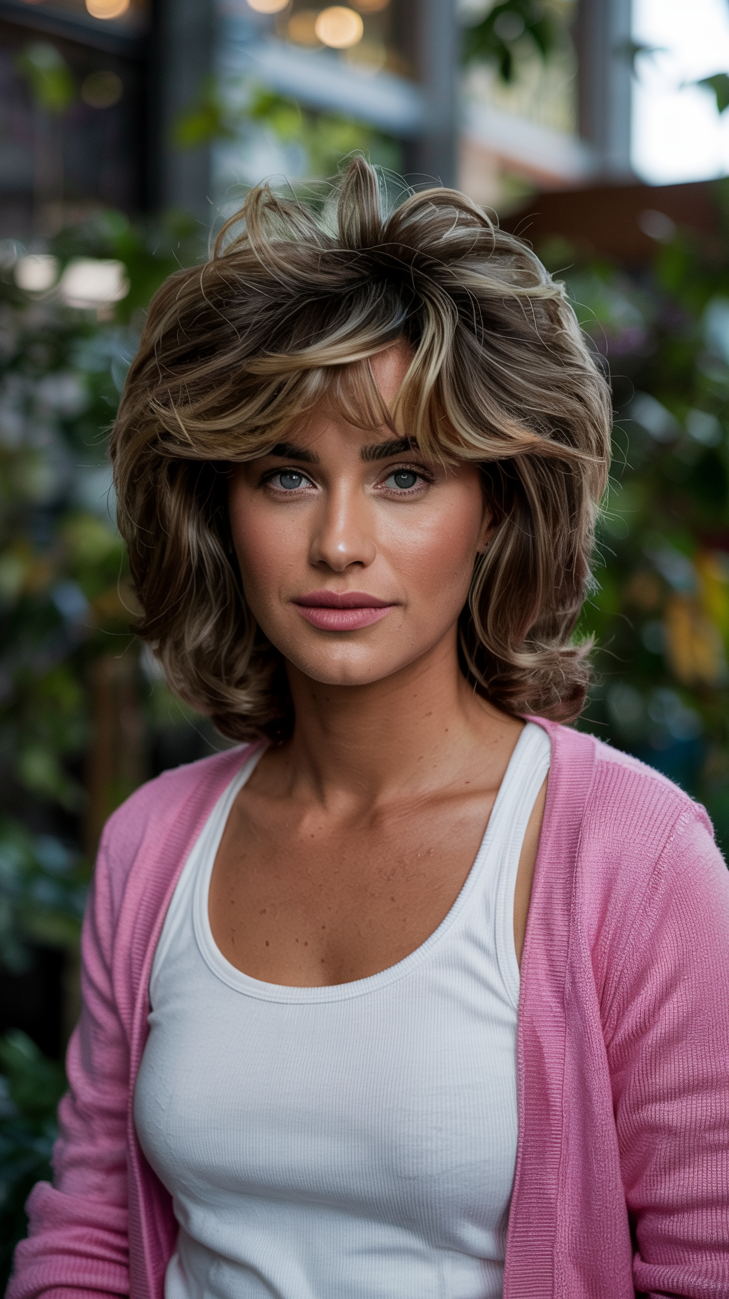
Sky-high bangs, shellacked updos, and hair that’s been teased and sprayed into a solid mass — these styles freeze the face rather than frame it. The stiffness is the problem: hair that doesn’t move looks like it was styled hours ago and has been sitting ever since, which reads as dated instantly. Volume is still fashionable, but modern volume lives at the roots and bounces, not in a fixed, sprayed-in-place structure.
The modern alternative: Root lift with a volumizing spray and a round brush blow-dry. The volume is real but the hair still moves. Think bouncy and soft, not tall and solid.

The 1960s Bouffant and Flip (Set and Shellacked)
The voluminous bouffant piled high on the crown and the flip-out ends of early-60s styling didn’t survive the trend cycle — and for good reason. These styles add width and height in unflattering places, and because they’re most commonly seen on older women, they’ve become unconsciously associated with a specific age bracket. The association does more damage than the style itself.
The modern alternative: Curtain bangs and soft layers that frame the face without boxing it in. The volume is in the mid-lengths, not perched on top of the head.

Harsh, One-Dimensional Color
There are two color mistakes that age hair the most: color that’s too uniform (no depth, no variation, one flat tone from root to end) and color that’s too harsh in its contrast (chunky highlights with a sharp demarcation line, or dip-dye ends that look painted on). Both read as processed and dated. The problem isn’t blonde, or brunette, or any particular color — it’s the technique. Hair color in real life has variation and dimension. Single-process box color and heavy chunky highlights eliminate that and make hair look less natural as a result.
The modern alternative: Balayage, babylights, or a root smudge technique. The goal is soft transitions between tones, not sharp lines. Even if you maintain color, ask your colorist for dimension rather than uniformity.

The One-Length Blunt Bob (Early 2000s)
The chin-length, completely blunt bob that everyone had in the early 2000s sits firmly in the “dated” category now. The harsh straight edge at the bottom and the complete absence of texture or movement make the style look deliberately dated rather than deliberately chic. A blunt line at the perimeter draws attention to itself and eliminates any sense of softness or modernity.
The modern alternative: A textured or piece-y bob where the ends have some movement. A slight graduation, or a razor cut that adds texture at the perimeter, makes the same length feel completely current. It’s one appointment’s difference.
Feathered, Wispy Bangs and “The Rachel” (1990s)
The heavy feathered bangs and the side-swept, layered fringe of the 1990s — most famously the Rachel cut — looked great in their moment but don’t translate well. The style lacks natural movement and frames the face in a way that drags it down rather than lifting it. The layers fall in very specific ways that require consistent re-styling to maintain, and the grow-out is immediately recognizable from that era.
The modern alternative: Curtain bangs — soft, center-parted fringe that blends into layers. They open the face rather than box it in, grow out gracefully, and work with most face shapes. They’re also genuinely low-maintenance compared to feathered bangs.
Heavy Ombré and Dip-Dye Ends (Early 2010s)
The very stark ombré with an obvious demarcation line between dark roots and bleached-out ends had a specific moment in the early 2010s and that moment has passed. The harsh, painted-on quality of dip-dye ends and the heavy contrast of early ombré reads as very deliberately stylized in a way that’s now dated rather than intentional. The darker roots weren’t grown out — they were placed that way, which was the point, and now the technique is too recognizable as belonging to a specific era.
The modern alternative: A root shadow or smudge technique — where the root color softly blends into lighter ends without a visible line. The same general effect (darker at root, lighter at ends) but with a gradient that looks like it could be natural.
Styles That Work Now

The Modern Shag and Wolf Cut
Inspired by the 1970s shag but completely reimagined, today’s wolf cut has lived-in layers, texture, and a soft edginess that works on almost every hair type. Unlike the 1970s roller-set versions that look stiff and helmet-like, the modern shag is defined by how it moves — the layers create volume at the crown and through the mid-lengths, and the ends are piece-y and textured rather than blunt. It’s particularly flattering on wavy and curly textures because it works with the natural movement of the hair rather than imposing a specific shape on it.
Why it doesn’t age you: The style is defined by movement and texture rather than a fixed shape, so it looks dynamic regardless of your age or how much effort you put into styling it that day.
Soft Layers with Movement
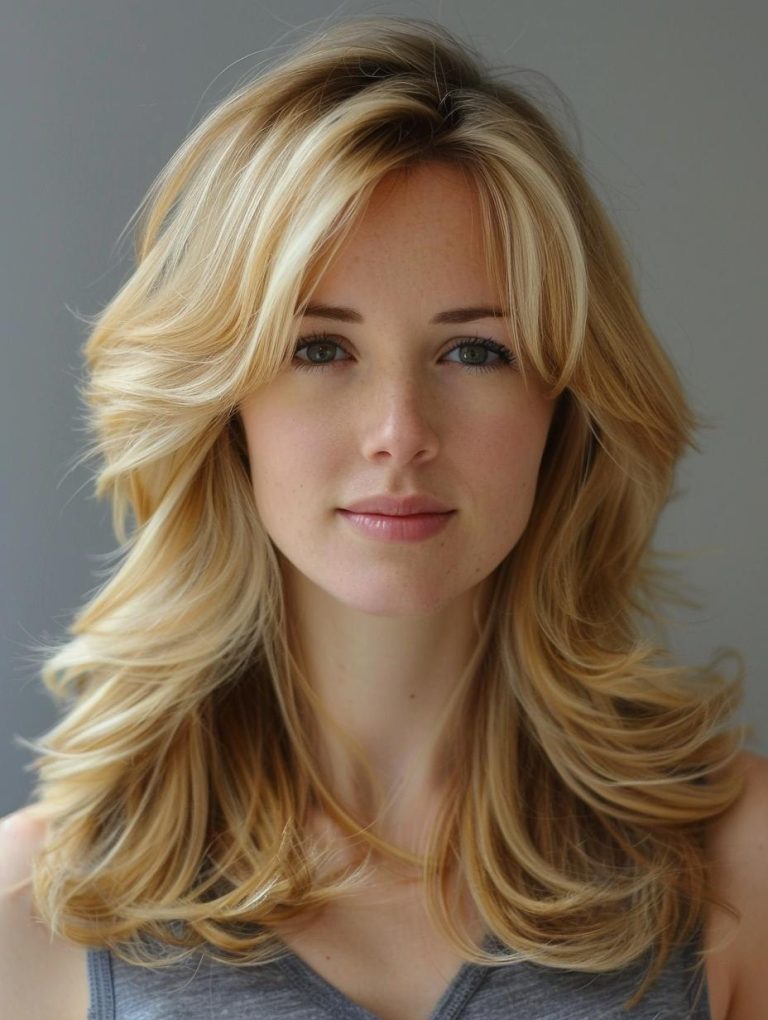
Face-framing layers that add dimension through the mid-lengths and ends are one of the most universally flattering choices available. They lift the face, soften strong features, and create that effortlessly youthful quality that stiff, set styles can’t replicate. The key word is “soft” — layers that are too choppy or too heavily disconnected can look just as dated as no layers at all. The goal is a graduated, seamless layering that makes the hair feel light and dynamic when it moves.
Styling approach: Air-dried texture with a curl cream or wave spray, or a quick rough dry with fingers. Not stiff styling, not a round-brush blowout every day.
Curtain Bangs and Wispy Fringe
Curtain bangs — parted softly in the center and blended into layers on either side — do for the face what a good pair of glasses does: they draw attention to the eyes and cheekbones while softening the forehead. Unlike the feathered bangs of the 1990s, they don’t box in the face. They open it. They’re also genuinely low-maintenance: they grow out gracefully and don’t need to be trimmed constantly to maintain the shape. Worn with soft waves or straight, they look equally current.
Airy, Low-Maintenance Waves
The opposite of a perfect, controlled curl. Loose, slightly undone waves — whether air-dried or heat-styled to look air-dried — bring softness and movement to the face that harsh lines don’t. The “effortless” quality is the whole point. Waves that look like you spent twenty minutes on them but read like you only spent five are exactly the aesthetic that reads as modern right now. Heavy styling products, stiff finishes, and waves that hold their shape for forty-eight hours all read as dated.

Face-Framing Highlights (Money Piece)
Strategically placed lighter pieces around the face — sometimes called “money piece” highlights — do something that full all-over color can’t: they brighten the face specifically where brightness does the most work. The lighter pieces around the hairline and at the temples catch light differently from the rest of the hair and create a natural-looking brightness that reads as youthful without looking like a color job. Paired with curtain bangs or face-framing layers, the effect is genuinely flattering on most face shapes and skin tones.
Important: The pieces should be soft-edged and blended, not chunky or sharply demarcated. The goal is a brightness that could be natural, not obvious highlights.

Glossy, Healthy Hair as a Style Choice
Healthy, shiny hair will always look more current than any specific style — because genuinely healthy hair reads as intentional regardless of how it’s cut or colored. The obsession with scalp care, bond treatments, and glass-hair shine that’s become mainstream in hair care over the past few years reflects this: the most modern thing you can do for your hair is make it visibly healthy. Dull, brittle hair with stiff styling dates a person more reliably than any specific cut or color choice.
What this looks like in practice: Hydrating shampoo and conditioner, a weekly bond treatment or deep mask, and a gloss or toning treatment every 6–8 weeks to maintain color vibrancy and shine. Heat styling on medium heat with a protectant always. Regular trims.
Color Techniques That Feel Current
- Balayage: Hand-painted color that creates a soft, natural-looking gradient. Grows out beautifully because there’s no hard demarcation line at the root.
- Babylights: Very fine highlights that mimic the natural color variation of children’s hair. Adds brightness and dimension without looking streaky or obvious.
- Root smudge / shadow root: Intentionally darker roots blended into lighter ends. Creates depth and makes regrowth look intentional rather than neglected.
- Glossing and toning: Refreshes color, adds shine, and neutralizes brassiness between appointments. One of the most effective and lowest-commitment things you can do for your color.
- Grey blending: Instead of covering grey completely, colorists blend it with highlights or lowlights to soften the transition. Much more flattering than flat, one-tone box dye on hair that has natural grey.
- Lived-in color: A natural-looking blend of tones that embraces your base color while adding subtle dimension. About soft, wearable color that looks effortlessly chic — not dramatic contrast.
Frequently Asked Questions
What hairstyle ages a person the most?
The most aging choices tend to be styles that are stiff, heavily set, or sharply defined in ways that eliminate natural movement — shellacked updos, very blunt perimeters, and one-dimensional color. Hair that doesn’t move looks dated almost regardless of the specific style. Movement, softness, and some degree of texture are what separate a modern-looking style from one that adds years.
Do short haircuts age you?
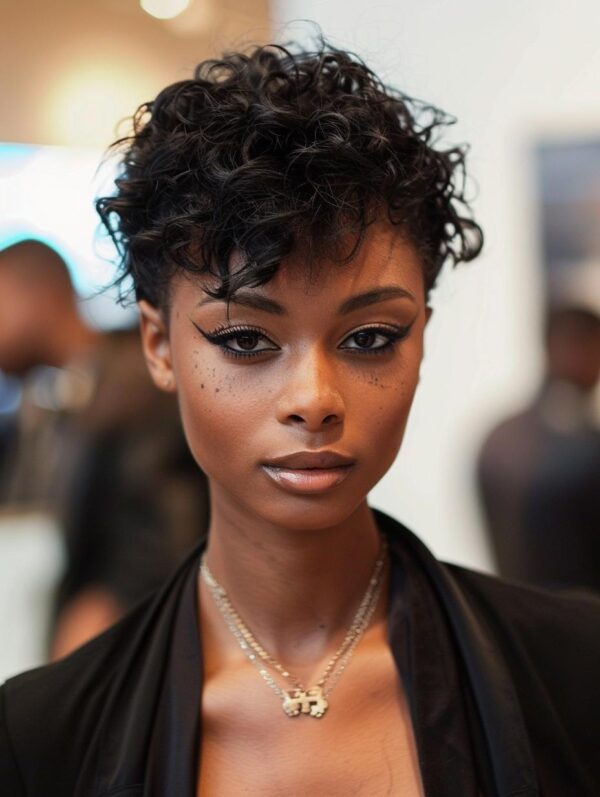
Not inherently — but the specific execution matters a lot. A short, blunt, or excessively structured cut can read as aging. A short cut with texture, movement, and a shape that works with your face rather than against it can look completely modern and flattering. The wolf cut, textured pixie, and soft bobs are all short options that read as current. “Short” isn’t the problem — “short and stiff” often is.
Does hair color affect how old you look?
Yes, significantly. Color that’s too uniform (one flat tone from root to end), too harsh in its contrast, or maintained with visible regrowth lines reads as aging. Color with dimension — variation in tone, soft transitions between shades, and intentional placement — looks more natural and more youthful regardless of whether it’s blonde, brunette, or grey. The technique matters more than the color choice itself.
Is grey hair aging?
Grey hair is not inherently aging — but grey hair that’s dull, poorly maintained, or styled in a dated way can add years. Grey and silver hair that’s well-cut, properly cared for with toning products to prevent yellowing, and styled with texture and movement can look striking and completely modern. The decision to go grey or maintain color is personal, but grey isn’t a default route to looking older if it’s worn intentionally.
Final Thoughts
The styles that quietly age you share a common thread: they prioritize a fixed, controlled shape over natural movement and texture. The modern alternatives all lean in the opposite direction — toward hair that moves, has dimension, and looks like it works with your natural texture rather than imposing something on top of it.
You don’t need a dramatic change to update your look. Often the difference between a dated style and a current one is a texture change, a different color technique, or a slight adjustment to where the volume sits. Talk to your stylist about which specific updates would make the most impact for your particular hair type and face shape — it’s usually a much smaller change than you expect.