26 Sombre Hair Color Ideas: Effortless Elegance for Your Locks
Sombre hair — a softer, more subtle variation of the ombre — has become one of the most beloved and enduring hair color techniques of the past decade, and for good reason. Where ombre creates a visible, defined transition from one color to another, sombre (soft ombre) blurs and feathers that transition so extensively that the two colors seem to merge and intertwine rather than clearly separate. The result is a hair color that reads as effortlessly natural and dimension-filled rather than obviously dyed — the kind of color that people look at and say “is that your natural hair?” The sombre is, in many ways, the hair color technique that most successfully replicates the effect of a summer spent in the sun: gradual, organic-looking lightening or color change that enhances rather than transforms.
These 26 sombre hair color ideas explore the full range of what sombre can achieve across every color family — from warm blonde and caramel to cool lavender and graphite gray, from rich burgundy and mahogany to soft pink and pastel amethyst.
26 Sombre Hair Color Ideas
1. Buttercream Blonde Tips
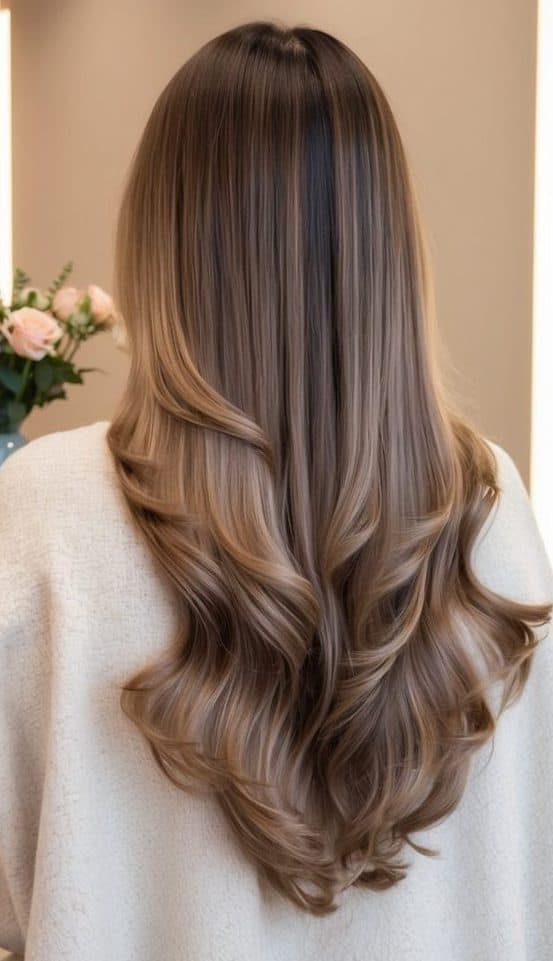
Buttercream blonde is one of the warmest, most inviting blonde tones available — the specific golden-cream quality of buttercream frosting applied to cake, warm and soft and richly blonde without the harshness of a platinum or the coolness of an ash. In a sombre, the buttercream blonde appears at the tips and ends of the hair, with the transition from the darker root color so gradual and feathered that the tips seem to have simply absorbed more sunlight than the rest of the length. The buttercream blonde sombre is one of the most natural-looking and universally flattering in the collection, working beautifully as a first foray into sombre color for those who want visible warmth without obvious artifice.
Best for: Natural brunettes and dirty blondes where buttercream ends develop naturally during the lightening process. Warm skin tones where golden-cream blonde creates the most harmonious and glowing complexion match.
Color tip: A warm honey or golden toner at level 8–9 creates the specific buttercream quality — avoid cool ash toners, which produce a completely different, more clinical blonde that’s the opposite of the warm buttercream effect.
2. Soft Pink Sombre

Soft pink sombre introduces a delicate, barely-there pink into the lighter ends of the hair — the sombre technique’s feathering and blending means the pink appears as a suggestion rather than a statement, a romantic blush of color that catches the light at certain angles and seems to fade into the natural hair color at others. The softness is what distinguishes this from a vivid pink color — this pink is luminous and gentle, more reminiscent of cherry blossom petals than candy or bubblegum. The soft pink sombre is one of the most romantic and feminine color options available, and the sombre technique makes it wearable even for those who might find a full pink color too bold for their lifestyle.
Best for: Light to medium blonde hair where pink tones apply most vividly without significant base lightening. Fair to medium skin tones with warm or cool undertones — pink is one of the most versatile fashion colors for complexion compatibility.
Color tip: A soft pink semi-permanent toner applied over a level 9–10 base creates the most delicate, blush-quality pink. Avoid permanent pink formulas, which tend to be too vivid for the soft, barely-there quality this sombre requires.
3. Sandy Blonde Sombre

Sandy blonde is the color of sun-bleached sand at the beach — a warm, slightly golden blonde with earthy undertones that prevent it from reading as a cold, clinical platinum or an artificially vivid blonde. In a sombre, the sandy blonde develops from a natural brunette or medium blonde base through gradual lightening and feathering, creating an end result that looks genuinely like a summer of sun exposure rather than a color appointment. The sandy quality — that specific mixture of warmth, golden tone, and earthiness — is one of the most convincingly natural-looking blonde destinations available in the sombre family.
Best for: Natural brunettes and medium blondes where sandy blonde is a believable natural endpoint. All skin tones — sandy blonde’s warm, earthy quality is one of the most universally flattering blonde options.
Styling tip: Beach waves complement the sandy blonde sombre most naturally — the texture echoes the sun-and-sea reference of the sandy tone, creating an overall look of effortless, salt-kissed beauty.
4. Chestnut Ribbon Layers

Chestnut ribbon layers use the sombre technique within the warm brown color family — the chestnut tone (a rich, warm red-brown that catches light with particular beauty) is woven through the hair as “ribbon” layers, with the feathered sombre technique creating the gradual, indistinct transitions between the chestnut highlights and the surrounding base color. The ribbon quality describes the way the lighter chestnut sections move through the hair like ribbons — curving with the layers, catching light at the edges, and creating dimension throughout the length without the choppy or high-contrast quality of traditional highlights. This is the dimensional brown color for those who want to enhance their natural brunette without going blonde.
Best for: Natural brunettes who want warmth and dimension within the brown color family. Warm skin tones where chestnut’s reddish-brown warmth creates a particularly harmonious match. Those who want a natural-looking sombre that enhances rather than transforms their existing hair color.
Color tip: A copper-chestnut toner applied over a lightly lifted base creates the ribbon-like quality — the toner’s red-warm undertone is what makes the chestnut read as rich and multidimensional rather than simply light brown.
5. Pastel Lavender Ends

Pastel lavender at the ends of a sombre is one of the most ethereal and visually beautiful fashion color options available — the soft, barely-there purple of a true pastel lavender creates a dreamy, almost watercolor quality that reads as otherworldly and romantic. In a sombre, the lavender appears most concentrated at the very tips and fades gradually back into the natural or lightened base as the eye moves upward, creating a color that seems to drift in and out of visibility with the movement of the hair. The sombre technique is particularly suited to pastel colors because the gradual fade mirrors the inherent delicateness of the pastel tone itself.
Best for: Light blonde to white-blonde hair bases where pastel lavender appears at its most delicate and pure. Cool skin tones with pink or lavender undertones where the lavender creates a particularly harmonious complexion complement.
Maintenance tip: Pastel lavender fades within 2–4 weeks, which can be managed through regular color-depositing purple conditioners — or embraced, as the fade from lavender through lilac to barely-there violet is itself beautiful.
6. Rose Gold Undertones

Rose gold undertones in a sombre create a particularly sophisticated and universally flattering color — the specific blend of pink and gold in rose gold has a warm, luminous quality that reads as simultaneously feminine and luxurious. In a sombre application, the rose gold appears as underlying warmth that becomes most visible at the ends and in the lighter sections of the hair, creating a color that seems to glow with a warm pink-gold light from within. Rose gold is one of the most photogenic hair colors available — it photographs beautifully in all light conditions and looks particularly stunning in the golden hour light that’s universally flattering in photography.
Best for: Light to medium blonde and light brunette bases where the rose gold tone is most visible and vibrant. Warm to neutral skin tones where the pink-gold warmth of rose gold creates a particularly flattering complexion relationship.
Color tip: Rose gold is typically created by mixing a warm copper and a soft pink toner — the ratio of copper to pink determines whether the result reads as more gold (more copper) or more pink (more pink toner). Specify your preference clearly to your colorist.
7. Deep Burgundy Tones

Deep burgundy tones in a sombre work differently from most sombre techniques — rather than lightening from dark to light, a burgundy sombre deepens and enriches from the base through to a darker, more saturated burgundy at the ends or alternatively creates a transition from a medium brunette base to vivid burgundy at the ends. The deep quality of the burgundy — its richness, its wine-dark saturation, its complex blue-red depth — creates a sombre that reads as more sophisticated and luxurious than a simple lightening sombre. The transition from brunette base to deep burgundy ends creates a color that’s particularly beautiful in wavy and curly hair, where the burgundy catches light and appears to glow at the curves of each wave.
Best for: Dark brunette and medium brown bases where burgundy can be applied over naturally dark hair without significant base lightening. Cool to neutral skin tones where the blue-red quality of deep burgundy reads most dramatically. Those who want a fashion color sombre that’s bold but wearable.
Color tip: A true burgundy formula has blue and red pigments in equal measure — formulas that lean too red without blue will read as auburn rather than burgundy, and formulas with too much blue will read as dark violet rather than wine burgundy.
8. Ivory Blonde Sheen

Ivory blonde sheen occupies the most luminous, refined end of the blonde spectrum — ivory is the specific off-white blonde that reads as warmer and softer than platinum while still being remarkably light. The sheen quality describes the particular surface quality of ivory blonde when well-maintained: a smoothness and reflectivity that creates a light-catching, almost luminescent quality. In a sombre, the ivory blonde appears at the ends and lightest sections of the hair, creating a transition from a darker base that arrives at something genuinely beautiful and refined at the tips — not harsh, not cold, but luminously ivory. This is the blonde sombre for those who want light blonde ends without the starkness of platinum.
Best for: Light to medium base colors where ivory blonde is a reachable destination without excessive bleaching. Neutral to cool skin tones where the soft warmth of ivory blonde is most flattering. Those who want very light blonde ends with the softness and warmth that platinum lacks.
Color tip: A toner with slight beige or warm pearl undertones (not cool violet or blue) creates ivory blonde from a lifted base — the warmth is what separates ivory from platinum.
9. Amethyst Accents

Amethyst accents bring the jewel-toned purple of the semi-precious stone into a sombre application — amethyst is a specific, medium-dark violet with notable depth and clarity, more saturated and deeper than a pastel lavender but lighter and more luminous than a deep plum or blackberry. Used as accents within a sombre technique, the amethyst appears as vivid flashes of jewel-toned purple within the overall color story, concentrated at the ends and lighter sections while the base remains natural. The accent approach means the amethyst doesn’t overwhelm but rather enriches — adding moments of vivid, gemstone-like color to the overall look.
Best for: Those who want a fashion color element in their sombre without committing to full coverage. Light to medium blonde bases where amethyst achieves its full jewel-toned saturation. Cool skin tones where violet’s cool undertones are most harmonious and flattering.
Color tip: Amethyst requires a level 9–10 base for full jewel-toned saturation. At lower lift levels, the purple will appear darker and more muted — which can itself be beautiful, creating a deeper, more berry-adjacent purple rather than a pure violet amethyst.
10. Rustic Auburn Waves

Rustic auburn waves combine a warm, earthy auburn sombre with wave styling to create one of the most naturally beautiful and organically appealing looks in the collection. Auburn — the red-brown that glows copper in sunlight and reads as rich warm brown in shade — is applied through the sombre technique to appear most intensely at the ends and in the lighter-catching sections of the waves, creating a color story that appears to change with the movement and light. The rustic quality suggests the auburn is not a vivid, fashion-forward red but rather a deep, earthy tone that reads as natural and complementary to the hair’s existing brown base.
Best for: Natural brunettes where auburn adds warmth and red quality within the brown color family. Warm and golden skin tones where auburn’s copper-red warmth creates a harmonious, glowing look. Medium to long hair where the waves can fully showcase the auburn’s light-catching quality.
Styling tip: Loose, natural waves styled with a wave-enhancing spray and minimal heat show the rustic auburn most beautifully — the organic quality of natural waves complements the earthy, natural-looking auburn sombre perfectly.
11. Glossy Mahogany Swirl

Mahogany is one of the richest and most complex colors in the brown family — named after the deep, reddish-brown wood, mahogany in hair has a specific warmth and depth that reads as intensely dimensional and luxurious. The glossy quality comes from the high-shine finish that well-formulated mahogany color achieves, the color’s warmth and richness translating into exceptional light reflectivity. The swirl describes the way the mahogany sombre moves through the hair in a spiral or swirling pattern created by the natural movement of the hair — most visible in wavy or curly styles where the mahogany catches light at the curves. The mahogany swirl sombre is one of the most sumptuous and visually rich looks in the collection.
Best for: Dark brunette bases where mahogany adds warmth and reddish depth without significant base change. Warm skin tones where the reddish-brown warmth of mahogany creates a particularly flattering match. Wavy and curly hair where the swirl pattern is most naturally visible and beautiful.
Color tip: A gloss treatment applied over a mahogany color appointment seals the color and adds the specific high-shine quality that distinguishes a glossy mahogany from a flat one — the gloss step is what makes this look truly luxurious.
12. Chocolate Cherry Melt

Chocolate cherry melt is one of the most deliciously named and genuinely beautiful sombre color combinations — the chocolate quality describes the deep, rich brown of the base, while the cherry describes the red-purple that melts into the chocolate in the sombre’s lighter sections. The melt technique means the transition between chocolate and cherry is particularly smooth and indistinct — the two colors blend so completely that the eye cannot identify where one stops and the other begins. The result is a multi-dimensional dark hair color with extraordinary depth and richness, a color that reads differently in every light condition and appears to change and shift as the hair moves.
Best for: Dark brunette bases where the chocolate foundation is already present and the cherry needs only to be added through targeted toning. Cool to neutral skin tones where the blue-red cherry quality reads most elegantly against the deep chocolate base. Those who want a rich, dimensional dark hair color that enhances their natural brunette rather than dramatically changing it.
Color tip: The cherry quality is most beautiful when it appears at the outer layers and ends where the most light falls — applying the cherry toner primarily to the surface and lengths, rather than throughout, creates the most visible and flattering placement.
13. Peach Blonde Hues

Peach blonde sits at the warm, fruity intersection of blonde and peach — a color that reads as blonde with obvious warmth and a gentle orange-pink quality that gives it a sun-ripened, naturally warm character. In a sombre, the peach blonde hues appear at the ends and in the lighter sections, creating a color that transitions from a warmer or darker base to these soft, peachy blonde tips. The hues quality suggests the peach blonde is not a solid, uniform color but rather a collection of slightly different warm tones within the peach-blonde family — some sections more golden, some more peachy, some more blonde — that together create the impression of dimensional, naturally developed color.
Best for: Light to medium blonde and light brunette bases. Fair to medium skin tones with warm undertones where peach blonde creates a particularly radiant, warm complexion match. Those who want a warm, feminine color that stops short of a vivid or dramatic fashion statement.
Color tip: A peach toner (a soft orange-pink formula at low levels) applied over a level 9 lifted base creates the most authentic peach blonde quality — request a “peachy” or “warm peach” toner rather than a “coral” (which tends to read as more vivid and orange) or a “rose gold” (which leans more pink).
14. Caramel Ombre Waves

Caramel ombre waves is one of the most classically beautiful and consistently requested sombre looks — the caramel color (warm, golden-brown with notable sweetness and depth) applied through the sombre technique creates a color of extraordinary warmth and naturalness, while the wave styling adds movement that makes the caramel shimmer and shift as the hair moves. Caramel is, in many ways, the ideal sombre color — warm enough to be visible and impactful, natural-looking enough to read as a believable sun-kissed color development, and universally flattering across a wide range of skin tones and base hair colors.
Best for: Natural brunettes where caramel adds visible warmth and brightness. All warm to neutral skin tones. Medium to long hair where the ombre waves can fully showcase the caramel’s movement and light-catching quality.
Color tip: Caramel is most beautiful at levels 7–8 — warm enough to be clearly visible against a darker brunette base but not so light that it loses the warm depth that distinguishes caramel from plain blonde. A honey or golden-brown toner at this level creates the most authentic caramel quality.
15. Smoky Lilac Ends

Smoky lilac occupies a specific tonal zone that distinguishes it from both pastel lavender and vivid purple — the smoky quality means the lilac has a slightly muted, complex character rather than the brightness of a pure pastel. This muted quality comes from the ash or gray undertones mixed into the lilac formula, creating a purple-gray that reads as sophisticated and editorial rather than playful or pastel. In a sombre, the smoky lilac appears at the ends and gradually fades as the eye moves toward the root, the sombre technique’s softness amplifying the already-soft quality of the smoky lilac tone.
Best for: Those who love purple tones but prefer a sophisticated, cool version rather than a vivid or pastel one. Cool and neutral skin tones. Light to medium blonde bases where the smoky lilac can achieve its full, complex tonal quality.
Color tip: A lilac toner with ash or silver mixed in creates the smoky quality — the ash counteracts the brightness that a pure lilac formula would have and creates the complex, slightly muted lilac that makes this look distinctive and elegant.
16. Crimson Velvet Fade

Crimson velvet fade brings one of the most dramatic and luxurious color choices in the sombre collection — crimson is a saturated, deeply vivid red with blue undertones that give it a jewel-like quality, and the velvet description adds the sense of texture and depth that well-formulated crimson hair color achieves. The fade technique means the crimson appears most intensely at the ends and gradually softens toward the roots, creating a sombre where the bold red is most visible at the tips and least visible at the scalp. The combination of bold color and soft technique creates an interesting tension — the drama of crimson contained within the softness of the sombre approach.
Best for: Those with a bold aesthetic who want vivid color expressed through a sophisticated technique. Dark brunette bases where crimson can be applied with minimal base lightening, using the dark base as a foil that intensifies the vivid red. Cool skin tones where the blue-red quality of crimson is most flattering.
Maintenance tip: Vivid reds fade fastest of all fashion colors — a red-depositing conditioner used at every wash is essential for maintaining the crimson’s saturation and preventing it from fading to a washed-out copper.
17. Luminous Blonde Sombre

Luminous blonde sombre achieves the quality that all blonde sombres aspire to — a blonde that appears to generate its own light, glowing with warmth and radiance rather than simply reflecting it. The luminous quality comes from the specific blonde tone selected (warm enough to glow but not so golden it reads as yellow), the hair’s condition (highly maintained hair has a smoother cuticle that reflects light more effectively), and the sombre technique’s soft transition (which allows the luminous blonde to develop from the root color gradually, creating a diffuse glow rather than a harsh flash of color). This is the blonde sombre that makes the wearer appear to have stepped directly from a beam of afternoon sunlight.
Best for: Light to medium brunette and blonde bases. Warm and neutral skin tones where a warm, golden-toned blonde creates the most luminous complexion interaction. Those who want their blonde sombre to be visually striking and genuinely beautiful rather than simply lighter than the root.
Color tip: A gloss treatment applied over the sombre adds 50% more luminosity — the gloss seals the cuticle and creates the smooth, highly reflective surface that makes blonde hair appear to glow.
18. Cinnamon Blonde Gloss

Cinnamon blonde describes a specific warm blonde with a spiced, slightly reddish-golden quality — the cinnamon element adds warmth and complexity to what might otherwise be a flat golden blonde, creating a color with the toasty, warming quality of cinnamon spice. The gloss refers both to the application technique (a gloss treatment applied over the sombre for shine) and the resulting surface quality — cinnamon blonde with a gloss finish is one of the most beautiful, light-catching warm blonde colors available. The high shine of the gloss makes every nuance of the cinnamon blonde most visible, catching light along each strand and creating extraordinary luminosity.
Best for: Warm and golden skin tones where cinnamon blonde creates a particularly harmonious, warming complexion match. Light to medium brunette bases where cinnamon blonde is a natural-seeming development. Those who want a warm blonde with more complexity and spice than a standard golden blonde.
Color tip: Cinnamon blonde is created through a warm copper-blonde formula at level 7–8 — slightly more red than a pure golden blonde but less red than a full auburn. The cinnamon quality lives in this specific warm-plus-red-plus-golden balance.
19. Champagne Blonde Glint

Champagne blonde occupies the precise tonal zone between warm blonde and cool blonde — a slightly golden-beige blonde that has the effervescent, light-catching quality of champagne in a glass. The glint describes the specific way champagne blonde catches light: not in a diffuse glow but in flashes and sparks of reflected light that appear and disappear with movement, like the bubbles in actual champagne. In a sombre, the champagne blonde glint is most visible at the ends and the outermost layers of the hair, where the most light falls and where the glinting quality has the most surface to develop. This is the blonde sombre for those who want light, refined, and slightly celebratory hair color.
Best for: Neutral to slightly cool skin tones where champagne blonde’s beige-gold quality reads most elegantly. Light to medium blonde and light brunette bases. Those who want a refined, sophisticated blonde sombre rather than a warm or dramatically vivid one.
Color tip: Champagne blonde is a toned platinum or high-lift blonde with slight beige or warm pearl undertones — the beige toner is what creates the champagne quality rather than the stark coolness of pure platinum.
20. Chunky Highlights and Sombre

Chunky highlights and sombre combines two distinct coloring techniques — the bold, visible width of chunky highlights with the gradual, soft transition of sombre — to create a hybrid look that has both graphic impact and soft depth. The chunky highlights create visible bands of lighter color throughout the hair, while the sombre technique ensures these bands transition softly into the surrounding hair rather than having the hard edges of traditional foil highlights. The result is a color that reads as modern and fashion-forward (in the boldness of the chunky placement) while still feeling organic and natural (in the soft transitions created by the sombre technique).
Best for: Those who want a more visible, impactful sombre than a standard soft balayage creates. Dark to medium bases where chunky highlights create the most dramatic contrast. Those who want to reference the bold highlighting trends of the early 2000s through a contemporary, sombre-softened lens.
Color tip: Chunky highlights in a sombre should be applied freehand rather than with foils — the freehand application creates softer edges that suit the sombre aesthetic, while foil highlights create the precise, hard-edged lines that distinguish standard highlights from this more integrated approach.
21. Blonde Sombre Twists

Blonde sombre twists describes both a color technique and a styling choice — the blonde sombre (soft, naturally fading blonde at the ends) shown in a twisted styling that reveals the color transition’s movement through the spiraling sections. The twists make the sombre visible in a new way: as the hair twists, the lighter ends peek through the darker sections, and the gradual transition becomes visible as a winding ribbon of light throughout the twists. This is as much about how the sombre is revealed through styling as about the color itself — twists, braids, and updos show a sombre’s gradient in uniquely beautiful ways that loose hair cannot.
Best for: Medium to long hair where twists or braids are a practical styling option. Natural brunettes and medium blondes where a blonde sombre creates a visible but natural-looking color transition. Those who style their hair frequently in updos, braids, or twists and want their color to be visible and beautiful in these styles.
Styling tip: Two-strand twists or rope twists that pull from the roots and incorporate all the hair create the most beautiful sombre reveal — the alternating sections of darker root and lighter end color create a spiral of light and dark throughout the twist.
22. Graphite Gray Shadows

Graphite gray shadows introduce a cool, sophisticated gray dimension into the sombre technique — the graphite quality means this is not a light, pale gray but rather a deep, dark gray that appears as a shadowing element within the overall color. Applied through the sombre technique, the graphite gray creates a transition from a black or very dark base through graphite shadow tones, creating a color story that feels modern, editorial, and deliberately cool. The shadow quality describes gray’s role here — not as the dominant color but as a darkening, atmospheric quality that adds complexity and dimension to an otherwise dark base.
Best for: Very dark brunette and black hair bases where graphite gray can be developed through targeted lightening. Cool and neutral skin tones. Those with a bold, fashion-forward aesthetic who want a sophisticated, dark sombre rather than a conventional lightening treatment.
Color tip: Graphite gray requires precise toning after lightening — an ash gray toner at the target sections creates the cool, dark gray quality, while any warmth left in the lifted base will fight the gray toner and create an undesirable olive or green-gray result.
23. Cranberry Ombre Glow

Cranberry is one of the most beautiful red tones available in the fashion color family — deeper and more blue-red than a standard red, with the specific tart, jewel-quality of the berry it’s named after. In an ombre glow sombre, the cranberry appears at the ends and lighter sections, with the sombre technique’s gradual transition creating a natural, organic-looking color development that still reads as clearly and beautifully colored. The glow quality describes cranberry’s specific light behavior — at the ends where the color is most concentrated, the hair appears to emit a deep red-pink glow, particularly beautiful in warm or directional lighting.
Best for: Dark brunette and black hair where cranberry can be applied with minimal base lightening and the dark base provides a beautiful foil for the jewel-toned red. Cool skin tones where cranberry’s blue-red quality creates a striking, flattering contrast. Those who want a rich, sophisticated fashion color expressed through the softness of the sombre technique.
Color tip: Cranberry sits between burgundy (darker and more wine-like) and magenta (brighter and more pink) — request a formula that’s red-dominant with blue undertones and specifically avoid orange or warm undertones, which shift cranberry toward a simple red rather than the specific jewel-berry quality.
24. Gilded Honey Locks

Gilded honey is one of the most luxurious and evocative descriptions in the blonde sombre family — the specific deep, warm, golden quality of honey with the added richness of gilt, suggesting a color of extraordinary warmth and depth. Honey blonde sits at a deeper, more golden level than typical blonde tones, giving the color a richer, more dimensional quality than lighter blondes achieve. The gilded quality suggests this honey has extra luminosity — a golden radiance that catches light with particular beauty and warmth. In a sombre, the gilded honey appears most concentrated at the ends and gradually transitions to the darker root, creating a natural-looking color that reads as genuinely sun-kissed and beautiful.
Best for: Medium to dark brunette bases where gilded honey creates a deep, warm sombre that’s visible without being stark. Warm and golden skin tones where honey’s warmth creates a particularly glowing and harmonious complexion match. Those who want a deeply warm, richly golden sombre with a sense of luxury and depth.
Color tip: Honey blonde at level 7 — slightly deeper than typical lighter blondes — creates the richest, most luxurious honey quality. At higher lift levels, the warmth reduces and the honey reads as a more standard golden blonde.
25. Vanilla Cream Waves

Vanilla cream is one of the softest, most gentle and inviting of all the blonde tones — the specific pale, warm-off-white of vanilla ice cream, with just enough warmth to prevent it from reading as cold or clinical. In a sombre, vanilla cream appears at the ends as a soft, warm light that reads as naturally developed rather than dyed, the sombre technique’s gradual transition amplifying the natural quality of a tone that’s already inherently organic-looking. The waves add movement that makes the vanilla cream shimmer and glow at the curves and peaks of each wave, creating a look of exceptional softness and warmth.
Best for: Light to medium blonde bases where vanilla cream is a natural-seeming color destination. Fair to medium skin tones with warm or neutral undertones. Those who want a very light, soft sombre that reads as genuinely natural rather than obviously colored.
Color tip: Vanilla cream is achieved through a warm white or very pale golden toner at level 10 — the specific warmth that distinguishes vanilla cream from stark platinum comes from the toner’s beige-pearl formula, which should have no violet or blue undertones.
26. Warm Toffee Sombre

Warm toffee closes the collection with one of the most comforting and universally flattering sombre colors available — toffee is the specific golden-caramel brown that reads as the warmest, most inviting member of the warm brown family, with enough golden quality to be clearly warm but enough brown depth to read as naturally brunette-adjacent. In a sombre, the warm toffee appears at the ends and lighter sections of the hair, transitioning so softly from the darker root that it reads as natural hair color that has simply caught more light at the ends. The warmth of the toffee creates an immediately appealing, sun-touched quality that’s one of the most universally flattering color effects in the sombre family.
Best for: Natural brunettes of any shade where warm toffee adds luminosity and warmth within the brown color family. All warm and neutral skin tones. Those who want a natural, sun-kissed sombre that enhances their existing hair color rather than transforming it. A reliable, universally flattering choice for a first sombre experience.
Color tip: A warm caramel-gold formula at level 6–7 creates the most authentic toffee quality — warm and golden but not so light that it reads as a standard blonde balayage. The toffee lives at this specific mid-level warmth between caramel and brunette.
Sombre vs. Ombre: Understanding the Difference
- Ombre: More visible, defined transition between two colors. The color change is usually apparent and intentional-looking.
- Sombre: Soft ombre — a significantly more gradual, blended, and feathered transition that creates a more natural, sun-kissed appearance. The transition is so soft it can be difficult to identify exactly where one color ends and another begins.
- Which to choose: Those who want their color to look natural and uncontrived generally prefer sombre. Those who want their color to make a visible, deliberate statement generally prefer ombre. Both techniques suit most hair types, colors, and lengths.
Frequently Asked Questions
How long does sombre hair last?
The longevity of a sombre depends on the specific colors involved. Natural blonde, caramel, and brown sombres can last 3–6 months before a significant refresh is needed, as these tones fade gradually and attractively. Fashion color sombres (pink, lavender, burgundy, cranberry) require more frequent maintenance — typically refreshing the fashion color every 4–8 weeks while the underlying lightening can last much longer.
Is sombre damaging to hair?
Sombre involves some degree of lightening for most looks, which does affect hair structure. However, the sombre technique’s gradual, soft application means the lightening is typically less intensive than a full bleach application — lighter colors at the ends only, with minimal or no lightening at the roots. A bond-protecting treatment used during the lightening process significantly reduces potential damage.
Can I do a sombre at home?
The sombre’s defining quality — its seamless, gradual, almost imperceptible transition — is very difficult to achieve at home because it requires a skilled hand to feather and blend the lightener with the precision the technique demands. A clearly visible, harsh line between colors is the most common DIY result. For natural-looking, truly seamless sombre results, a professional colorist using the balayage hand-painting technique is strongly recommended.
Final Thoughts
Sombre hair’s enduring appeal lies in its fundamental promise: that hair color can look simultaneously beautiful and uncontrived, dimensional and natural, enhanced and authentic. The 26 ideas in this collection span every color family and every aesthetic from the most natural warm blonde to the most vivid crimson velvet, demonstrating that the sombre technique is as versatile as the color spectrum itself. Whatever the color destination, the sombre technique arrives there with grace.


