19 Brunette to Blonde Ombre Ideas: Sun-Kissed Locks for Effortless Style
If you’ve been sitting on the idea of going lighter without committing to a full bleach job, brunette to blonde ombre is exactly the move. It’s one of those color techniques that gives you real dimension — the kind that looks like summer did it, not a salon chair. The dark roots stay rich and grounded while the ends open up into something much warmer and brighter. It works on straight hair, wavy hair, thick hair, fine hair. It’s forgiving to grow out and incredibly versatile to style.
We’ve pulled together 19 real takes on this look — everything from deep chocolate fading into soft caramel, to chestnut melting all the way to near-platinum tips. Each one has a slightly different color placement, different depth at the root, different tone at the ends. So you can actually walk into a salon and say that one.
How to Choose Your Brunette to Blonde Ombre
| Face Shape | Best Style | Why It Works |
|---|---|---|
| Oval | Any — Golden Honey Melt, Sun-Kissed Waves | Balanced proportions suit every placement |
| Round | Warm Chestnut Fade, Fawn Melt | Vertical color pull lengthens the face |
| Square | Sweet Almond Highlights, Ivory Strand Balayage | Soft blending softens the jawline |
| Heart | Vanilla Swirl, Creamy Caramel Ends | Lighter ends balance a wider forehead |
| Long | Amber Radiance, Molten Gold Touch | Warm tones add horizontal visual weight |
| Hair Type | Recommended Look | Tip |
|---|---|---|
| Fine / Thin | Hazelnut Frost, Buttery Blonde Touch | Lighter ends create the illusion of thickness |
| Thick / Coarse | Spiced Latte Flow, Velvet Chocolate Shine | Deep root keeps weight without heaviness |
| Curly / Wavy | Curly tones pick up light naturally — any warm shade works | Use balayage, not foils |
| Color-treated | Maple Blonde Fusion, Coco Blonde Twist | Bond treatment before lightening is non-negotiable |
1. Sun-Kissed Waves
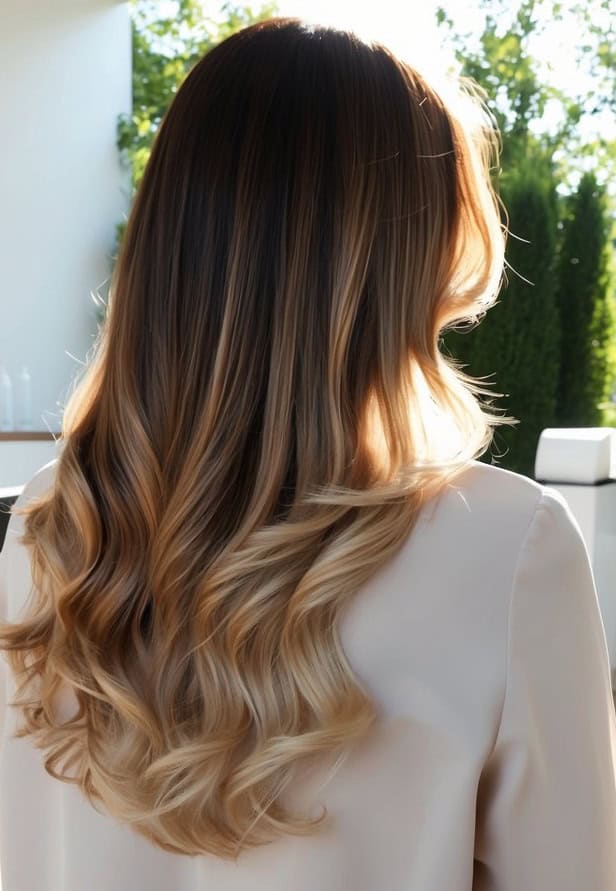
This is the look people mean when they say they want hair that looks like they just got back from two weeks at the beach. The brunette base stays strong from root to mid-shaft, then the color breaks into warm, honeyed tones through the ends. The transition isn’t sharp — it feathers naturally, which makes it incredibly easy to live with as it grows.
Best for: Medium to long wavy hair. The natural movement of the waves shows off the color gradient beautifully — every twist catches the light differently.
Styling tip: Scrunch in a sea salt spray while damp and diffuse on low heat. The texture brings the color story to life.
2. Golden Honey Melt
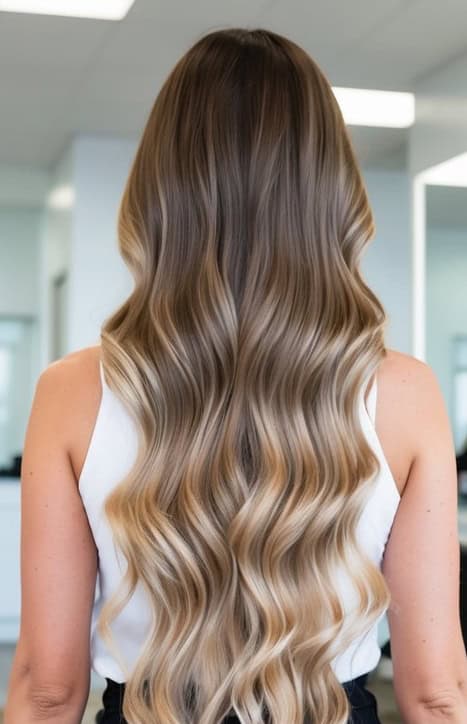
This one leans warmer than most ombres — the ends hit a rich, amber-gold rather than a cool blonde. It suits warm and neutral skin tones particularly well and gives the hair a lit-from-within glow. The mid-lengths carry a caramel transition zone that stops it from looking like a stark two-tone.
Best for: Anyone with golden or olive skin who wants to avoid a washed-out result. Cool blondes tend to fight warm complexions — this one works with them.
Maintenance: Use a brass-enhancing shampoo every few weeks (not purple — purple will kill the warmth). Gloss treatments between appointments keep the gold punchy.
3. Dark Caramel Delight
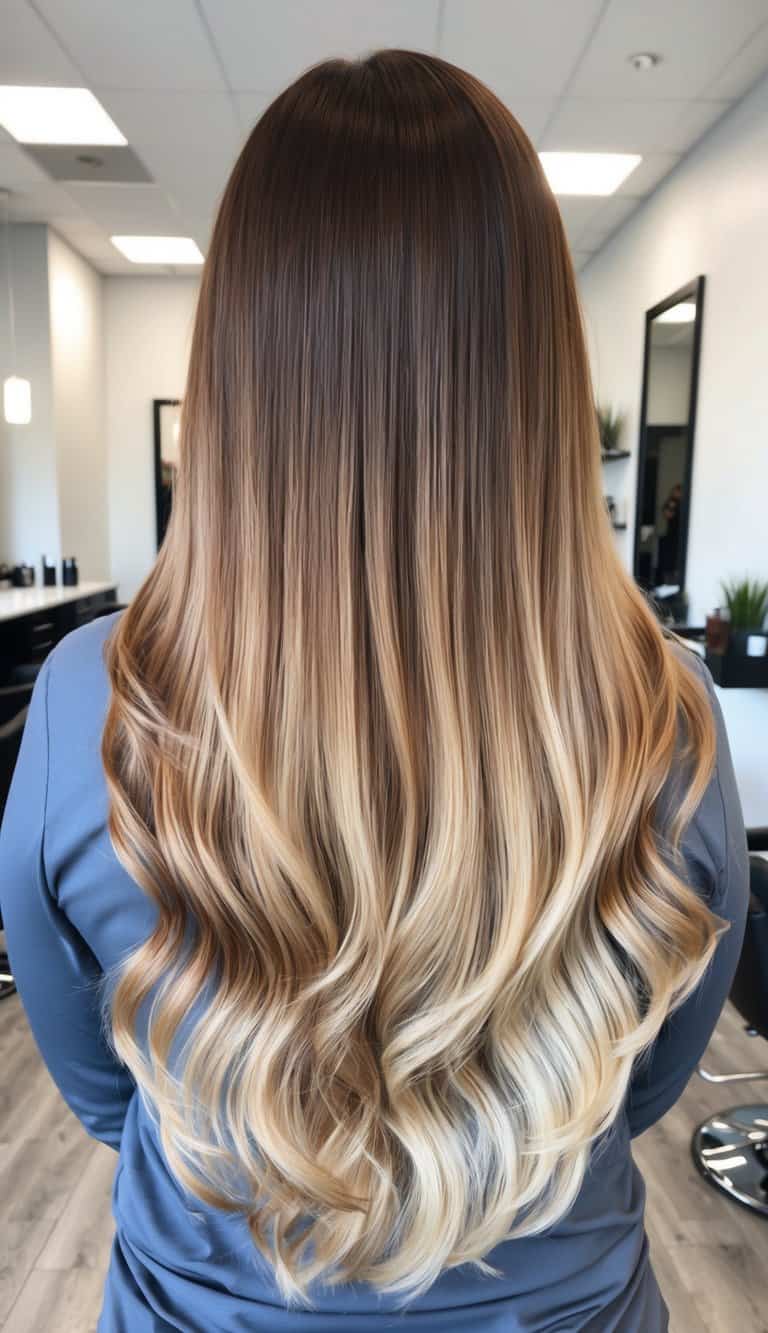
The root here is a proper deep brunette — almost espresso — and the color lifts slowly through a long caramel mid-section before reaching lighter ends. It’s a longer ombre than most, meaning the dark zone covers more of the hair. That makes it lower maintenance and easier on hair that’s already been processed.
Best for: Naturally dark hair types or anyone coming from a box dye who wants to ease into lightening without shocking the hair all at once.
Styling tip: Loose braids overnight on slightly damp hair give you effortless texture that shows off the color graduation perfectly in the morning.
4. Warm Chestnut Fade
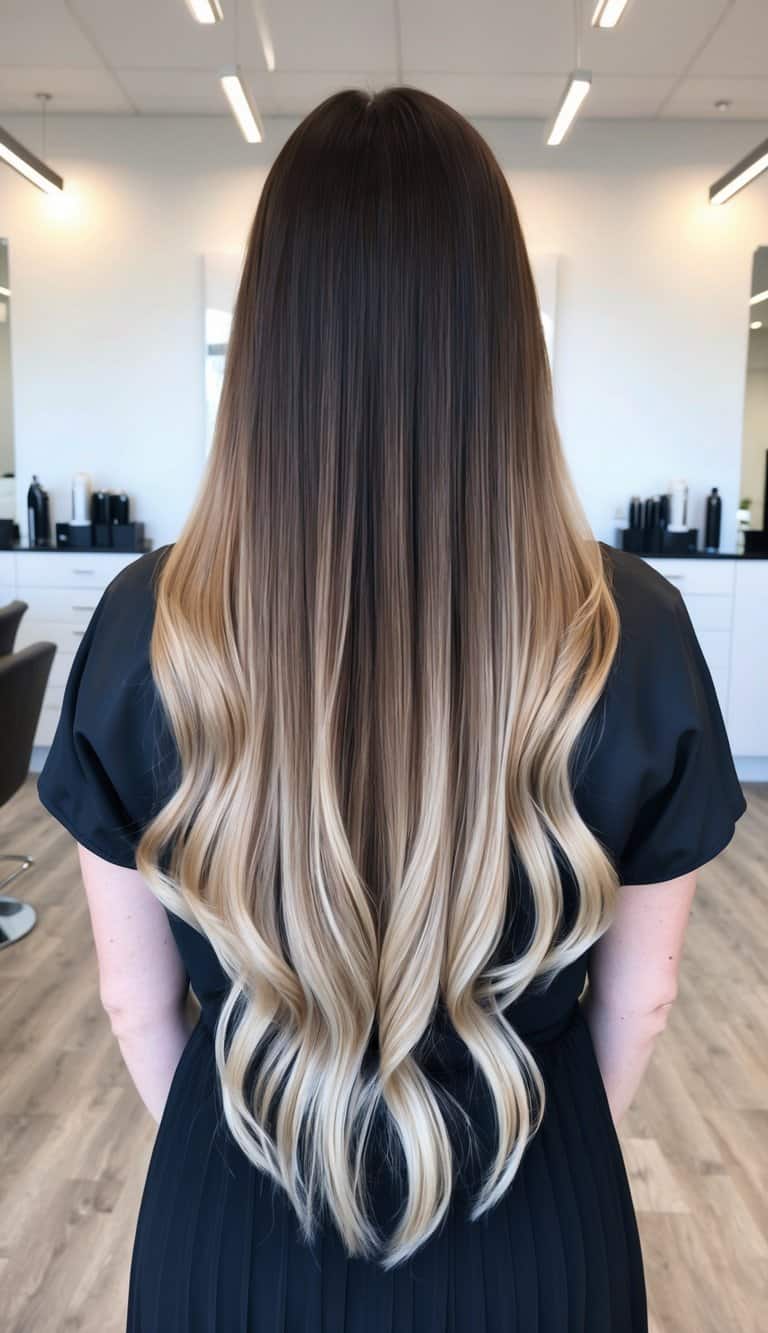
Chestnut is one of those base colors that photographs incredibly well — it has red-brown undertones that photograph warm rather than flat. This fade takes it from rich chestnut at the root through to a golden, sandy blonde at the ends. It’s a softer overall contrast than a dark brown-to-platinum, which means less maintenance between appointments.
Best for: Medium-brown natural hair. If you’re already in the chestnut range, your colorist can achieve this in a single session without much pre-lightening.
Maintenance: A toning gloss every 6–8 weeks keeps the chestnut base from fading red and the ends from going brassy.
5. Hazelnut Frost
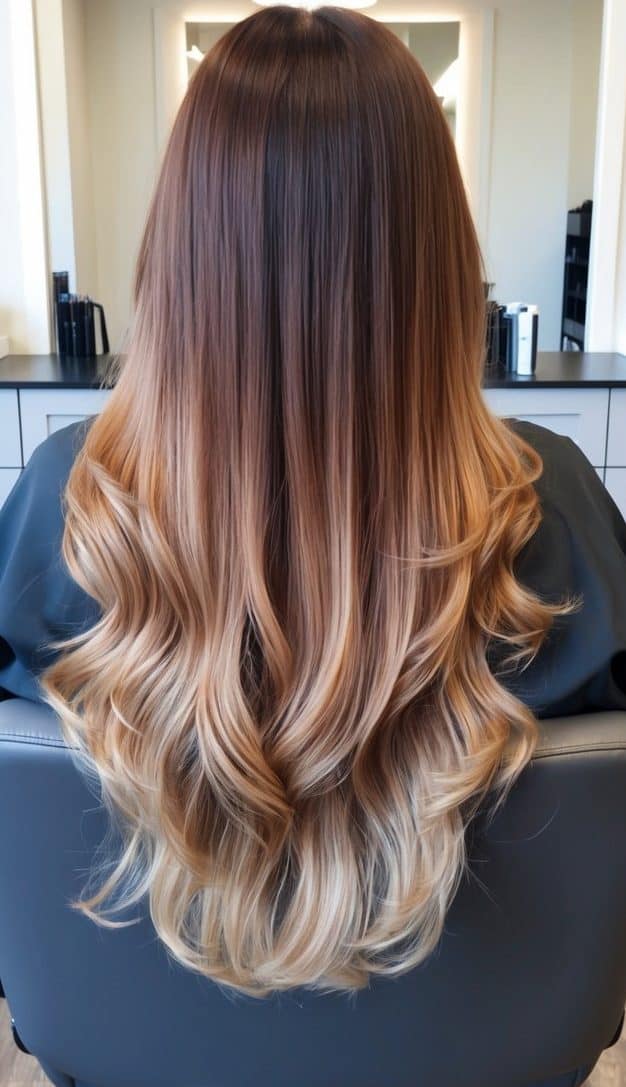
Where most ombres go warm, this one goes cool. The hazelnut root is warm-toned, but the ends have been toned to a frosty, almost ashy blonde — there’s a visible shift in temperature as your eye moves down the hair. It’s a modern take on ombre and works especially well on fair skin with cool or pink undertones.
Best for: Cooler complexions. If gold tones make you look sallow, this is your version of blonde ombre.
Maintenance: Purple or blue shampoo once a week to hold the frost. Without toning, the ends will shift warm quickly, especially if you use hot tools daily.
6. Sweet Almond Highlights
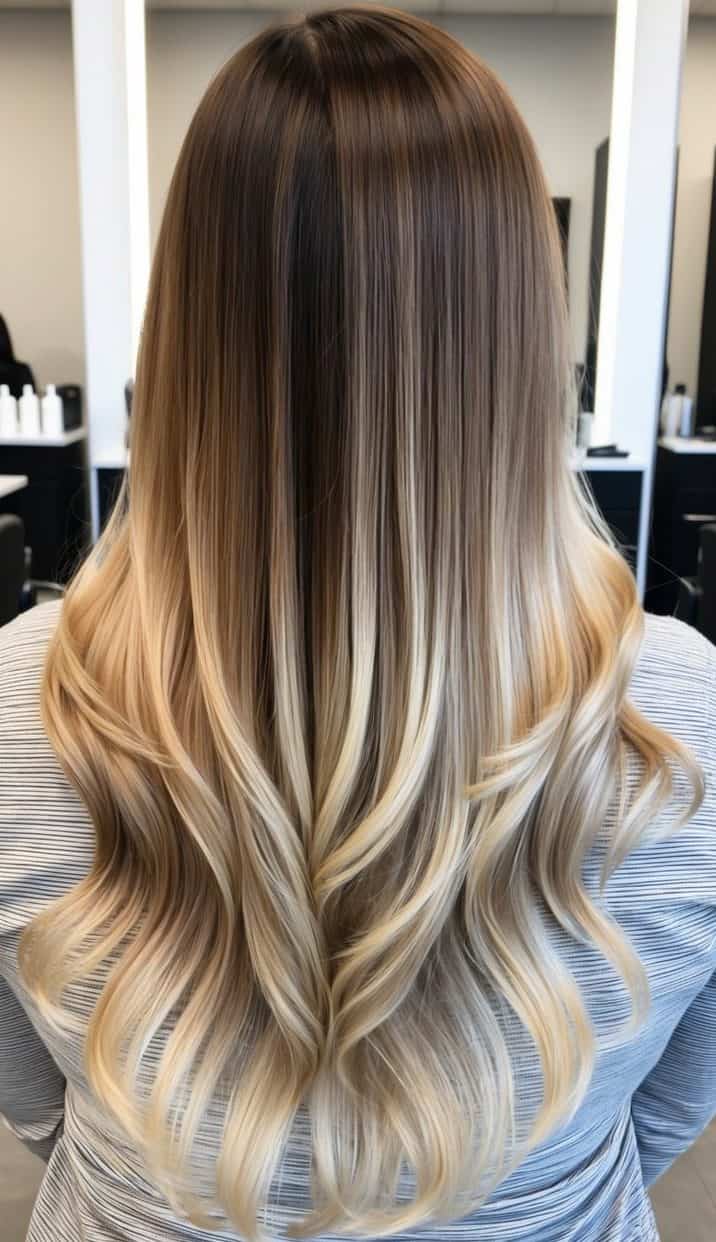
This isn’t a traditional all-over ombre — it’s more of a face-framing balayage that creates the illusion of ombre when the hair falls naturally. Almond-toned pieces are painted through the front sections and mid-lengths, lightening progressively toward the ends. The overall effect is soft and dimensional without heavy contrast.
Best for: Anyone who wants the ombre effect but doesn’t want to commit to lightening all their hair. Great as a first step into color.
Styling tip: Wear it down with a center or deep side part to maximize how much of the highlighted sections frame your face.
7. Spiced Latte Flow
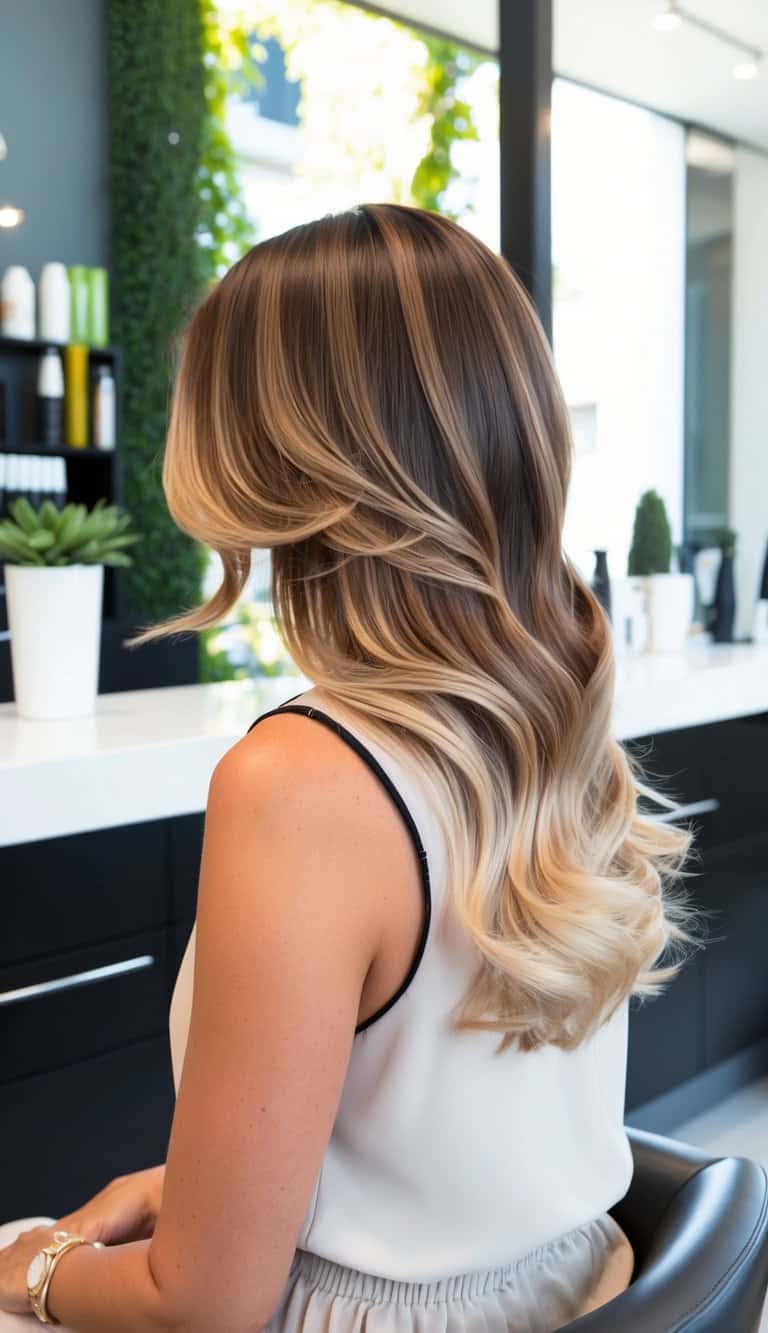
Think of the color of a latte — that mix of espresso and steamed milk — and you’ve got the palette of this look. The roots are deep and coffee-dark, the mid-lengths are a milky medium brown, and the ends are a creamy, warm blonde. It flows naturally and the spiced undertones give it depth that flat brown-to-blonde ombres often lack.
Best for: Medium-length hair in a blunt cut or lob. The color flow looks most intentional when the ends all hit at the same level.
Maintenance: Refresh with a light toning mask at home every 3–4 weeks. Brands like Schwarzkopf Chroma ID or Redken Shades EQ do excellent warm-neutral tones.
8. Molten Gold Touch
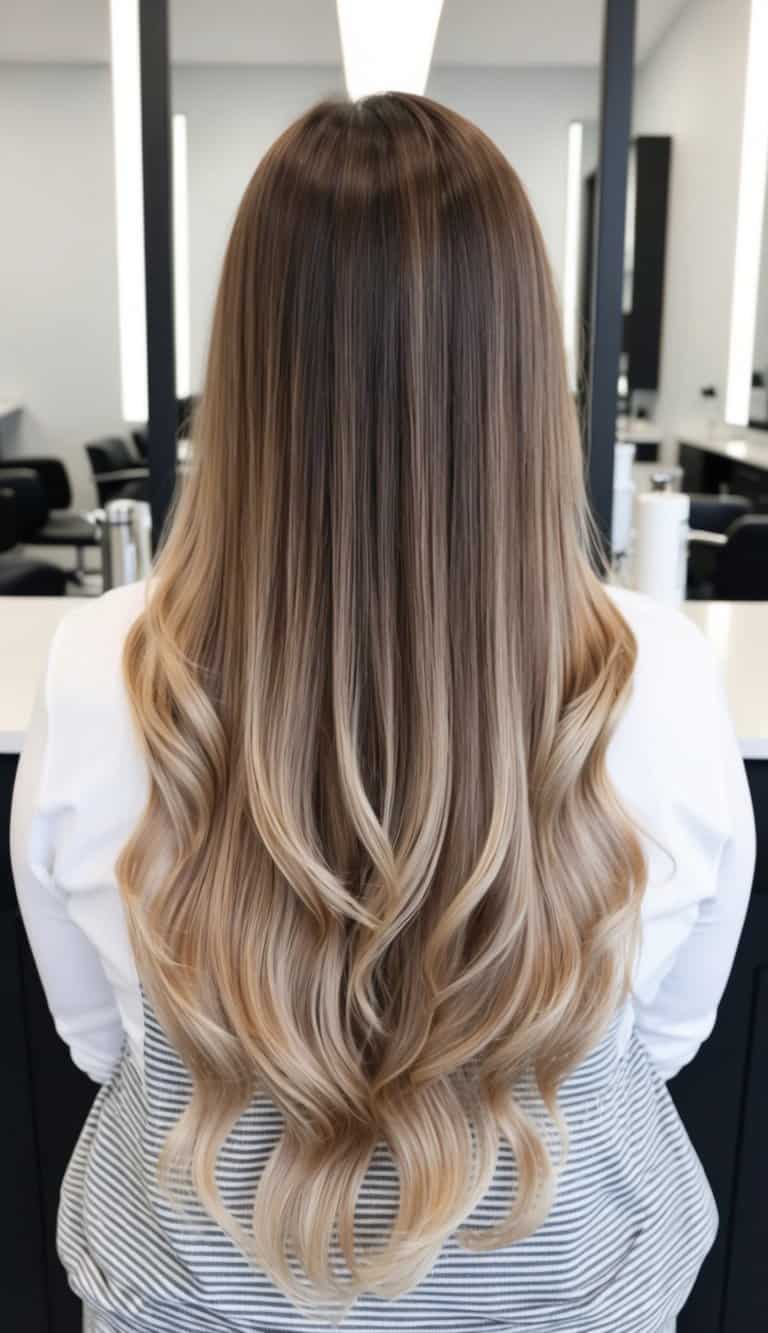
If you want ombre that reads luxurious, this is the one. The base is a deep, rich brown and the ends have been lifted to a bright, saturated gold — not yellow, not honey, but genuinely golden. The effect is deliberate and high-contrast, which means it makes the most impact on straight or lightly wavy hair where the color blocks are clearly visible.
Best for: People who want their color to be noticed. High contrast = high glamour.
Styling tip: Blow-dry straight or do loose, polished waves. Messy texture can obscure the gold at the ends — let the ends shine.
9. Creamy Fudge Harmony
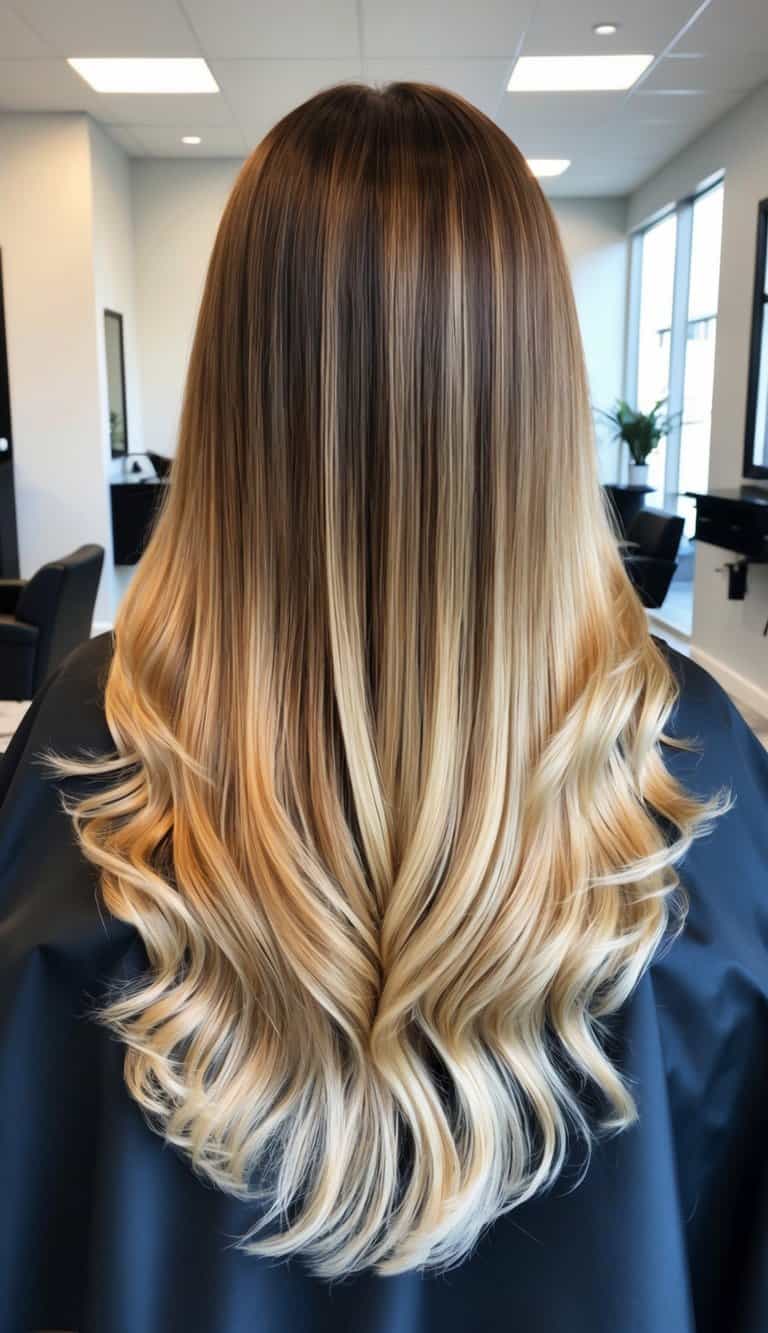
The key word here is harmony — nothing fights. The brown root has a slight warmth to it, the transition through the mid-section is gradual rather than sudden, and the blonde ends are creamy rather than stark. It’s an ombre that flatters almost every skin tone and doesn’t demand constant maintenance to look intentional.
Best for: Low-commitment color clients. This fades gracefully — even at 12 weeks grown out, it still looks like a choice rather than neglect.
Maintenance: A bond-strengthening treatment like Olaplex No.3 every two weeks keeps the ends from going dry and dull.
10. Vanilla Swirl
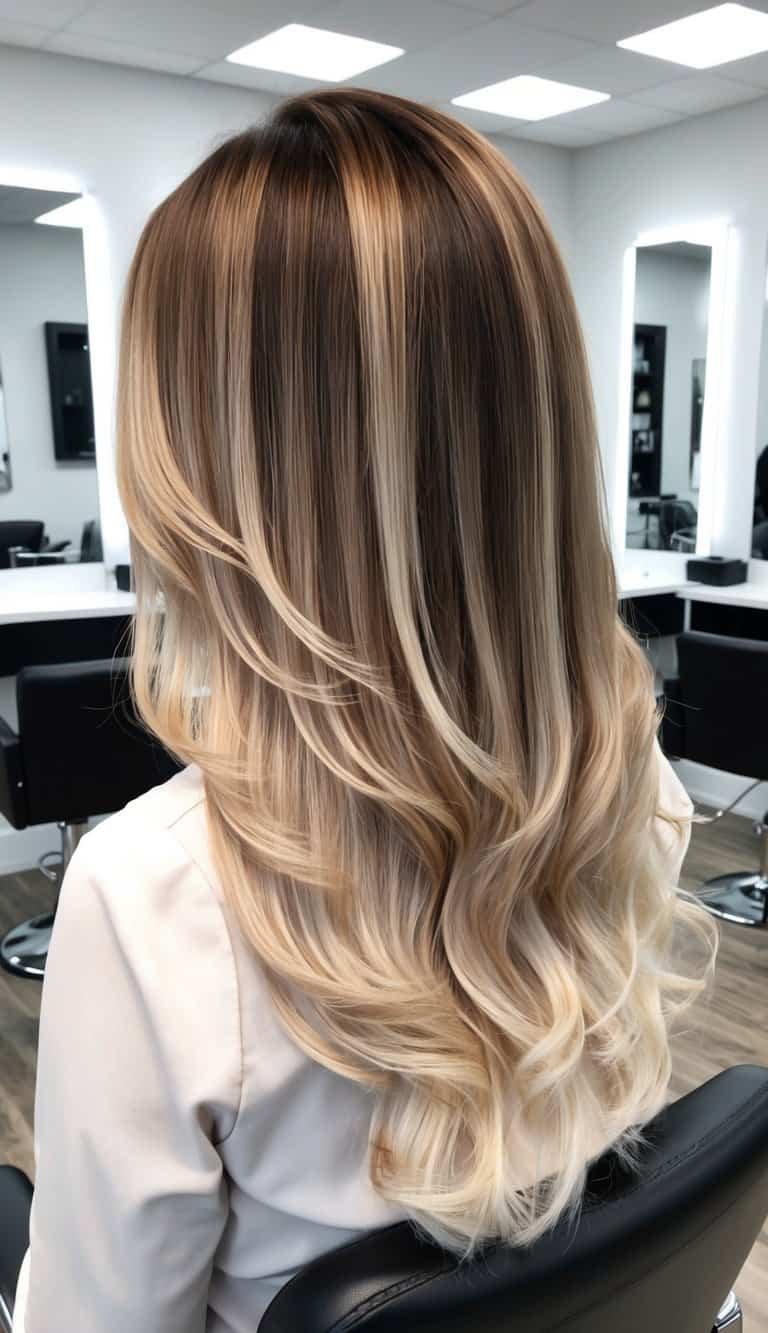
Vanilla here refers to the tone of the ends — a soft, slightly warm off-white blonde rather than a cool platinum. When it’s twisted into a bun or braid, the color looks like actual vanilla swirled through chocolate. It’s a playful, youthful take on ombre that still works in professional settings because the root stays dark and grounded.
Best for: Longer hair styles that you typically wear up or braided. Updos with this color are genuinely stunning.
Styling tip: A messy bun or Dutch braid with the lighter ends tucked at the top creates a beautiful ombre contrast in the hairstyle itself.
11. Amber Radiance
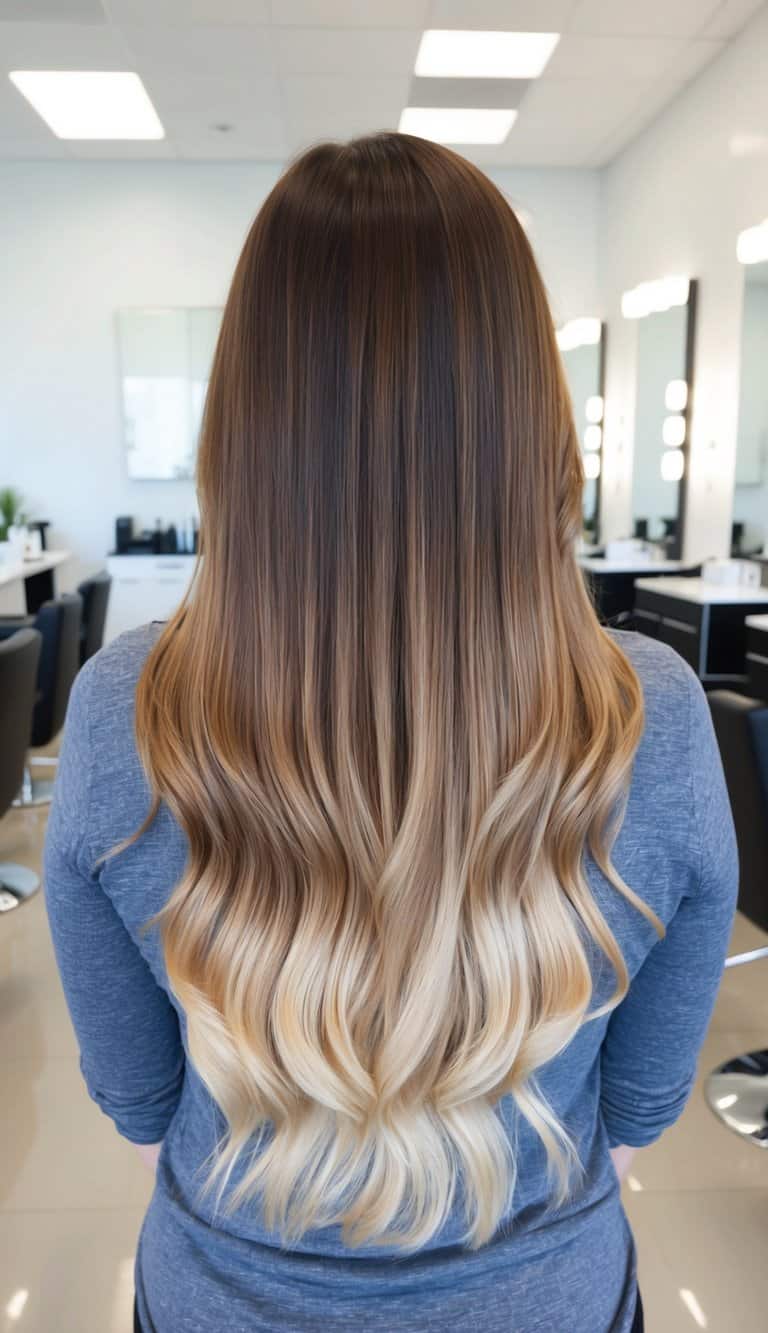
Amber sits between gold and copper, and this ombre leans heavily into that territory. The ends are warm, glowing, and almost orange-adjacent — in the best way. It photographs beautifully in natural light and gives the hair a genuine radiance that cooler blondes can’t replicate. Ideal for autumn but honestly stunning year-round.
Best for: Warm skin tones — golden, peachy, medium brown. Amber intensifies warm undertones in skin, making the overall look glow.
Maintenance: Avoid purple shampoo — it will kill the amber tone fast. Use a hydrating, color-safe shampoo and refresh with a copper or peach toning conditioner as needed.
12. Velvet Chocolate Shine
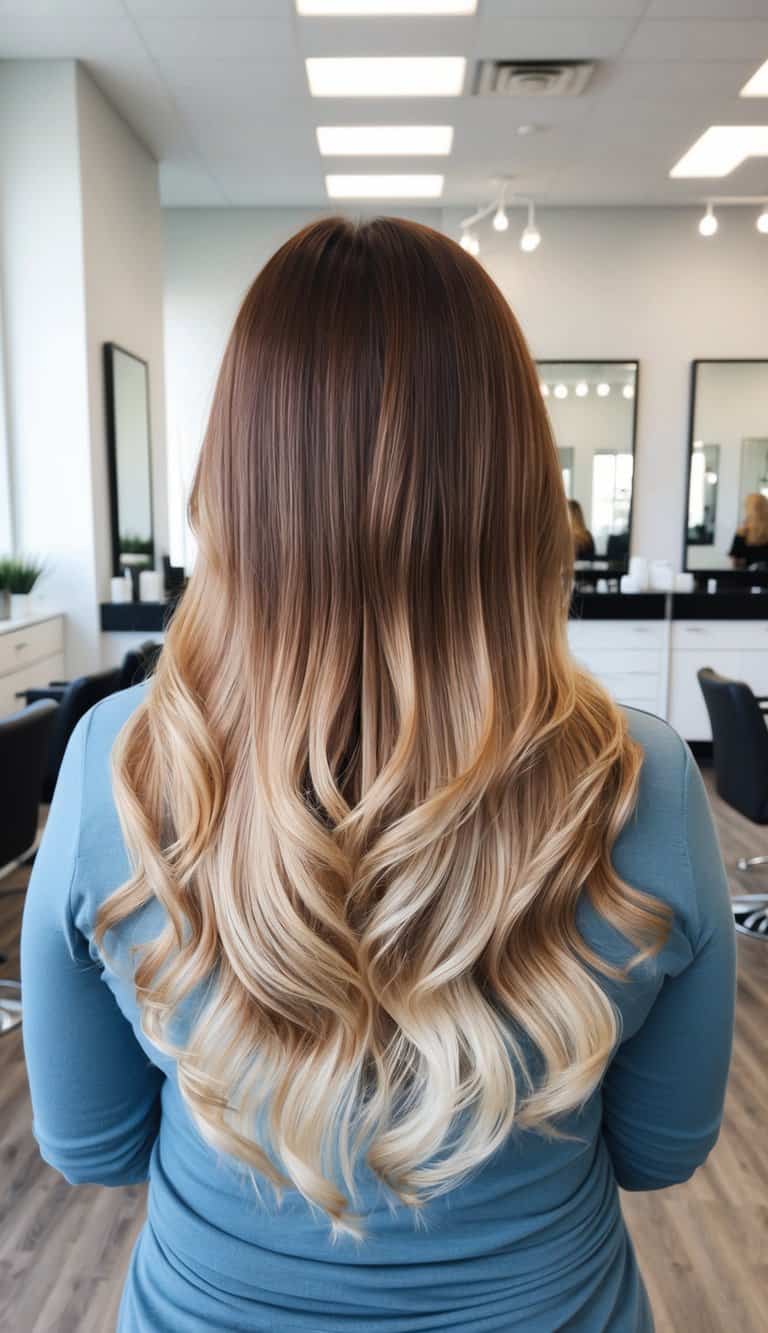
This is a darker, more subtle take on ombre — the root is a deep, glossy chocolate and the ends lighten to a mid-tone caramel rather than a full blonde. The shine is the hero here: with the right gloss treatment, this look has a mirror-like quality that looks expensive. It’s ombre for people who want dimension but don’t want to go visibly blonde.
Best for: Those transitioning from dark hair who want to test the ombre waters without dramatic contrast. Also great for corporate environments where light blonde ends might feel too casual.
Styling tip: Finish with a glossing serum on dry hair (Moroccanoil Treatment or similar) — the reflective quality of the product amplifies the chocolate tones.
13. Creamy Caramel Ends
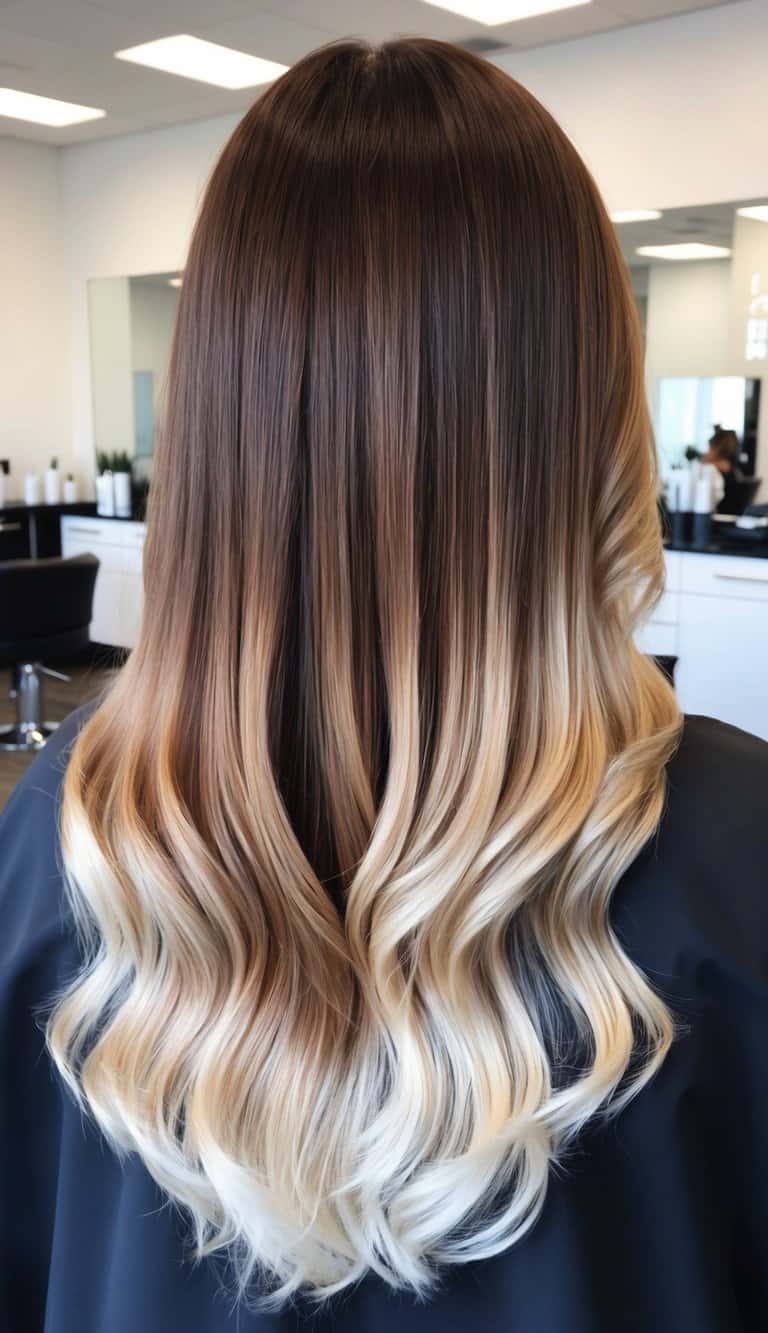
Classic in every sense. Deep brunette root, clean gradient through the mid-lengths, and ends that land on a warm, creamy caramel. It’s the ombre that started the whole movement, and there’s a reason it’s never really gone away — it’s genuinely flattering on a massive range of people and it doesn’t age badly as it grows out.
Best for: First-time ombre clients who want a safe, universally flattering result. This is the low-risk, high-reward option.
Maintenance: Touch up ends every 3–4 months. Root regrowth is intentional with ombre, so you have more breathing room than with a highlights appointment.
14. Ivory Strand Balayage
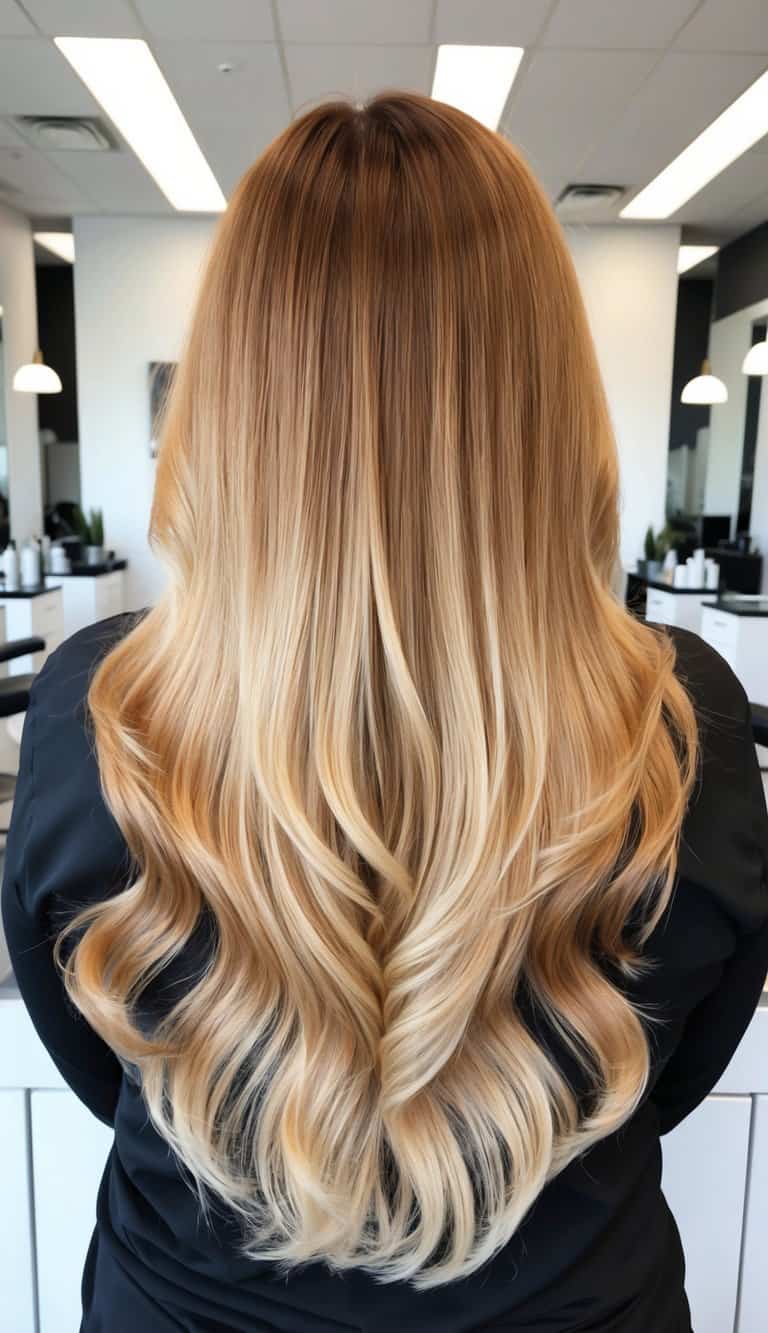
Balayage-applied, ombre-effect — individual strands are hand-painted with lightener rather than the ends being lifted uniformly. The result is a more natural, uneven ombre where some strands reach ivory and others stay mid-brown. When the hair moves, it catches light differently on every strand. It looks sun-bleached rather than salon-done.
Best for: Textured, wavy, or curly hair types. The uneven color placement follows the natural movement of the hair and looks more organic than a sharp ombre line.
Styling tip: Air-dry wherever possible. The natural texture combined with the varied color depth is the whole look — don’t flatten it with a straightener.
15. Maple Blonde Fusion
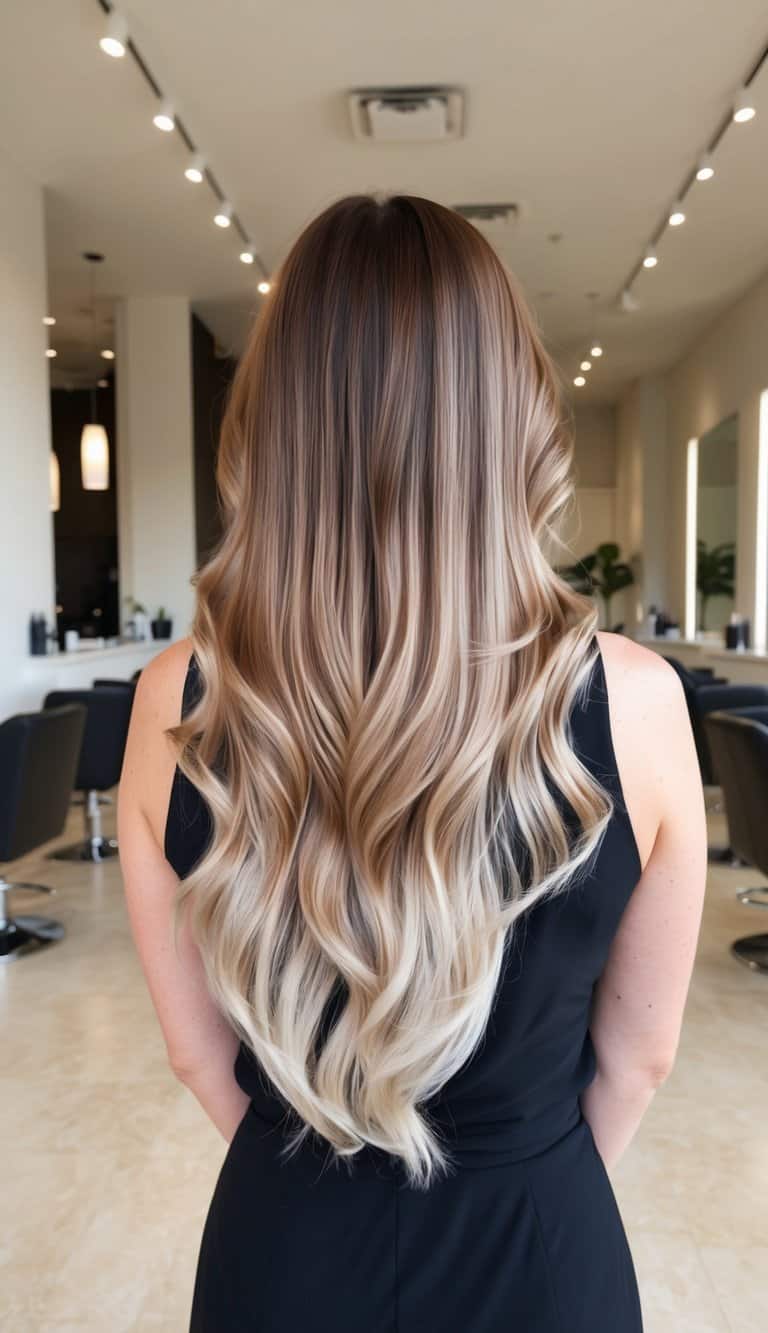
Maple brings a reddish-brown warmth to the transition zone that sets this ombre apart from standard chocolate-to-blonde. There’s a clear warm orange-brown moment in the mid-section that catches the light like actual maple — it’s unexpected and rich. The ends land on a golden blonde that continues the warm journey rather than switching to cool.
Best for: Natural redheads or anyone with a warm, auburn base who wants to go lighter without losing their warmth. Fighting your natural warmth always ends in more maintenance — this works with it.
Maintenance: Keep up with a moisturizing mask weekly. Warm tones on blonde tend to fade faster, and hydrated hair holds color longer.
16. Coco Blonde Twist
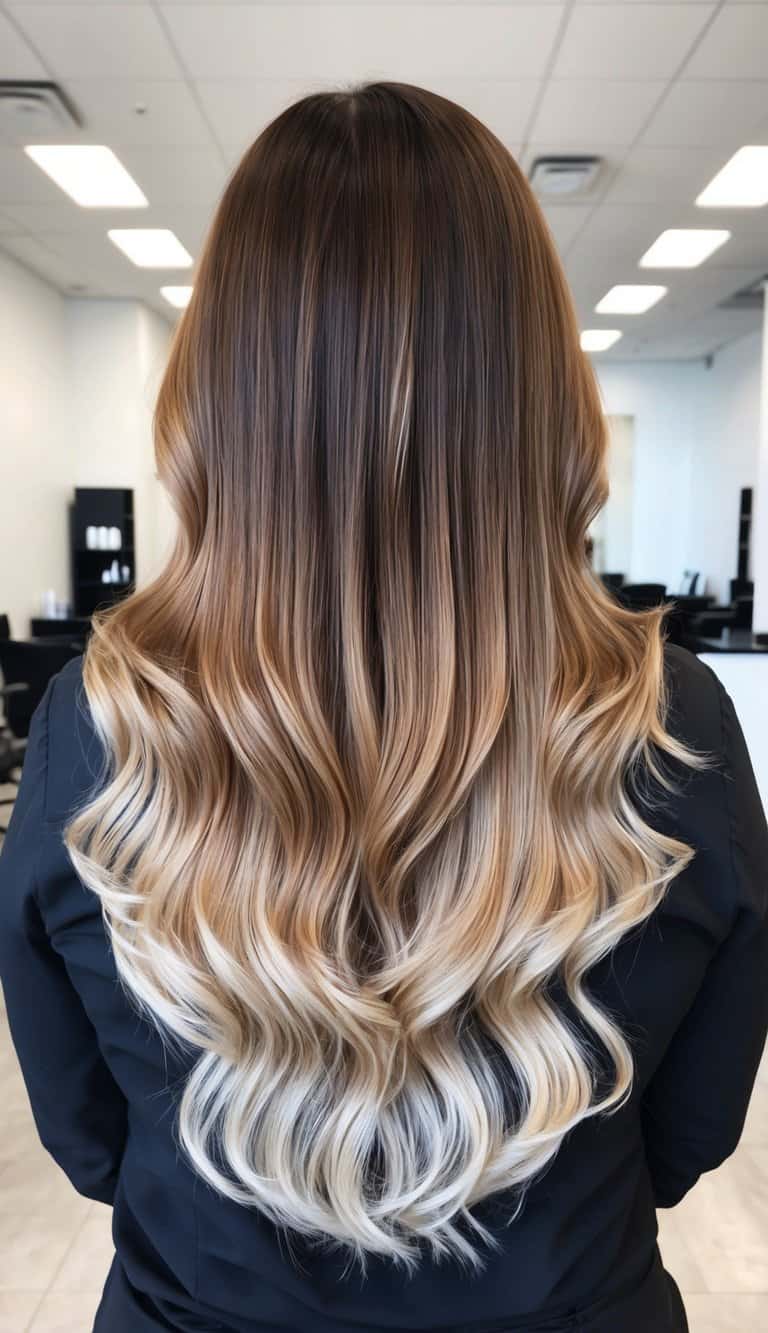
The twist here is in the application — rather than a straight horizontal ombre line, the lightener is twisted and blended diagonally through sections, creating a more complex color pattern. Some sections go lighter faster, others stay deeper longer. When styled, especially in braids or twist-outs, the complexity of the color becomes really apparent.
Best for: Hair that’s frequently worn in braids, twists, or protective styles. The complex color placement looks its best in textured updo styles.
Styling tip: Two-strand twists or rope braids on this color are genuinely showstopping. Let the style and the color work together.
17. Fawn Melt
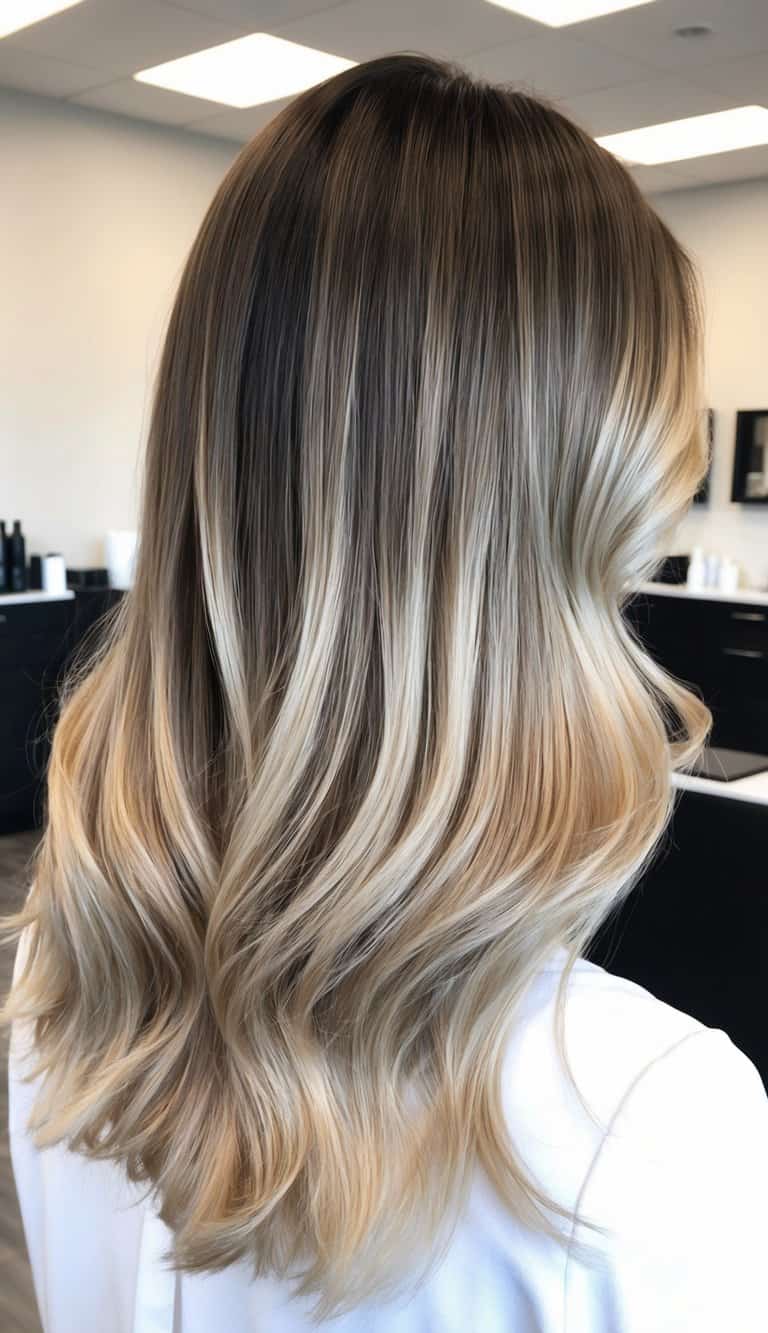
Fawn is one of those tones that’s hard to describe but immediately recognizable — it’s a warm, muted blonde-brown that sits right at the meeting point of brunette and blonde. This melt starts with a cool-leaning dark root and transitions into that fawn zone where the temperature shifts from cool to warm. It’s understated, sophisticated, and effortlessly wearable.
Best for: Neutral skin tones. Fawn doesn’t pull dramatically warm or cool, so it reads naturally on complexions that sit between warm and cool.
Maintenance: A toning gloss every 8 weeks to keep the fawn from shifting too warm (brassy) or too cool (ashy) depending on your preference.
18. Buttery Blonde Touch
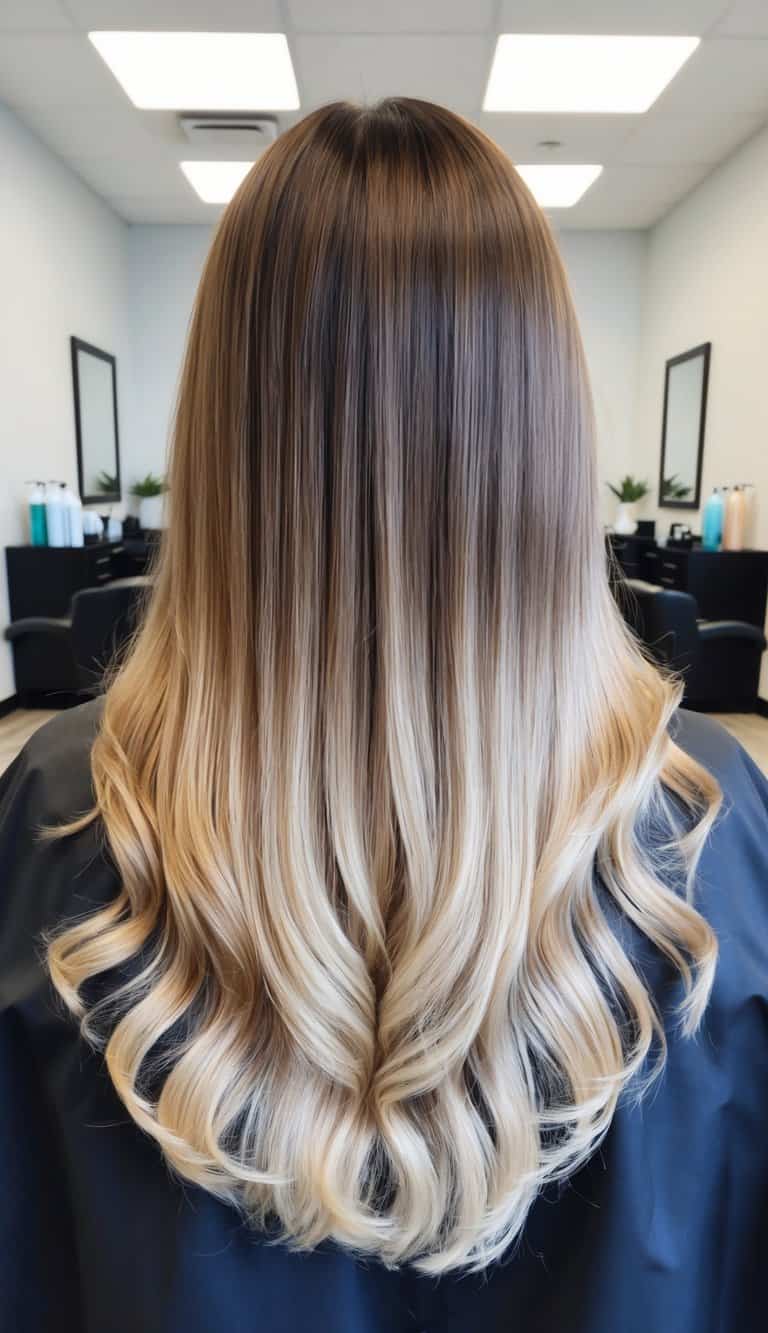
Buttery is the right word — the ends here are rich and soft, not sharp or stark. There’s yellow in it, but it’s the good kind: warm and creamy rather than bright and brash. The root stays a natural-looking brunette and the transition is gradual, so nothing about this looks high-effort even though it absolutely is.
Best for: Anyone who wants to look blonde-ish without committing to actual blonde maintenance. The buttery tone is forgiving as it fades and doesn’t turn green or grey the way platinum can.
Styling tip: Works beautifully on beachy, undone styles. Add a dry texture spray through the mid-lengths and ends for that effortless, lived-in quality.
19. Brunette to Blonde — The Classic
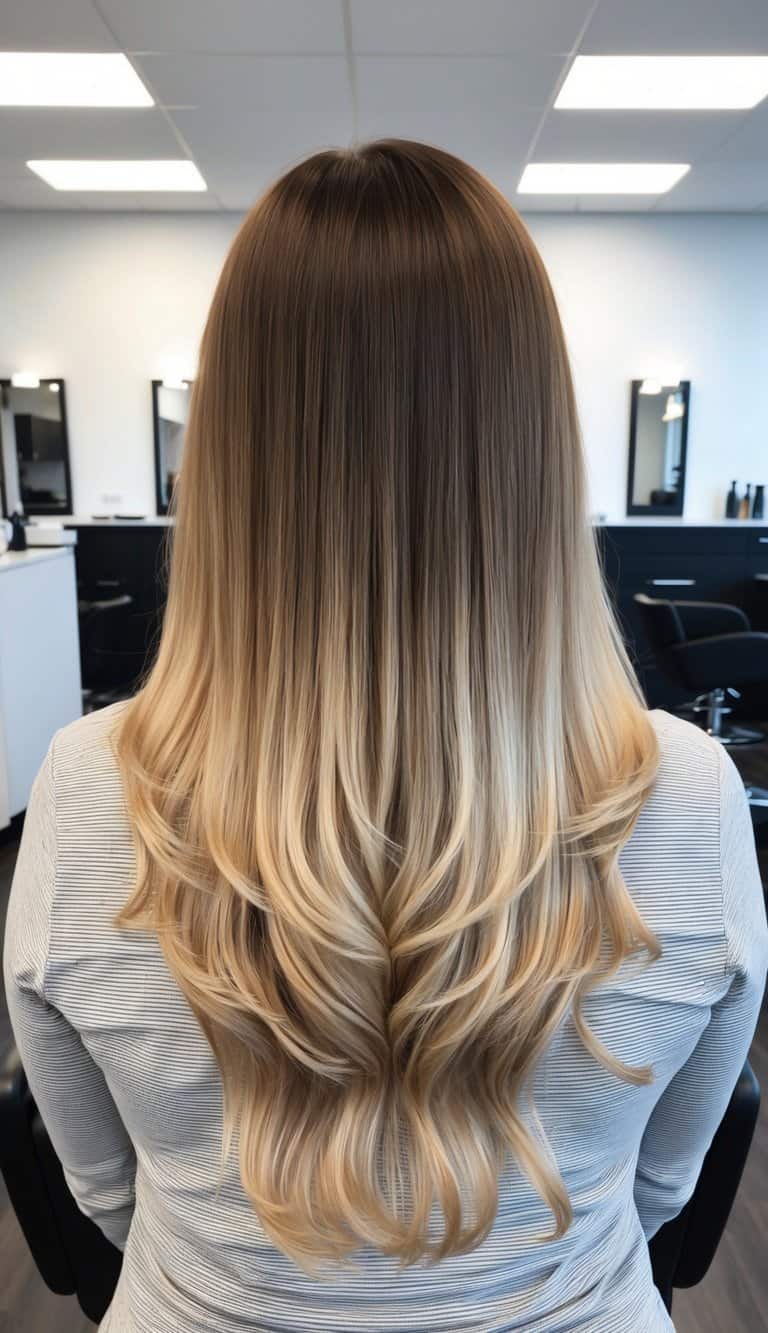
This is the OG — a clean, deliberate brunette-to-blonde where neither end is ambiguous. The root is clearly dark, the ends are clearly blonde, and the gradient in between is smooth and well-executed. It’s a look that’s been iconic since it first took over Pinterest years ago, and when it’s done correctly, it genuinely never looks dated.
Best for: Straight to slightly wavy hair. The clean gradient shows best when the hair falls smoothly — texture can break up the ombre line in ways that make it look blotchy.
Maintenance: Blonde ends need regular bonding treatments and deep conditioning. Expect to be in the salon every 10–12 weeks to keep the gradient looking intentional and the ends healthy.
How to Care for Brunette to Blonde Ombre Hair
Ombre involves lightening — and lightening changes the structure of the hair. The ends are almost always more processed than the root, which means they need more attention. Here’s what actually matters:
- Sulfate-free shampoo: Sulfates strip color and moisture. Switch to a gentle, color-safe formula and you’ll keep the blonde looking fresh significantly longer.
- Toning: Blonde ends go warm (brassy) as they fade. A purple shampoo or toning conditioner used once a week corrects this without a salon visit. If your ombre is warm-toned (amber, maple, buttery), skip the purple and use a hydrating clear conditioner instead.
- Bond treatments: Olaplex, K18, or similar bond-building treatments reverse lightening damage from the inside. Use a bond-strengthening product at home every 2 weeks — the difference in how the ends feel and look after 6 weeks is significant.
- Heat protection, always: The blonde ends are already more fragile. Using a heat protectant isn’t optional — without it, you’ll see the ends break and the color fade to an uneven, patchy finish.
- Deep condition weekly: A 10-minute masque once a week is the single biggest thing you can do to keep ombre looking healthy and intentional rather than damaged and grown-out.
- Gloss treatments: An in-salon gloss every 6–8 weeks seals the cuticle, adds shine, and refreshes tone without lifting color. It’s low-cost and high-impact.
Frequently Asked Questions
How long does brunette to blonde ombre last?
The color itself can last 3–6 months before it noticeably needs refreshing, depending on how much you wash your hair and how frequently you use heat. The great advantage of ombre is that root regrowth is intentional — you won’t have a harsh line at the roots the way you would with highlights or a solid color. Most people go back to the salon every 3–4 months just to freshen the ends.
Can I go from brunette to blonde ombre in one session?
Usually yes, especially if your natural hair is medium brown. Very dark or previously dyed hair may need two sessions to get the ends light enough without over-processing. A good colorist will assess your hair condition and let you know what’s realistic in one sitting. Don’t push for platinum in one session if your colorist advises against it — you’ll pay for it with breakage.
Does ombre work on short hair?
It does, but the shorter the hair, the less transition zone you have to work with. On a bob or lob, ombre becomes very much a two-block color — dark top, light bottom. It still looks great, but the gradient is more dramatic and visible. Some people love this; others prefer a softer result, which is easier to achieve on longer hair.
How do I maintain the ombre at home between salon visits?
Three things: purple shampoo for cool-toned blondes (to fight brassiness), bond treatments every two weeks (to maintain hair integrity), and a weekly deep-conditioning mask (to keep the ends hydrated and smooth). If you do these consistently, your ombre will look fresh for months between appointments instead of growing out dull and dry.
Final Thoughts
Brunette to blonde ombre has been around long enough to prove it’s not a trend — it’s a technique. Done well, it gives you color that looks like it belongs to you: effortless, dimensional, and naturally lit. The key is in finding the right version of it for your base color, your skin tone, and your lifestyle. A warm amber melt hits completely differently than a cool frosty fade, even though they’re technically the same technique.
Take these 19 looks to your colorist appointment, not just as inspiration but as a conversation starter. Point to the specific tone at the roots, the specific tone at the ends, and the length of the transition zone. The more specific you can be, the more likely you’ll walk out with exactly what you had in mind.


