27 Green Ombre Hair Ideas: Stunning Looks to Inspire Your Next Style
Green ombre hair is one of the most adventurous and visually exciting choices in the fashion color category — a color that draws from nature’s most abundant palette (the countless greens of forest, field, sea, and stone) and translates them onto hair with unexpected beauty and creativity. Green has historically been considered a challenging color for fashion hair, but the ombre technique’s ability to blend and transition green from the hair’s natural or darker base through vivid, organic, and jewel-toned greens has made it one of the most popular and wearable fashion color directions of recent years. From the deep, forest-dwelling greens of emerald and fern to the neon electric of lime and bright green, the green ombre family has something for every level of color boldness.
These 27 green ombre hair ideas explore the full spectrum of the green color family — from the softest, most natural sage and mossy greens to the most vivid neon and electric interpretations.
27 Green Ombre Hair Ideas
1. Emerald Ombre
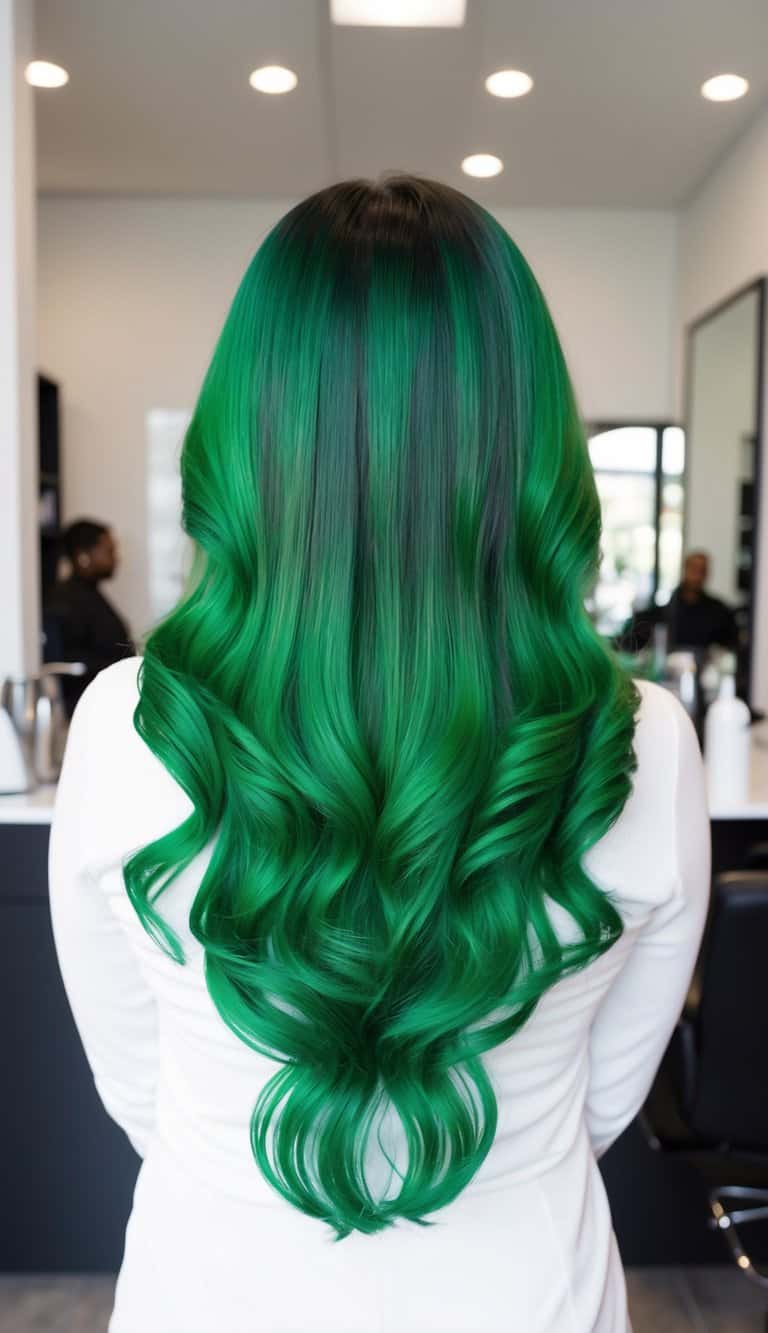
Emerald is the jewel tone of the green family — rich, deeply saturated, and with the specific blue-green balance of the precious stone that gives it extraordinary depth and luminosity. An emerald ombre uses the most luxurious and dimensional green in the palette, creating a color that reads as genuinely precious and considered rather than simply vivid. The ombre placement takes this rich green from the mid-lengths downward (or from wherever the colorist chooses to begin the transition), allowing the emerald to develop against the darker root in a gradient that showcases the green’s depth at full saturation. Emerald is the green ombre for those who want their color to read as sophisticated and jewel-toned rather than playful or neon.
Best for: Those with a bold but sophisticated aesthetic. Most skin tones — emerald’s blue-green balance works across a surprisingly wide range of complexions. Long to medium hair where the jewel-toned green has sufficient length to develop beautifully.
Color tip: True emerald requires a blue-green formula — too much yellow in the formula creates a bright grass green rather than the jewel-toned emerald. A teal-leaning emerald toner creates the most luxurious, stone-referencing result.
2. Jade Gradient

Jade is the stone whose specific quality of green — cool, slightly gray-toned, with a muted rather than vivid quality — makes it uniquely wearable and sophisticated among the fashion greens. Jade green in hair has a cool, almost dusty quality that reads as naturalistic and organic rather than artificially vivid: it’s the green of aged stone, of pale moss, of the specific cooled-down vibrancy of jade mineral. In a gradient ombre, the jade tone develops from a dark root through progressively lighter and more clearly jade green toward the ends, the gradient technique creating a smooth transition that emphasizes the cool, complex quality of jade rather than the simple brightness of more vivid greens.
Best for: Those who want a green ombre that reads as sophisticated and somewhat naturalistic rather than vivid and fashion-forward. Cool skin tones where jade’s gray-green quality is most complementary. Medium to long hair.
Color tip: Jade is created from a forest green base with significant gray or ash added to the formula — the ash counteracts the brightness of pure green and creates the specific muted, stone-like quality of true jade.
3. Mossy Green Ends

Mossy green is the most organic and naturalistic interpretation of green in this collection — a muted, earthy green with brown undertones that reads as genuinely found-in-nature rather than fashion-colored. Moss grows in the damp, shaded spaces of forests and stone walls, and its specific green has a warmth and earthiness that most hair greens lack. At the ends of a dark hair ombre, the mossy green appears as a naturalistic, somewhat unexpected color that feels like it might actually develop in the right conditions — the most “accidental-looking” of the green ombres, and one of the most intriguingly beautiful. The muted quality makes it particularly wearable in everyday contexts.
Best for: Those who want an organic, nature-referencing green rather than a vivid fashion statement. Warm and neutral skin tones where mossy green’s earthiness reads most naturally. Dark brunette and black bases where the mossy green appears at the ends as a particularly intriguing, mysterious color.
Color tip: Mossy green requires a green formula with significant brown mixed in — a straight green formula will be too vivid, while the brown addition creates the specific earthy, muted quality of moss.
4. Light and Dark Green
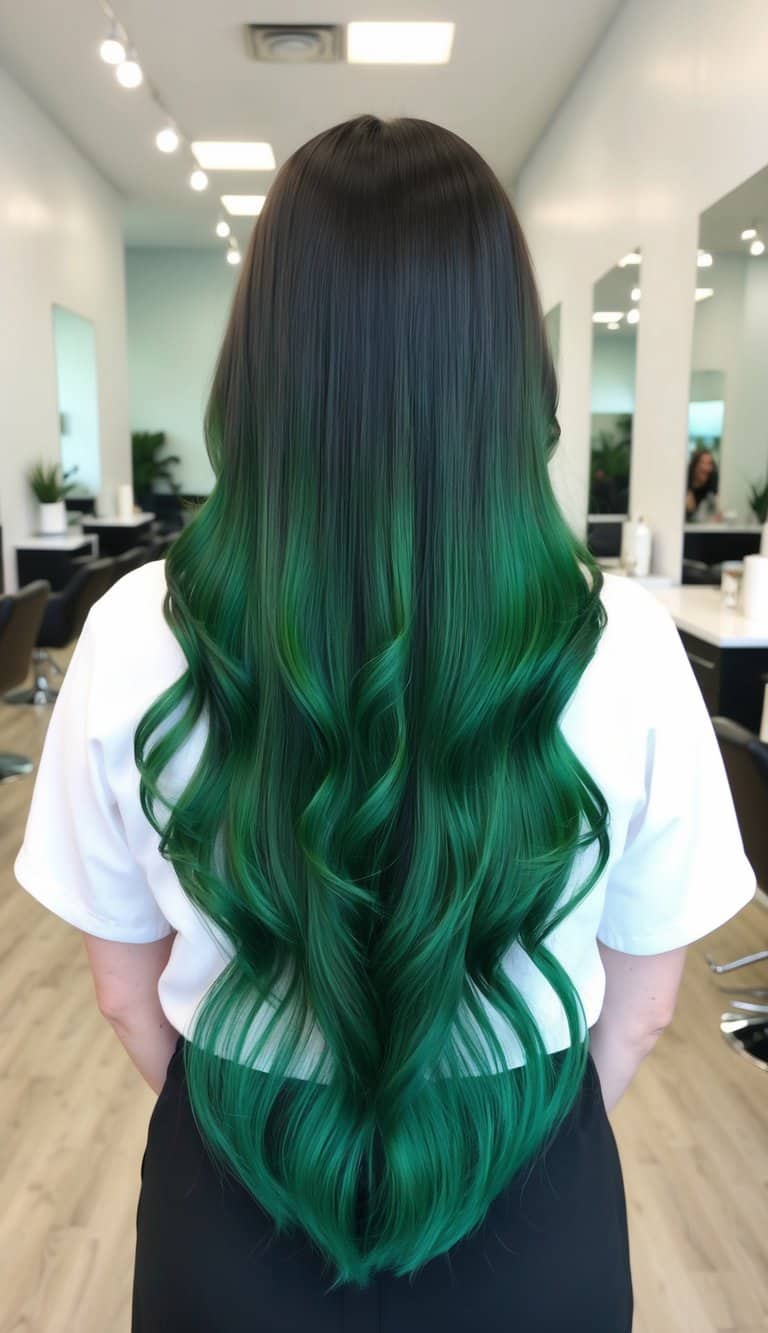
The light and dark green ombre uses the ombre technique within the green color family itself — rather than transitioning from a natural base color to green, this ombre transitions from a deep, dark forest green at the roots to a lighter, brighter green at the ends. The two-green approach creates a color that’s entirely within the green family, creating a look for those who are fully committed to the green aesthetic and want their entire hair story to be told in green tones. The contrast between dark forest green and lighter, more vivid green creates dimension and movement that a single-tone green color cannot achieve.
Best for: The most committed green color enthusiasts who want a full-coverage green look. Most skin tones — the variation within the green family creates enough internal contrast to work against diverse complexions. Long hair where the two-green gradient has sufficient length to develop fully.
Color tip: Start with a dark emerald or forest green at the root and transition to a lighter grass or bright green at the ends — the darkening at the root is what makes the lighter ends pop and creates the natural-feeling ombre graduation within the green family.
5. Luxe Green Ombre Curls
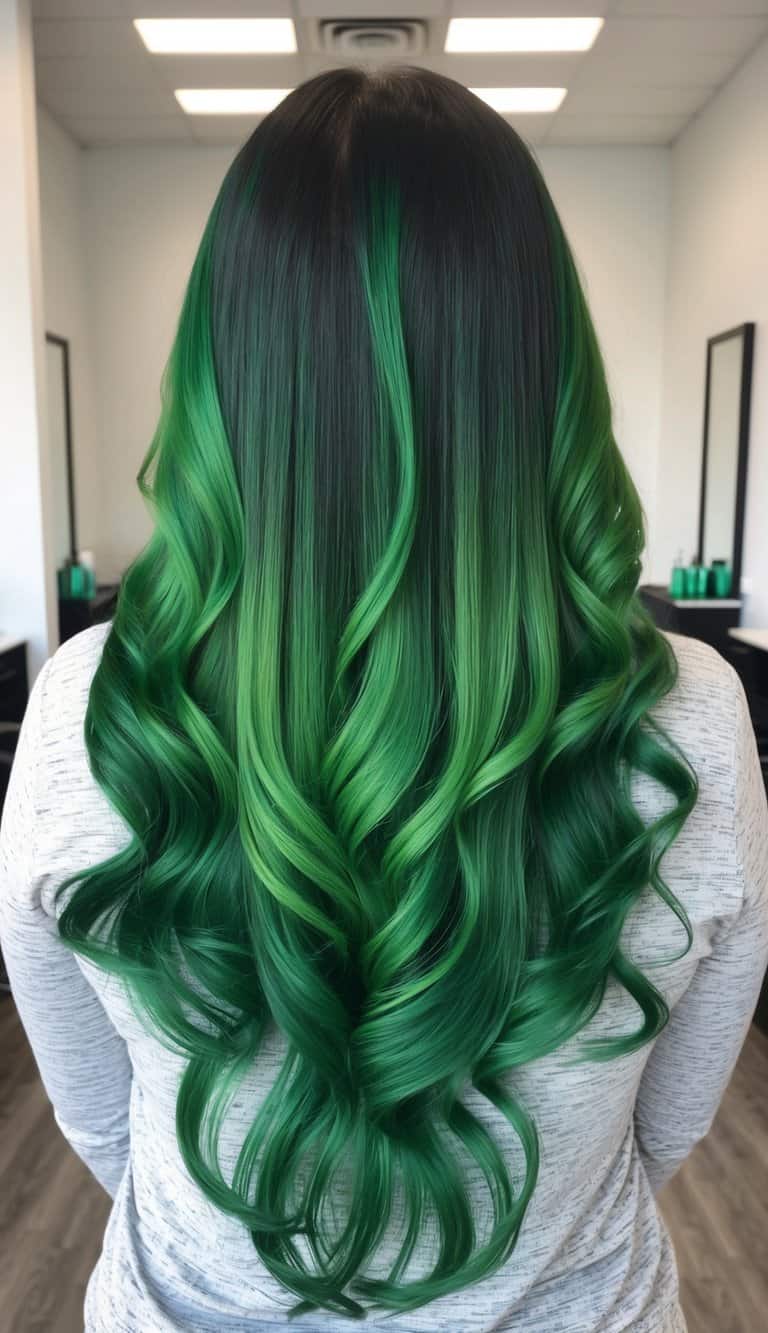
Luxe green ombre curls combines a rich, opulent green with the movement and texture of curly hair — curls show ombre colors in a uniquely beautiful way, with each curl revealing the color transition as it springs and coils, the darker and lighter sections of the ombre alternately visible as the curl turns. The luxe quality suggests this is a premium interpretation of green ombre — a deep, richly saturated green on curl hair that’s been specifically styled to maximize the visual impact of both the curl pattern and the color graduation. The result is one of the most visually striking looks in the collection, with movement, texture, and vivid color all working together.
Best for: Naturally curly hair where the curl pattern showcases the ombre graduation most beautifully. Those who want maximum visual impact from their green ombre. Medium to long curly hair.
Styling tip: A curl-defining cream applied through soaking wet curls and allowed to air dry creates the most beautiful, defined curl pattern for this look — the definition ensures each individual curl is clearly visible as its own color-showing unit rather than a fuzzy, undefined mass.
6. Bright Green Ombre

Bright green ombre embraces the most vivid, saturated, fully-on green in the spectrum — not neon (which has a specific electric, UV-reactive quality) but the maximum saturation of a pure, clean, unmistakably vivid green. This is grass green at its most vivid, the green of traffic lights and safety vests at its most purely chromatic — and in an ombre, this vividness is contained and graduated in a way that makes it exciting rather than overwhelming. The bright green ombre is for those who want their color to be immediately, unmistakably noticed — the most visually arresting of the standard (non-neon) green options in the collection.
Best for: Those with bold, high-visibility style preferences. Most skin tones — bright green’s pure chromatic quality has a surprising range of complexion compatibility. Dark brunette and black bases where the bright green creates maximum contrast.
Maintenance tip: Vivid bright greens are high-maintenance colors that require frequent refresh — a green-depositing conditioner used at every wash significantly extends the color’s life between appointments.
7. Mermaid Inspiration

Mermaid-inspired green ombre draws from the aesthetic of underwater worlds and the mythological mermaid’s specific palette — a blend of deep teal, blue-green, and vivid green that evokes the layered colors of the ocean at different depths. The mermaid quality means this is not a single green but a multi-tonal range of greens and blue-greens that together create the impression of light filtering through water: deep teal at the roots gradually brightening through blue-green mid-tones to vivid green at the ends, or any combination thereof. The mermaid ombre is inherently romantic and fantastical, one of the most photogenic and fairy-tale-adjacent looks in the collection.
Best for: Long hair where the multi-tonal color story has room to develop across multiple distinct zones. Most skin tones — the blue quality of teal-green creates a particularly flattering cool-leaning palette. Those who love fantasy, ocean, and nature aesthetics in their personal style.
Color tip: A mermaid palette should include at least three distinct green-adjacent tones — deep teal, mid blue-green, and bright or vivid green — placed in gradient from root to end to create the layered, underwater light effect.
8. Neon Green Ends
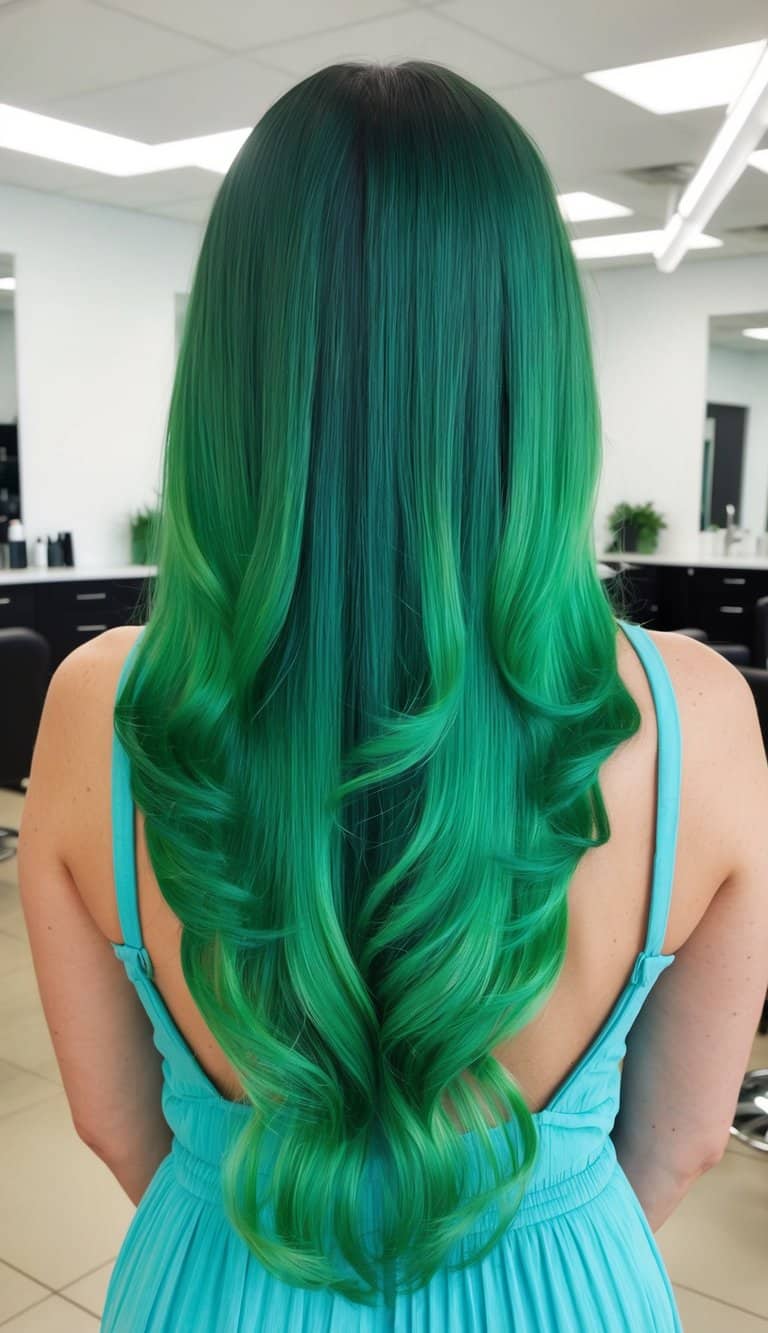
Neon green ends are one of the most electrifying and maximally impactful looks in the green ombre collection — neon green has a specific UV-reactive, high-energy quality that makes it appear to glow even in ordinary light, and concentrated at the very tips of the hair it creates a dramatic, eye-catching statement that’s impossible to ignore. The ends placement focuses the neon specifically at the point of maximum movement and visibility, allowing the vivid color to flash as the hair moves while the darker, more conventional root maintains a degree of wearability in the overall look. This is the green ombre for those who want the most vivid, most electric, most attention-commanding color destination possible.
Best for: The most adventurous color clients with a high-visibility aesthetic. Any base color, though the neon effect is most vivid on the lightest possible lifted base. Most skin tones — neon’s specific brightness is so extreme that it creates its own visual context regardless of complexion.
Color tip: True neon green requires a near-white base (level 10+) for the neon tone to achieve its full UV-reactive, electric quality — on lower-lifted bases, neon green reads as simply bright rather than genuinely neon.
9. Lime Edge

Lime green occupies a specific tonal zone that makes it distinctly different from both yellow-green and pure green — the specific citrus quality of lime is both fresh and slightly acidic, with a yellow undertone that adds brightness without pushing all the way to yellow. The edge placement means the lime color is concentrated at the perimeter of the haircut — the ends and outermost strands — where it appears most vividly against the darker interior sections of the hair. This edge approach creates a dynamic, motion-activated color reveal: when the hair is still, the lime edge is less visible; when the hair moves, the outer sections swing outward and the lime flashes into view.
Best for: Dark to medium bases where the contrast between dark interior and lime-green edge creates maximum impact. Those who want a vivid green color that’s strategic and motion-revealed rather than all-encompassing. Most face shapes and hair textures.
Color tip: The lime quality comes from a yellow-leaning green formula rather than a pure or blue-leaning green — the yellow prevents the lime from reading as grass green or neon and creates the specific citrus freshness of true lime.
10. Forest Green Fade
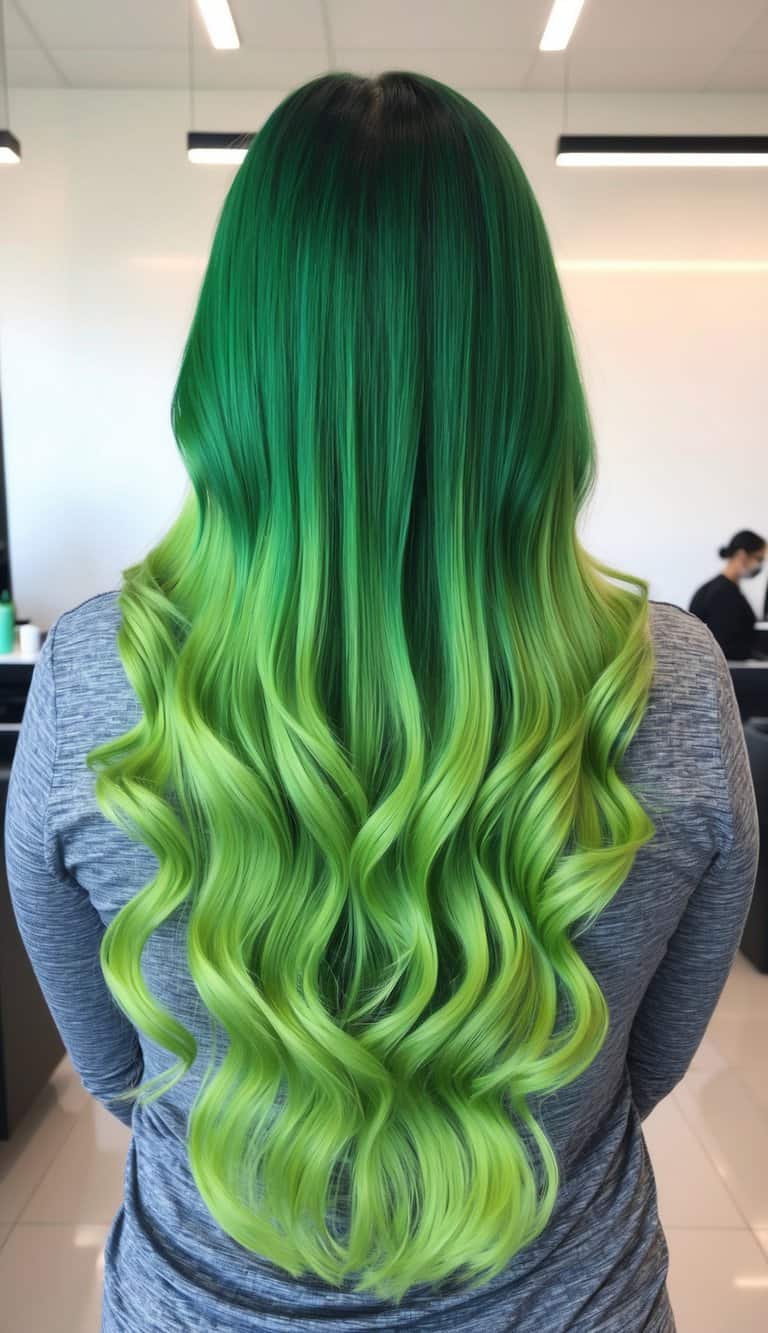
Forest green is the color of deep woodland — a rich, dark green with significant brown and earth undertones that grounds it firmly in the natural world rather than the fashion color spectrum. Forest green in a fade ombre creates a transition from a very dark (almost black or deep brown) root through progressively lighter and more clearly forest green toward the ends, with the fade technique creating a seamless, organic-feeling gradient. The forest green destination is one of the most wearable and naturalistic of the vivid green options — its depth and earthiness make it readable as a sophisticated color choice rather than a purely fashion-forward one.
Best for: Dark brunette and black hair where forest green is a natural-seeming progression from the very dark root. All skin tones — forest green’s earthy depth is broadly flattering. Those who want a green ombre that reads as rich and naturalistic rather than electric and vivid.
Styling tip: Straight or smoothly waved styling best showcases the forest green fade’s depth and the seamlessness of the fade technique — the color’s naturalistic quality reads most elegantly on hair that also has a controlled, intentional quality.
11. Apple Tinge

Apple tinge brings the fresh, crisp quality of a green apple into the ombre — the specific green of a Granny Smith apple has a lightness, brightness, and slight yellowness that distinguishes it from the heavier, earthier greens in the collection. A tinge application means this apple green appears as a subtle, barely-there coloring rather than a full saturation — as if the hair has been washed in green apple juice and retained just a suggestion of the color. The tinge quality makes this one of the most gentle and approachable green options, suitable for those who want to try green without committing to a vivid, unmistakably-colored look.
Best for: Those making their first foray into fashion color who want a gentle, subtle green rather than a full vivid statement. Light to medium blonde bases where the apple tinge appears most clearly at low saturation. Those who want a fresh, spring-like color that reads as a light enhancement rather than a dramatic change.
Color tip: An apple tinge is created through a very diluted green toner applied over a lightened base — the dilution is what creates the “tinge” rather than full saturation. Mix the green toner with a clear conditioner at a 1:3 ratio for the most delicate tinge effect.
12. Mint Frosted Tips
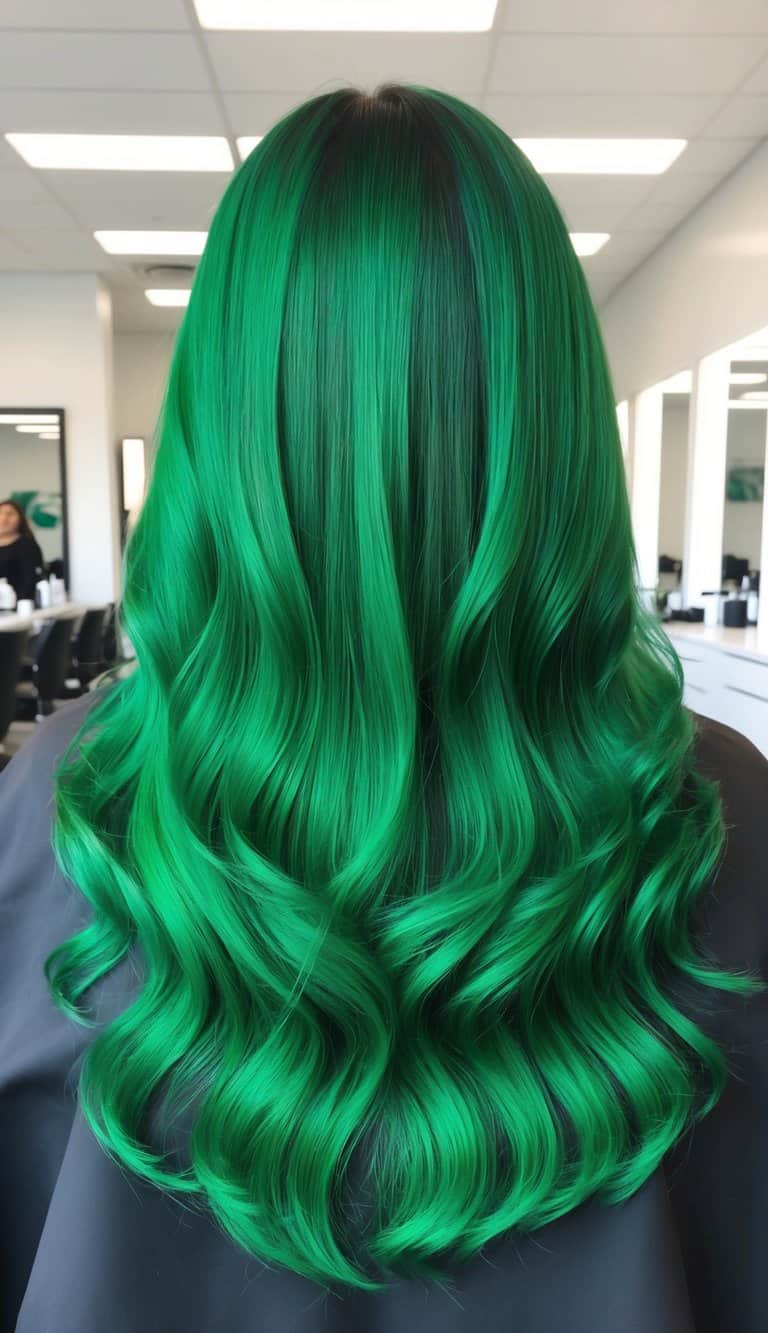
Mint is the softest, palest, and most delicate of all the green family’s members — a near-pastel that reads as green-adjacent without ever being saturated or vivid. Frosted tips — concentrated specifically at the very ends of the hair — give the mint color a crisp, defined presence that contrasts with the darker or natural color of the lengths above. The frosted quality suggests a precise, edge-concentrated application of the pale mint rather than a blended gradient, creating a more graphic color moment at the tips than the gradual transition of a standard ombre. Mint frosted tips are fresh, clean, and unexpectedly beautiful — one of the most accessible and wearable green ombre options.
Best for: Light to medium blonde bases where mint reads at its most delicate and pure. Cool skin tones where the cool green of mint is most complementary. Those who want a fashion color element that’s noticeable without being overwhelming. Most hair lengths.
Color tip: A mint toner (a pale, slightly cool green formula with white added) applied over a level 9–10 base at the tips only creates the most authentic frosted mint quality — avoid more saturated greens, which will read as vivid rather than the specific soft mintiness this look requires.
13. Emerald Beauty

A second approach to emerald green in the collection, emerald beauty emphasizes the beauty aspect — the way emerald green, when perfectly formulated and applied, creates hair color of genuine aesthetic impact. The beauty quality here refers to the specific luminosity and depth that well-executed emerald green achieves: the color appears to have an inner light, a jewel-like glow that catches and returns light in a way that flat or matte fashion colors do not. Emerald at its most beautiful is a color that people have to look at twice, not because it’s shocking but because it’s genuinely lovely in a way that other colors rarely achieve.
Best for: Those who want a green ombre that reads as beautiful and considered rather than simply bold. All skin tones — the blue-green balance of emerald works surprisingly well across diverse complexions. Long hair where the full emerald green can develop at the lengths with visible impact.
Styling tip: A shine-enhancing serum applied to the dry lengths amplifies emerald green’s natural luminosity — the smoother the hair cuticle, the more beautifully the jewel-toned green reflects light.
14. Earthy Allure

Earthy allure is one of the most naturalistic green ombre interpretations — the earthy quality means the green has significant brown, gold, and earth undertones that ground it in the natural world. This is not the green of leaves alone but of the whole forest floor: green leaves plus brown earth plus golden light filtering through, creating a multidimensional color that reads as part of a natural ecosystem rather than a fashion statement. The allure is the unexpected beauty of this earth-green combination — the way it catches warmth, the way it reads as natural yet still clearly, beautifully colored.
Best for: Those who want a green ombre that feels organic, warm, and naturalistic. Warm and golden skin tones where the brown-green combination reads most harmoniously. Dark brunette bases where the earthy green develops naturally from the warm dark base.
Color tip: Earthy green is created by mixing green with a warm brown toner — the specific ratio determines whether the result reads as more green (more green formula) or more brown (more brown formula). For the truest earthy allure quality, the result should read as “a green that makes sense” rather than a clearly artificial color.
15. Shamrock Shimmer

Shamrock green is the bright, pure, unmistakably vivid green of the Irish clover — no blue, no yellow, no earth or muted quality, just the most simply and perfectly green green available. The shimmer quality describes the light-catching finish of a well-executed shamrock green color, with the specific vibrancy of the tone creating a hair color that appears to emit its own green light. In an ombre, the shamrock shimmer typically appears at the lighter sections and ends, creating vivid flashes of pure green that catch the eye with immediate, simple, joyful impact. This is the green ombre for those who love the uncomplicated boldness of simply brilliant color.
Best for: Those who want pure, uncomplicated green without any blue, yellow, or muted quality. Dark to medium bases where the bright shamrock green creates the most vivid contrast. Most skin tones. Those who want their color to celebrate green most purely and directly.
Color tip: A pure green formula without any additional tonal modifier creates the most authentic shamrock quality — avoid adding blue (which creates teal), yellow (which creates lime), or gray (which creates muted sage).
16. Fern Fusion

Fern green is the specific medium green of fern fronds — lighter and more yellow-influenced than forest green but darker and more complex than lime or apple green. Fern sits in the natural middle of the green spectrum, warm enough to read as organic and plant-inspired but vivid enough to be clearly a fashion color rather than a subtle enhancement. The fusion quality describes how fern green blends with the natural hair color in the ombre: rather than appearing as a distinct, separate color zone, the fern green fuses with the transitioning root tones to create a color that reads as a continuous, flowing part of the overall hair. This seamless fusion is the ombre at its most technically accomplished.
Best for: Natural brunettes and those with medium brown bases where fern green fuses naturally with the warm undertones of the base color. Warm skin tones where the yellow quality of fern green reads most naturally. Those who want a botanically-inspired green with genuine depth and warmth.
Color tip: Fern green sits at the specific intersection of warm and pure green — a formula that’s slightly more yellow-influenced than a pure green but not so yellow that it reads as lime creates the most authentic fern quality.
17. Fresh Flair

Fresh flair describes a green ombre approach that prioritizes the quality of freshness — a vivid, clean, and immediately energizing green that makes the hair appear newly alive and vibrantly colored. The fresh quality in green hair color comes from the green being clean and pure rather than muted or mixed with earth tones, and the flair adds the personal expressiveness and style confidence that makes the color most impactful. A fresh flair green ombre reads as genuinely joyful and energetic, the color equivalent of opening a window to a garden in spring. This is the uplifting, optimistic green of new growth and beginning.
Best for: Those who want their hair to communicate energy, optimism, and vitality. Warm to neutral skin tones where a vivid, warm-leaning green creates the most energizing look. Most hair lengths and textures.
Styling tip: Bouncy, full styling — blow-dried for volume, with loose waves or curls — amplifies the fresh, energetic quality of this color. Flat, sleek styling can make vivid colors look stark; movement and volume make them look alive.
18. Green Tea Tips

Green tea is one of the most subtle and sophisticated green color references available — the specific pale, slightly warm, yellow-green of brewed green tea has a quality that’s more suggestion than statement, a color that appears as almost-green, a whisper of the green family rather than a full declaration. Applied at the tips, green tea creates a color that many people will notice and appreciate without immediately identifying as “green hair” — the subtlety is its charm. Green tea tips are the perfect introduction to green ombre for those who want to explore the green color space without the commitment of a more vivid option.
Best for: Those who want a barely-there green that reads as sophisticated rather than obviously fashion-colored. Light to medium blonde bases where the pale green tea reads most clearly. Warm and neutral skin tones where the slight warmth of green tea is most harmonious. Professional environments where vivid fashion colors may be inappropriate.
Color tip: A heavily diluted warm-green formula — or a very pale olive toner — creates the green tea quality. The color should be so subtle that it reads as “something interesting” rather than immediately identifiable as green hair color.
19. Fresh Cut Fade

Fresh cut fade describes the specific quality of newly cut grass — the bright, living green of a lawn immediately after mowing, with all the vivid chlorophyll quality of newly exposed plant cells. This specific green has a freshness and immediacy that dried or aged greens lack, and in hair color it translates as a vivid, living green that reads as genuinely alive. In a fade ombre, the fresh-cut green develops gradually from the root downward, the fade technique creating a smooth transition that allows the vivid green to appear organically rather than suddenly. This is one of the more energetic and vivid interpretations in the green ombre collection.
Best for: Dark bases where the vivid fresh-cut green creates maximum contrast. Those who want a vivid green with a natural, plant-inspired reference. Most skin tones, with the green’s natural reference making it broadly wearable despite its vividness.
Color tip: A pure green formula without brown, blue, or excessive yellow creates the specific fresh-cut quality — the color should read as purely, vividly green without additional tonal complexity.
20. Teal Ends

Teal is the color at the exact intersection of green and blue — equally both, belonging fully to neither, and creating a color of extraordinary richness and complexity. Teal at the ends of an ombre creates a sophisticated, deeply-colored destination that reads as more complex and multidimensional than a pure green or pure blue — the viewer’s eye sees both simultaneously, creating a visual interest that single-family colors cannot achieve. Teal’s dual nature means it works beautifully as a bridge between green and blue, and teal ends can be the starting point for a full mermaid or oceanic ombre by adding additional tones above and below.
Best for: Those who love the intersection of green and blue and don’t want to choose between them. Cool skin tones where teal’s blue quality is most complementary. Dark to medium bases where teal creates a rich, jewel-toned destination.
Color tip: True teal requires a perfectly balanced green-blue formula — too much blue creates blue-green, too much green creates green-blue. The 50-50 balance is what creates the specific teal quality that reads as genuinely halfway between the two families.
21. Lime Sweep

Lime sweep describes a broad, sweeping application of lime green color that moves across large sections of the hair in one directional sweep — this is not a precise, contained color application but rather a bold, confident sweep of lime from one area to another, creating a dramatic color moment that reads as artistic and intentional. The sweeping quality creates an asymmetric, dynamic color distribution that changes as the hair moves — from one angle, the lime sweep dominates; from another, the base color is more visible. The lime color’s specific citrus brightness makes this an immediately energizing look with strong visual impact.
Best for: Those with a bold, creative aesthetic who want their color to read as artistic and directional. Most base colors. Those comfortable with asymmetrical, dynamic color placement that creates different effects from different angles.
Color tip: Freehand application with a balayage brush creates the most organic, sweeping quality — a formulaic or foil application creates too precise and even a placement for the sweeping, directional quality this look requires.
22. Pistachio Pop
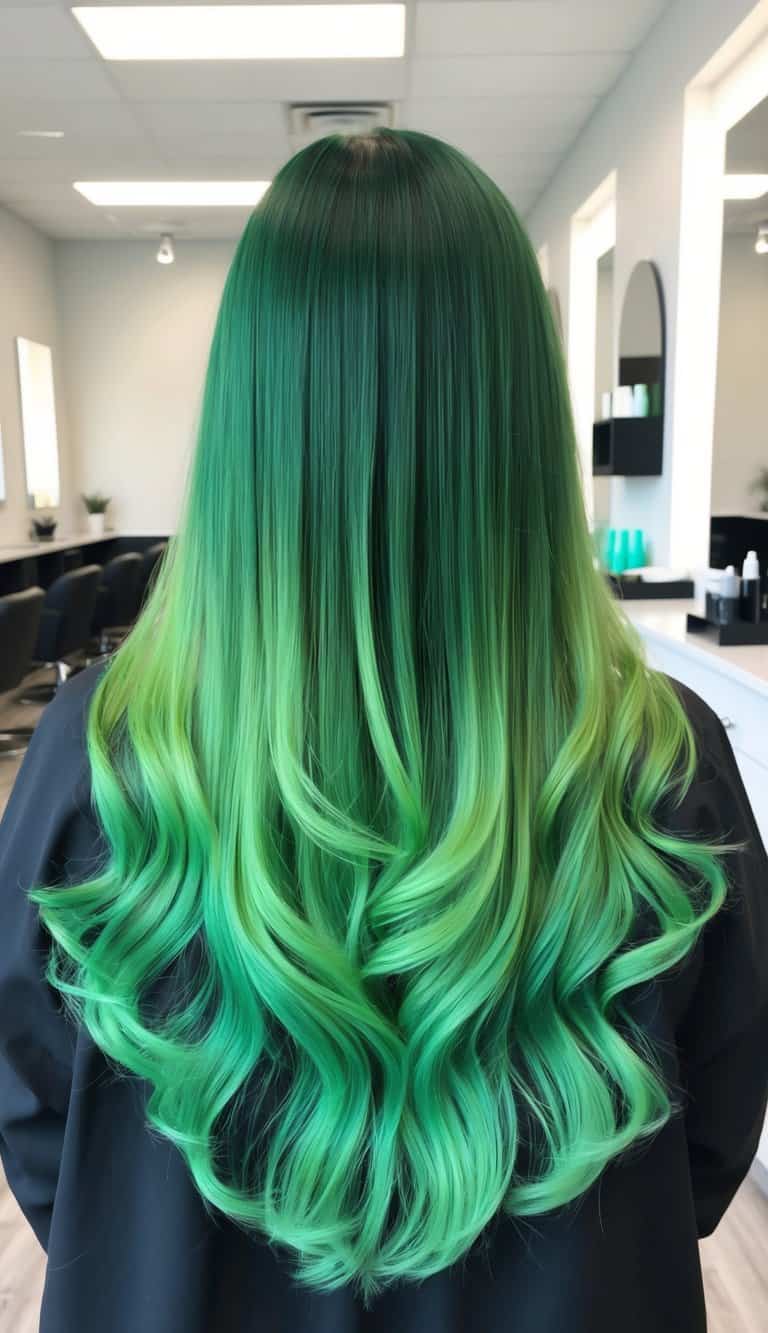
Pistachio is one of the most delicate and inviting green tones in the collection — the specific pale, slightly warm, dusty green of pistachio nuts has a gentle, almost edible quality that reads as naturally beautiful rather than artificially vivid. The pop in the name describes the way pistachio appears against darker hair: a gentle but clear color pop that immediately enriches the overall look without overwhelming it. Pistachio pop sits in the territory between sage and mint, warmer than mint but cooler than sage, creating a green that’s uniquely its own rather than an obvious reference to a more common shade.
Best for: Those who want a soft, sophisticated green with gentle warmth and a slightly dusty quality. Light to medium blonde and light brunette bases where pistachio reads most clearly and prettily. Neutral to warm skin tones where the soft, warm-leaning green is most harmonious.
Color tip: Pistachio is created from a pale green formula with slight warm (beige or golden) undertones added — the warmth prevents the pistachio from reading as cool mint and creates the specific warm-green, nutty quality of true pistachio color.
23. Green Apple Gradient

Green apple gradient takes the fresh, tart quality of green apple color and applies it through a gradual gradient technique — the color develops from a natural or dark root through progressively brighter and more clearly green-apple toward the ends, the gradient creating a smooth and natural-feeling color development. Green apple’s specific quality — the combination of brightness, freshness, and slight tartness suggested by the fruit — creates a hair color that reads as vibrantly alive and energetic. The gradient ensures this energy is introduced gradually rather than suddenly, making the green apple color most accessible even for those who might find a sudden, full vivid application daunting.
Best for: Those who want the brightness and energy of a vivid green but prefer it introduced through a gradual gradient. Most base colors. Most skin tones — green apple’s clean, bright quality reads well across diverse complexions.
Color tip: Green apple sits between lime (more yellow) and standard green (more pure) — a formula that’s vivid green with a slight yellow undertone (but not so much that it reads as lime) creates the most authentic green apple quality.
24. Rainforest Radiance
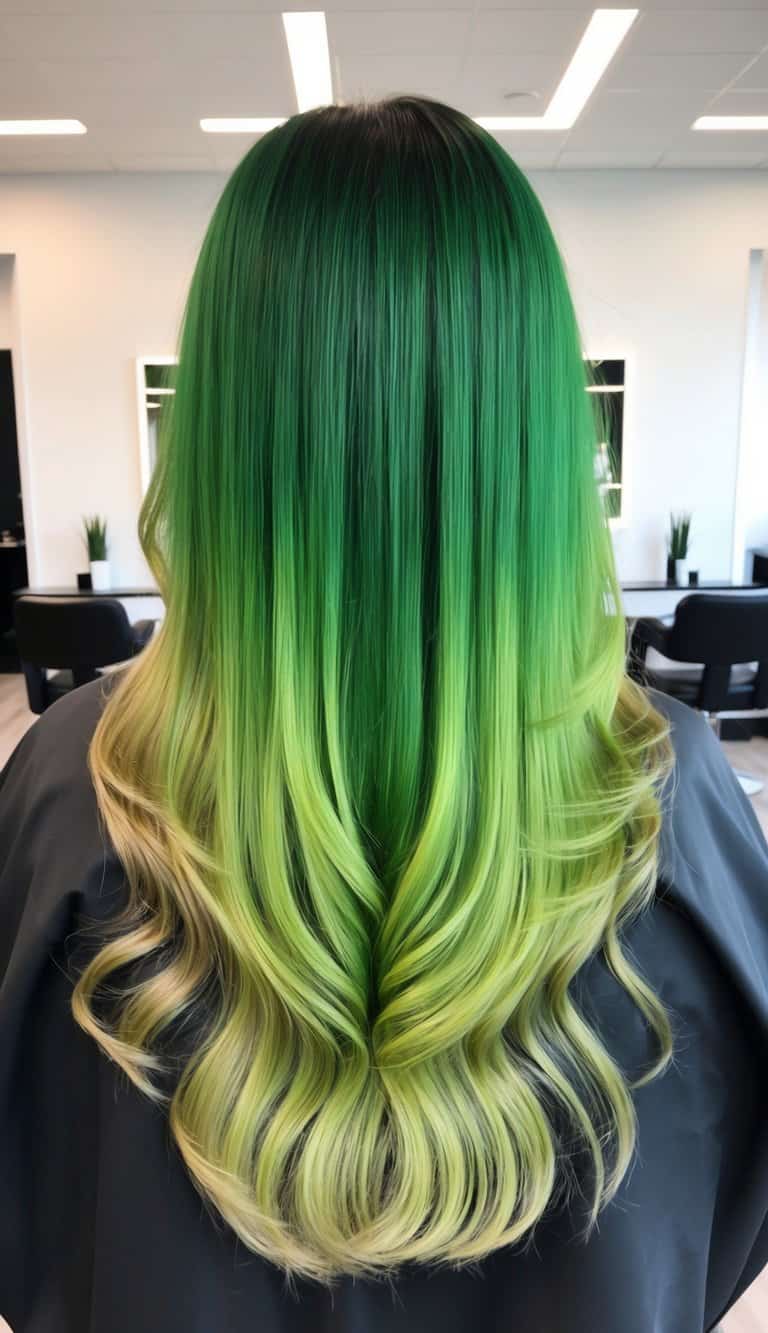
Rainforest radiance draws from the specific quality of tropical green — the extraordinary depth and luminosity of rainforest foliage, where the combination of high moisture and intense sunlight creates greens of almost supernatural vividness. Rainforest green in hair has a depth and saturation that seems almost three-dimensional, the color appearing to have layers of depth within it rather than lying flat on the hair surface. The radiance quality describes the way this deep, moist green catches light — not with the flash of a vivid or neon color but with a deep, sustained glow that reads as richly beautiful. This is one of the most complex and luxurious greens in the collection.
Best for: Those who want a deeply saturated, luxuriously complex green that reads as genuinely extraordinary. Long hair where the rainforest radiance has sufficient length to develop its full depth and complexity. Most skin tones — the deep, complex green works across a wide range of complexions.
Color tip: A multi-tonal green application — using both darker and lighter green formulas in different sections rather than a single formula throughout — creates the depth and complexity that makes rainforest radiance look genuinely multidimensional.
25. Garden Glint
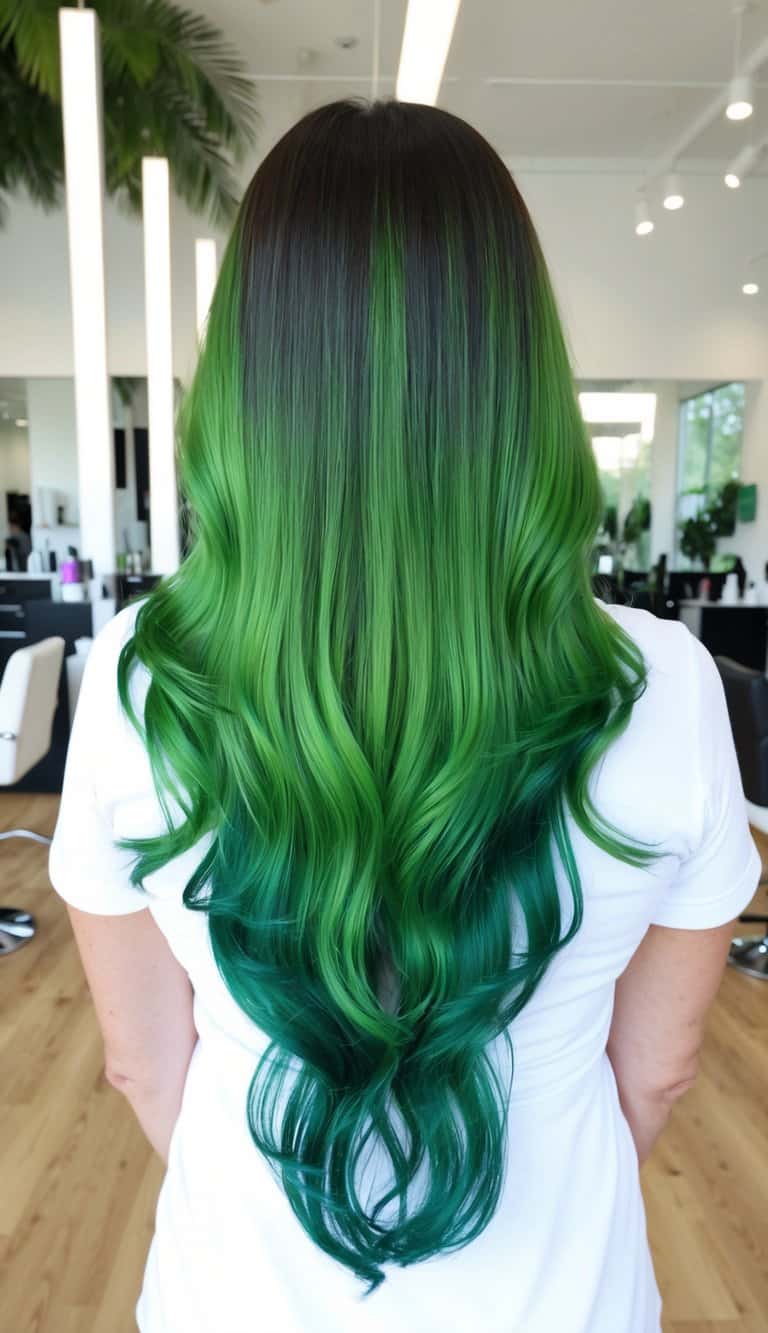
Garden glint describes a green ombre where the color appears in strategic, light-catching moments rather than as a continuous presence throughout the hair — the glint quality means the green catches the eye in specific lighting conditions and from specific angles, appearing and disappearing as the hair moves and the light changes. This creates a more interactive, dynamic color experience than a fully saturated color application: the garden glint green is a color you discover rather than immediately see, a color that rewards closer observation with moments of beautiful color revelation. The garden reference suggests the green is naturalistic and soft rather than electric or vivid.
Best for: Those who want a subtle, strategically placed green that reads as sophisticated and somewhat understated. Light to medium bases where a gentle green glint is visible but not overwhelming. Those in professional or semi-formal contexts where vivid fashion colors are limited.
Color tip: Apply the garden glint green specifically to the outermost, lightest-catching sections of the hair — the surface layers, the face-framing pieces — rather than throughout the entire length. The strategic placement creates the glinting, reveal quality that defines this look.
26. Neon Green and Brown

Neon green and brown is one of the most unexpected and striking combinations in the green ombre collection — the pairing of the most vivid, electric green with the most grounded, earthiest brown creates a high-contrast, nature-meets-technology aesthetic that reads as genuinely original. The brown provides the grounding element that makes the neon green acceptable and wearable in everyday contexts, while the neon green provides the energy and visual impact that makes the brown more interesting. The contrast between the earthy and the electric is the look’s defining characteristic — neither color is as interesting alone as they are together.
Best for: Those with a bold, creative aesthetic who enjoy unexpected color pairings. Dark brunette bases where the brown is already present and the neon green is added through targeted placement at the ends or as highlights. Most skin tones — the brown provides the grounding element that makes the neon more broadly wearable.
Color tip: Apply the neon green specifically where the brown is lightest — the ends, the balayage sections, or the outermost strands — allowing the dark brown to remain dark and the contrast to read as maximum. Blending the two together reduces the impact; keeping them clearly separated maximizes it.
27. Sage Green Ombre
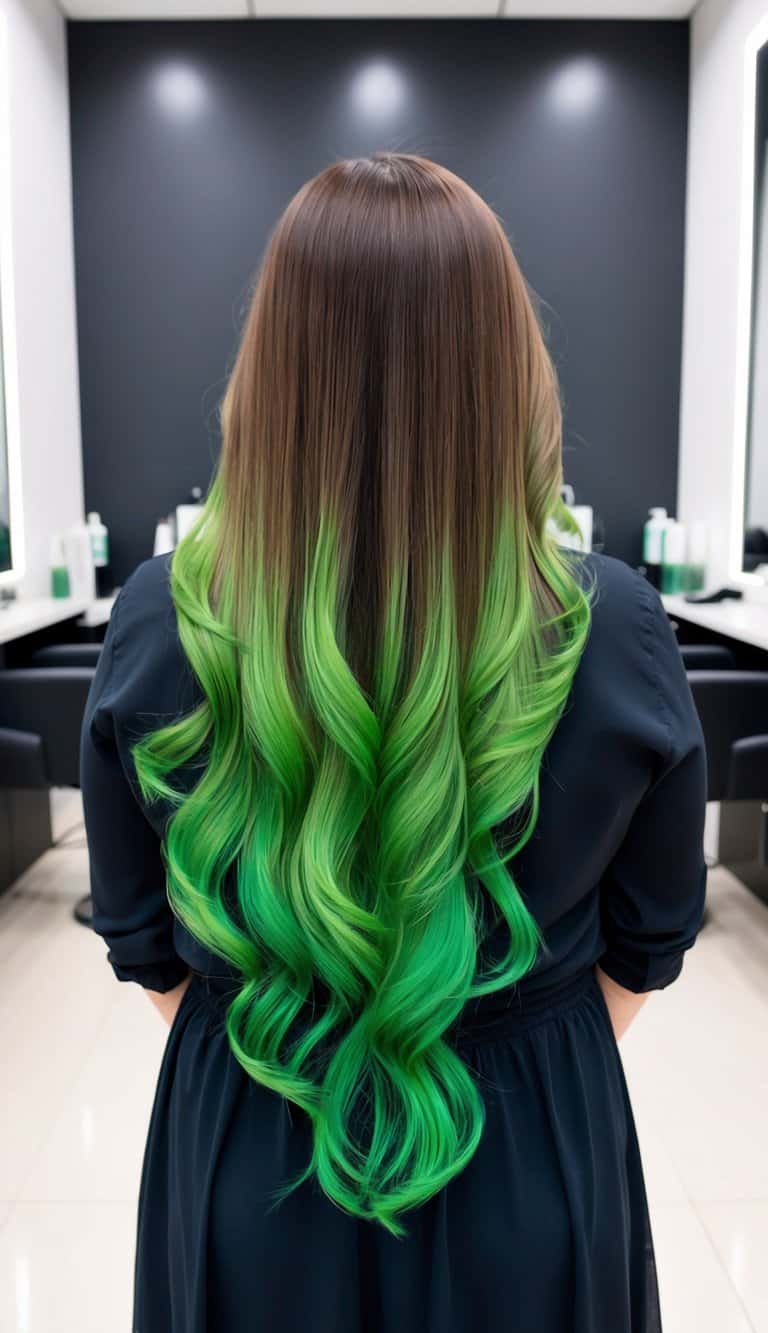
Sage green closes the collection with one of the most wearable and broadly appealing green tones available — sage is a muted, gray-green with slight silver undertones that reads as simultaneously natural and fashionable, earthy and refined. Named after the culinary herb whose distinctive gray-green leaves have the same specific muted quality, sage green in hair has a sophisticated, almost timeless quality that distinguishes it from the more vivid or fashion-driven greens in the collection. In an ombre, sage green creates a gentle, naturalistic transition from a darker root to the warm, slightly dusty green of sage — a color that many people find surprisingly flattering and naturally beautiful.
Best for: The widest range of clients in the green ombre collection — sage’s muted, sophisticated quality means it’s accessible even to those who wouldn’t consider themselves “fashion color” people. Neutral to cool skin tones where sage’s gray undertones create a particularly elegant, flattering match. Most hair lengths and textures.
Color tip: Sage is created from a green formula with significant ash (gray) added — the ash counteracts the brightness of the green and creates the specific muted, gray-green quality of sage herb. The result should read as “cool, muted green” rather than “vivid green with gray in it.”
How to Choose Your Green Ombre Shade
- Consider your base color: The darker your natural hair, the more lightening will be required for vivid greens. Dark hair can achieve forest green, mossy green, and teal with less preparation; lighter greens (lime, mint, neon) require more lightening regardless of base color.
- Match the intensity to your lifestyle: Vivid, neon, and electric greens require more maintenance and may be less appropriate for professional environments. Muted greens (sage, mossy, earthy allure, green tea tips) are more versatile and require less frequent refreshing.
- Think about your skin tone: Cool greens (teal, emerald, jade) suit cool skin tones most. Warm greens (forest green, earthy allure, fern) suit warm skin tones. Muted greens (sage, mossy) suit both. Vivid greens work across most skin tones because their intensity creates its own visual context.
- Plan for maintenance: All green hair colors fade, but the rate varies significantly. Vivid and neon greens fade most quickly (4–6 weeks); deep jewel tones like emerald and forest green last longer (8–12 weeks); muted and subtle greens (sage, green tea tips, apple tinge) have the most graceful, attractive fade qualities.
Frequently Asked Questions
Does green hair fade attractively?
Green hair’s fade behavior depends significantly on the specific tone: vivid and neon greens tend to fade to a washed-out, blue-green-gray that requires frequent refreshing to maintain; muted and sage greens often fade very attractively, moving through progressively lighter, more golden green tones toward a subtle warm-green that reads as naturally beautiful; teal fades toward a soft blue-green that many find prettier than the original color.
Will green hair damage my hair?
Green hair color itself doesn’t damage hair — the lightening required to achieve lighter green tones is where the potential damage occurs. The more lightening required (neon green, lime, mint require the most), the more structurally intensive the preparation. Bond-protecting treatments used throughout the lightening process significantly reduce potential damage.
Can I remove green hair color?
Green is one of the more difficult fashion colors to remove — its blue and yellow pigments can create unexpected results when using color remover or attempting to cover with a different color. Orange-based formulas can neutralize green (orange is opposite green on the color wheel), but professional assistance is strongly recommended for green color removal to avoid unexpected outcomes.
Final Thoughts
Green ombre hair is the color choice for those who find their inspiration in the natural world — in forests, gardens, oceans, and stone — and want to carry that inspiration visually. The 27 ideas in this collection demonstrate that green, in all its infinite variations, is one of the richest and most expressive color families available in hair color. From the barely-there suggestion of green tea tips to the full electric declaration of neon green ends, from the sophisticated depth of emerald to the organic warmth of mossy green, there is a green ombre here for every green-lover and every level of color courage.