25 Platinum Blonde Ombre Hair Ideas: Cool & Striking Looks
Platinum blonde ombre is one of the most striking and technically demanding hair color transformations available. It combines the cool, almost white luminosity of platinum blonde with the gradual gradient effect of ombre coloring, creating a look that shifts from a darker, warmer root into an increasingly pale, icy blonde toward the ends. The result is simultaneously modern and timeless — a cool, high-contrast color that works on every hair length and suits a surprising range of skin tones when executed with the right root depth and gradient placement.
These 25 platinum blonde ombre hair ideas span the full creative range of the technique — from the barely-there golden platinum sombre to the dramatic charcoal-to-platinum transformation.
25 Platinum Blonde Ombre Hair Ideas
1. Frosty White to Warm Blonde Fade
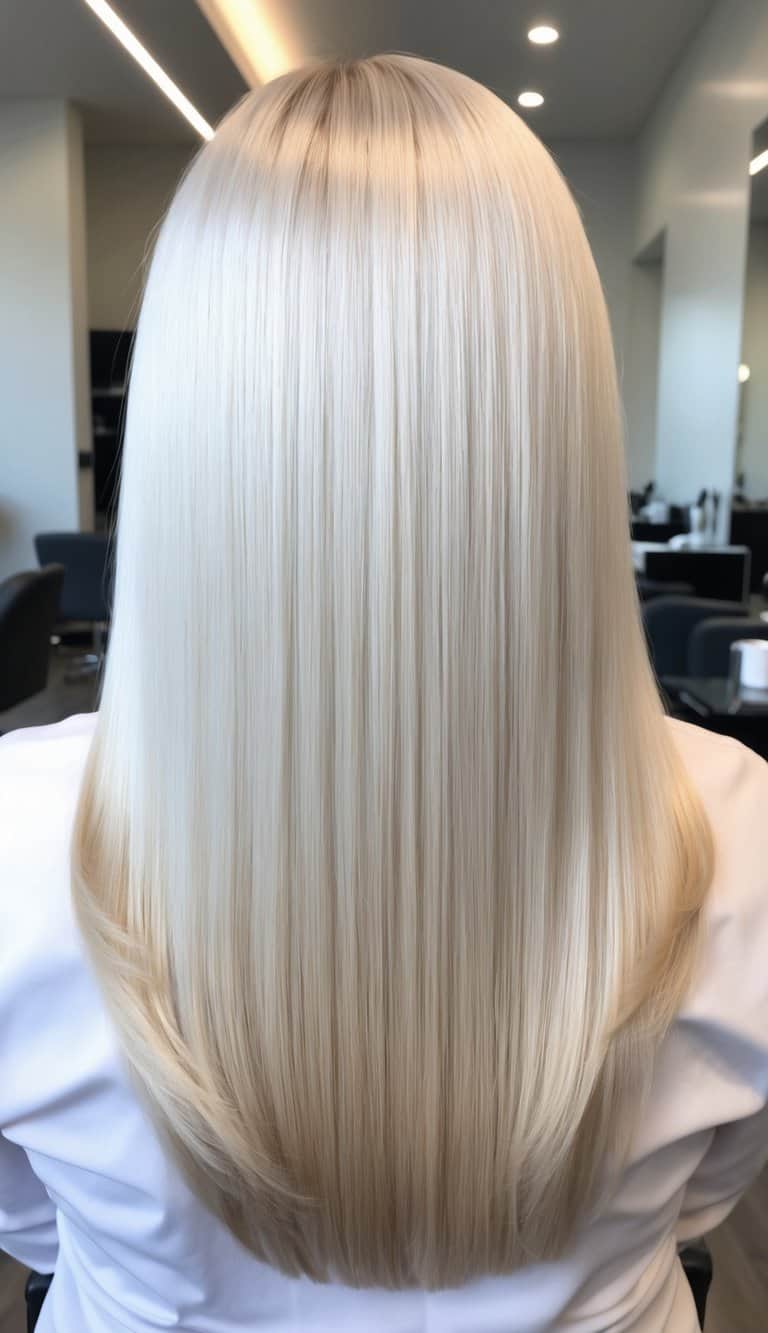
The frosty white to warm blonde fade inverts the typical platinum ombre direction — instead of warming at the roots and cooling at the ends, this interpretation places the coolest, brightest white at the ends and allows a subtle warmth to emerge toward the roots. The effect is unusual and striking: the tips appear almost white while the roots carry a soft, warm blonde undertone that makes the overall look feel more natural than standard platinum ombre. The transition from warmth to frost creates a gradient that mimics the way sunlight hits bleached hair from above.
Best for: Fair to medium skin tones with cool or neutral undertones. Medium to long hair.
Color tip: Achieve the warm root by applying a soft golden or beige toner at the roots and a clear or violet-tinted toner at the ends — the contrast between the two toners creates the warm-to-frost fade.
2. Cool Platinum Ombre

Cool platinum ombre is the purest expression of the look — the coolest, most neutral blonde possible applied in a classic gradient from darker roots to bright platinum ends. The cool quality comes from a precise violet or blue toner applied over a pale blonde base, eliminating all warmth and creating the distinctly icy, metallic tone that separates true platinum from simply bleached blonde. This is the reference look against which all other platinum ombre variations are measured.
Best for: Cool and neutral skin tones. All hair lengths — the clean, classic quality of cool platinum suits every cut.
Maintenance tip: Use a purple shampoo every second or third wash and schedule a gloss appointment every 6–8 weeks to maintain the cool, neutral quality as the toner fades.
3. Brown to Platinum Blonde
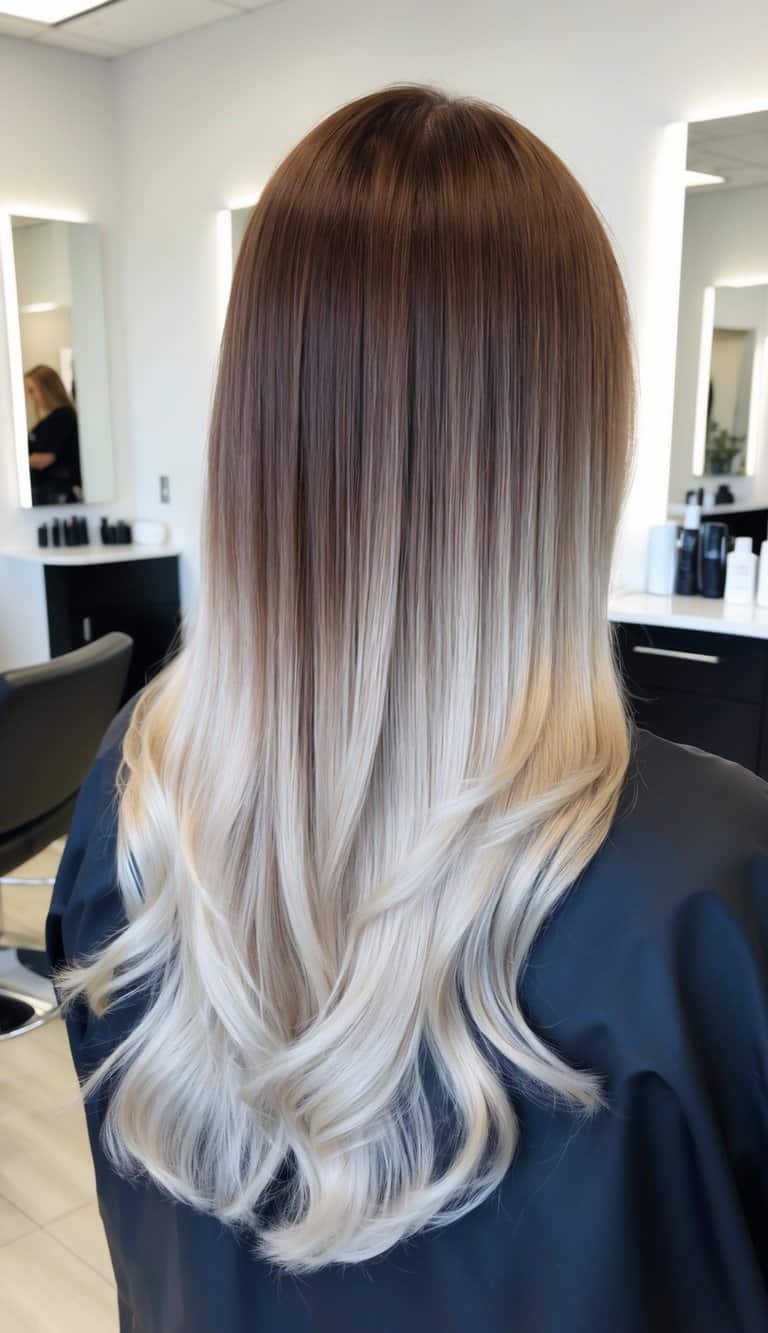
Brown to platinum blonde is the most dramatic and technically challenging platinum ombre variation — taking hair from natural medium to dark brown all the way to true platinum requires multiple lightening sessions and careful, staged processing to avoid severe damage. The visual impact of the finished look is exceptional: the deep, warm brown root creates maximum contrast against the cool platinum ends, making the gradient appear even more dramatic than it would from a lighter starting point. This is the version for those who want the most striking possible platinum ombre result.
Best for: Those willing to commit to a multi-session salon process. All skin tones — the warm brown root is universally flattering, and the platinum ends create a sophisticated contrast regardless of complexion.
Color tip: Plan for at least 2–3 salon sessions 4–6 weeks apart for the safest result. Deep conditioning treatments between appointments are essential for maintaining hair integrity throughout the process.
4. Soft Grunge Platinum Ombre

Soft grunge platinum ombre takes the deliberate, slightly rough-edged aesthetic of grunge style and softens it into a wearable, fashion-forward hair color. The roots are kept notably darker — not just shadow-rooted but genuinely dark, even charcoal-tinted — while the platinum ends retain their cool, bright quality. The transition between the dark roots and platinum ends is intentionally less blended than standard ombre, creating a more visible boundary that references the bold, unapologetic contrast of grunge fashion.
Best for: Those with an alternative or fashion-forward aesthetic. Works on all skin tones — the contrast-heavy nature of the look reads as intentional on any complexion.
Styling tip: Tousled, textured styling suits the soft grunge aesthetic far better than polished, smooth blowouts. Apply a texturizing spray or sea salt spray to enhance the deliberately undone quality of the look.
5. Chic Frosted Streaks
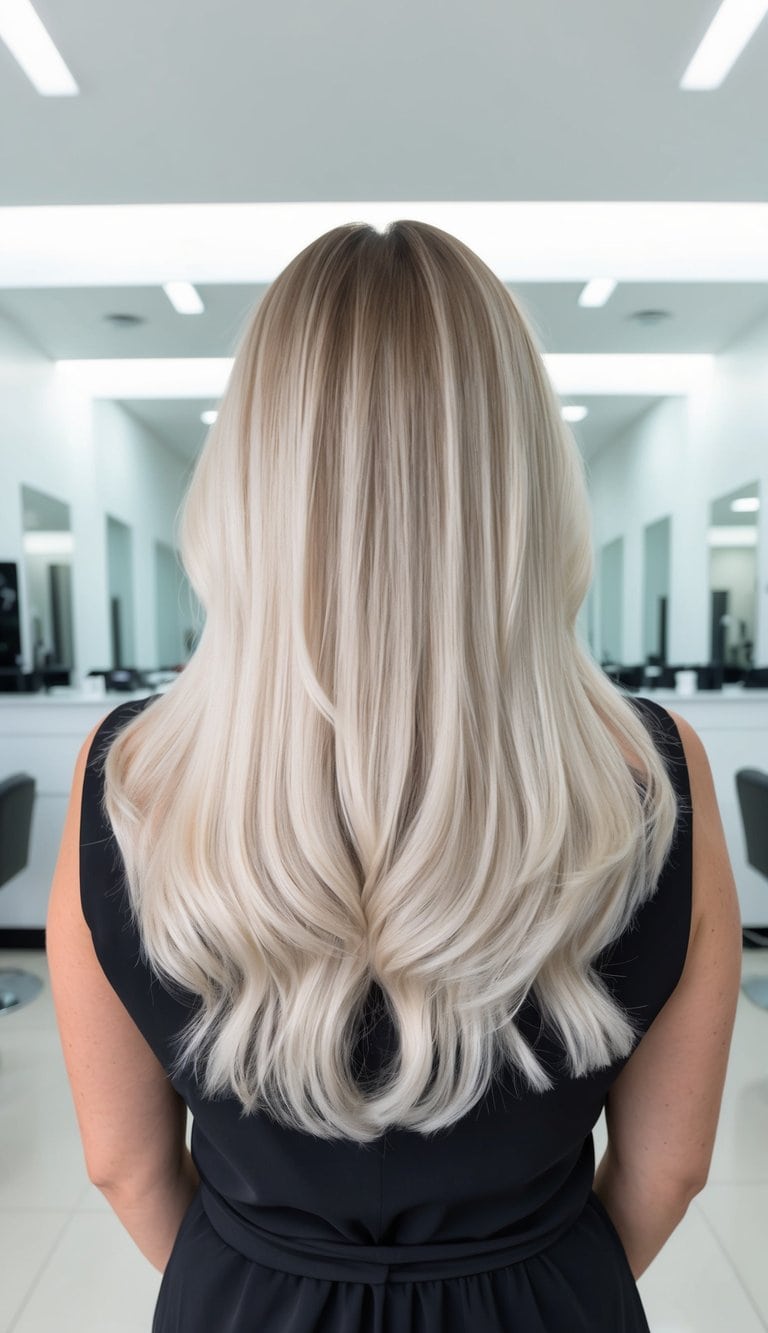
Chic frosted streaks use platinum blonde as a deliberate highlight color rather than a full ombre gradient — the platinum appears in broad, face-framing streaks placed throughout the hair rather than as an even transition from root to tip. The frosted quality comes from the cool, bright nature of the platinum tone and from the placement: the streaks are positioned to catch the light and create the impression of frost on the hair’s surface. This is a lower-commitment approach to platinum blonde that delivers significant visual impact without the full lightening required for all-over ombre.
Best for: All skin tones. Those who want platinum’s visual impact without fully committing to all-over lightening.
Maintenance tip: Streaks require less frequent toning than full ombre because the surrounding natural color provides visual context — a slightly warmer streak blends better than slightly warm all-over ends would.
6. Dewy Dusty Blonde
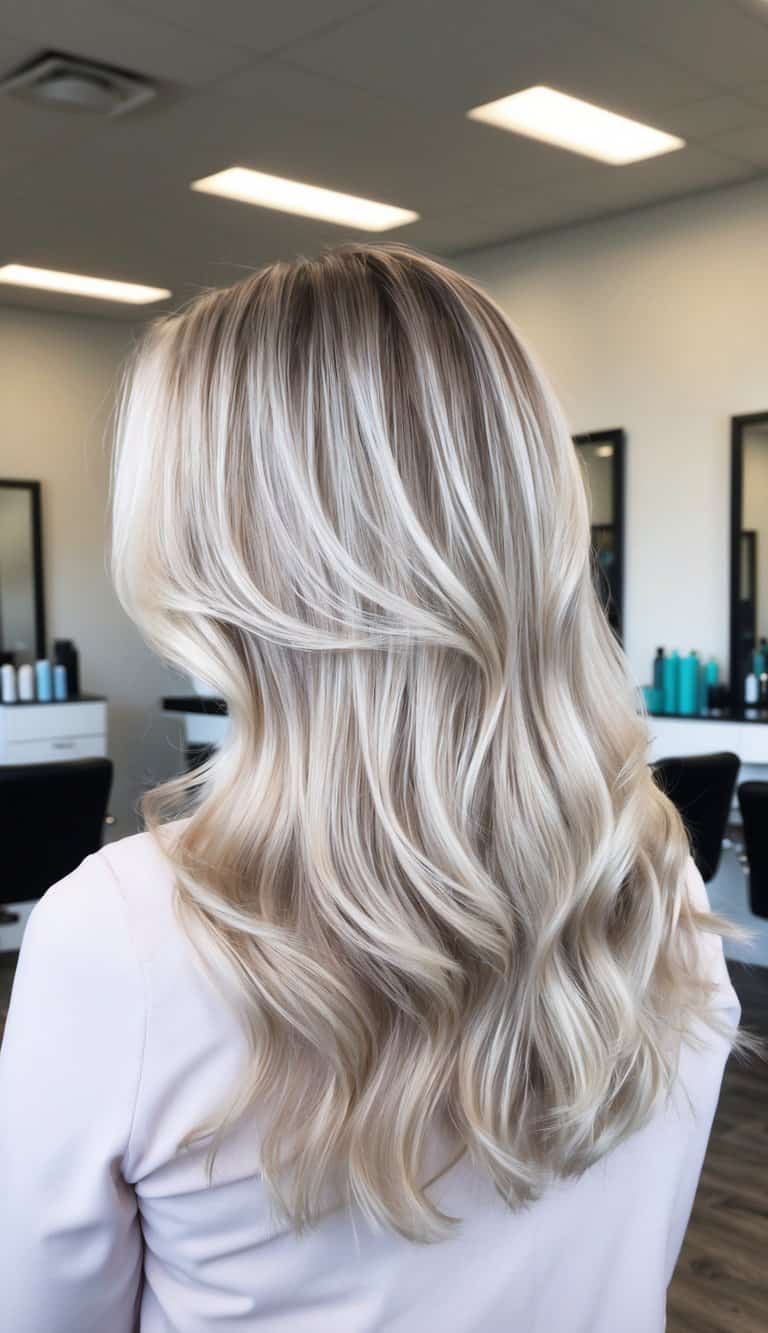
Dewy dusty blonde sits at the edge of the platinum family — the dusty quality comes from a slightly muted, desaturated interpretation of platinum blonde that reads as softer and more diffused than the bright, sharp cool of standard platinum. The dewy finish comes from a high-shine gloss treatment applied over the color, adding a fresh, luminous quality that contrasts pleasingly with the muted, dusty tone. This is the most gentle and low-key interpretation of platinum ombre, suitable for those who want the cooler, lighter end of the blonde spectrum without full platinum commitment.
Best for: Fair and medium skin tones. Those who prefer a softer, more understated approach to platinum blonde.
Color tip: A beige-blonde toner (rather than violet) over a level 9 base creates the dusty quality — the slight warmth in the beige toner is what distinguishes dusty from standard cool platinum.
7. Silvery Satin Finish

Silvery satin finish blends the cooler, more metallic quality of silver with the bright, near-white tone of platinum, creating a gradient that reads as both metallic and luminous. The satin finish describes both the color quality (mid-sheen, not matte and not mirror-bright) and the surface texture it creates when combined with a medium-shine finishing treatment. Applied as an ombre, silvery satin creates a particularly elegant result — the cool, metallic quality of the silver reads as sophisticated rather than harsh.
Best for: Cool and neutral skin tones. Medium to long hair where the satin quality has room to develop.
Styling tip: A blowout with a paddle brush creates the smooth, satin surface that the color is designed for — texture and waves are better suited to the more casual dewy dusty blonde or frosted streaks looks.
8. Ash Blonde Ombre

Ash blonde ombre is the cooler, slightly darker cousin of platinum ombre — the ash quality comes from the same blue and violet toning process used for platinum, but applied to a lighter blonde base rather than a near-white base. The result is a cool, muted blonde that lacks the brightness of true platinum but retains its coolness and neutrality. As an ombre, ash blonde creates a gradient that’s particularly flattering because it avoids the stark, high-contrast nature of full platinum while delivering the same cool, modern aesthetic.
Best for: Cool and neutral skin tones. Light to medium brown base hair. Those who want a cooler blonde without the intensity of full platinum.
Maintenance tip: Ash tones are among the most maintenance-intensive in the blonde family — the cool pigment fades quickly, revealing the warm undertones of the underlying base. Purple shampoo three times weekly is often necessary to maintain the ash quality.
9. Icy Blonde with Dark Roots

Icy blonde with dark roots is one of the most fashion-forward platinum ombre interpretations — the contrast between the deliberately dark, visible roots and the pale, almost white icy blonde ends is designed to be striking rather than seamless. Unlike shadow root techniques that aim to blend the contrast, this look celebrates the visible boundary between dark and light, treating the root line as a deliberate design element. The icy quality of the blonde ends — cooler and brighter than standard platinum — amplifies the contrast against the dark roots.
Best for: Those who love high-contrast, editorial-style color. Medium to dark base hair. All skin tones.
Maintenance tip: The grow-out of dark roots actually improves this look over time — as the natural roots grow in, they extend the dark section and make the deliberate contrast appear even more intentional.
10. Rooty Platinum Blend

Rooty platinum blend takes the low-maintenance appeal of the shadow root technique and applies it to a platinum ombre context. The roots are kept at their natural depth or slightly darkened, creating a smudged, diffused starting point for the platinum gradient. Unlike the deliberately sharp contrast of icy blonde with dark roots, the rooty platinum blend aims for a seamless, natural-looking connection between the root depth and the platinum ends. The result looks as though the hair naturally lightens toward the ends — intentionally effortless.
Best for: Those who want platinum ombre with minimum maintenance. All skin tones.
Maintenance tip: With proper root blending, salon visits can be extended to every 4–5 months — the intentional root depth means natural regrowth blends into the design rather than appearing as unwanted grow-out.
11. Champagne Blonde Melt

Champagne blonde melt uses a slightly warmer, more golden interpretation of platinum as the target end color — the champagne tone sits between warm golden blonde and cool platinum, creating a gradient that’s bright and light without the stark coolness of true platinum. The melt technique describes the seamless, completely boundary-free transition from root to end — no visible demarcation, no harsh lines, just a continuous flowing gradient from the natural root depth through to the champagne blonde ends. This is the most naturally wearable interpretation of platinum ombre.
Best for: Warm and neutral skin tones. All hair lengths. The warmth of the champagne tone makes this one of the most universally flattering platinum ombre variations.
Color tip: A warm-neutral toner (level 9, beige) over a pale blonde base creates the champagne quality — the slight warmth is what separates champagne from cool platinum.
12. Smoky Blonde Gradient

Smoky blonde gradient adds a hazy, slightly grey-tinted quality to the platinum ombre transition, creating a color that reads as simultaneously cool and dimensional. The smoky effect comes from a grey-blonde toner applied over the mid-lengths — between the natural root and the platinum ends — creating an intermediate tone that makes the gradient feel more complex and layered than a simple two-tone ombre. The smokiness is most visible in the mid-lengths, creating a three-zone gradient: natural root, smoky grey-blonde middle, platinum ends.
Best for: Cool and neutral skin tones. Medium to long hair where the three-zone gradient has room to develop.
Color tip: A grey-blonde or pearl toner applied to the mid-lengths (avoiding the ends, where the platinum toner goes) creates the smoky middle zone that defines this gradient.
13. Snowy Ombre Balayage

Snowy ombre balayage uses the freehand balayage painting technique to apply platinum blonde in a pattern that mimics the way snow settles on hair — heaviest at the top surfaces and ends, with less lightening in the inner layers and underneath sections. The snowy quality comes from the near-white brightness of the platinum sections and from the irregular, surface-heavy placement that creates the impression of frost or snow. In natural light, the lighter top sections appear to glow against the darker inner layers visible at the mid-lengths.
Best for: All hair types and lengths. All skin tones — the variation in placement means not all sections go fully platinum, making this more adaptable to different complexions than uniform platinum ombre.
Styling tip: Volume and texture enhance the snowy balayage effect — the contrast between lighter surface sections and darker inner layers is most visible on voluminous, well-textured hair.
14. Vanilla Ice Balayage

Vanilla ice balayage sits between the warmth of vanilla and the coolness of ice — a warm-neutral blonde that’s light enough to approach platinum territory without crossing fully into the cool, metallic zone. The vanilla quality adds a subtle creaminess and warmth to what would otherwise be a cool, stark platinum application, while the ice quality ensures the result is still decidedly light and bright. The balayage application creates natural-looking variation in the placement rather than a uniform gradient.
Best for: Warm and neutral skin tones. Light to medium brown base hair.
Color tip: Achieve vanilla ice by using a warm-beige toner diluted with a small amount of cool ash — the exact ratio of warm to cool determines whether the result reads warmer (more vanilla) or cooler (more ice).
15. Subtle Root Shadow

Subtle root shadow on platinum blonde is a precision maintenance technique as much as a style choice — a very light, diffused darkening at the roots that creates a barely-perceptible shadow effect, reducing the visual contrast between the growing-out natural root and the platinum blonde. The subtlety is key: too much shadow makes the root appear dirty or neglected, while too little defeats the maintenance purpose. This is the technique that makes platinum blonde truly wearable for those who can’t visit the salon every 6 weeks.
Best for: Existing platinum blonde clients looking to reduce maintenance frequency. All skin tones.
Maintenance tip: The root shadow formula is typically mixed specifically to match the client’s natural root color, then applied and immediately smudged into the platinum with a brush or fingers to create the soft, diffused boundary.
16. Golden Platinum Sombre

Golden platinum sombre (subtle ombre) is the softest, most gradual interpretation of platinum ombre in this collection — the gradient is so long and gentle that the color appears almost solid, with the platinum quality only becoming obvious at the very ends. The golden quality introduces a slight warmth to the platinum tone, making the end color a warm-cool platinum rather than strictly cool. The sombre application means the transition from natural root to golden platinum can span the entire length of the hair without any visible blending lines.
Best for: Those who prefer the most natural-looking color enhancement. Warm and neutral skin tones. All hair lengths.
Color tip: For a true sombre effect, the bleach should be applied starting just below the midpoint of the hair and blended upward with a very light hand — the feathering creates the gradual, barely-visible start of the transition.
17. Platinum with Pastel Lowlights

Platinum with pastel lowlights takes the bright, uniform quality of platinum blonde and adds complexity through the introduction of very sheer pastel tones — soft lavender, faint pink, or delicate mint — woven through the platinum sections as lowlights. These pastels are applied so lightly that they read as shadows or depth within the platinum rather than as obvious color additions, creating a multitonal, opalescent quality in the hair. In different lighting conditions, the pastel lowlights reveal themselves in different ways.
Best for: Those who already have platinum blonde hair and want to add dimension without going darker. Fair to medium skin tones.
Color tip: Apply pastel tones as a gloss or direct dye heavily diluted with conditioner (1:4 ratio or more) — at full strength, pastels overpower the platinum and look obviously colored rather than creating the subtle dimensional effect this look requires.
18. Ash Silver Melt

Ash silver melt is one of the most technically sophisticated platinum ombre variations — the color gradient moves from a cool, ashy root through an increasingly silver mid-length to a bright platinum at the ends, with each zone perfectly melted into the next. The ash-silver-platinum progression creates a three-tone cool gradient that reads as remarkably dimensional and complex while remaining entirely within the cool, neutral palette. Each zone transitions seamlessly into the next with no visible boundaries.
Best for: Cool skin tones. Those who want maximum dimension within a cool, silver-platinum palette.
Color tip: Requires three different toner formulas applied in sequence — ash for the roots, grey-silver for the mid-lengths, and a clear or cool violet for the ends — blended where they meet to create seamless transitions.
19. Ivory Blonde Dip-Dye

Ivory blonde dip-dye applies the platinum blonde color in a more deliberate, visible way than standard ombre — the “dip” effect creates a slightly more defined boundary between the natural root color and the ivory blonde ends, making the transition visible rather than seamlessly blended. The ivory quality of the blonde adds a warm, creamy element that softens the coolness of platinum, creating an end color that reads as very light and very pale without the stark, icy quality of pure platinum. This is a softer, warmer alternative to cool platinum ombre.
Best for: Warm and neutral skin tones. All hair lengths.
Color tip: The dip-dye boundary can be made more or less defined by the amount of blending applied at the transition point — more blending creates a softer, more ombre-like result, while less creates the sharper, more deliberate dip-dye boundary.
20. Antique Blonde Gradient

Antique blonde gradient uses a slightly aged, slightly golden interpretation of platinum that reads as vintage-inspired rather than strictly modern. The antique quality comes from allowing a tiny amount of warmth into the platinum toner formula — enough to give the lightest sections a vintage, slightly golden quality rather than the fresh, bright coolness of standard platinum. The gradient is long and gradual, with the antique blonde appearing most prominently at the very ends. The result looks like well-maintained vintage hair rather than a fresh color appointment.
Best for: Warm and neutral skin tones. Those who appreciate a vintage or retro aesthetic.
Color tip: Add a very small amount of golden-yellow direct pigment to a neutral blonde toner to achieve the antique quality — approximately 1 part gold to 20 parts toner creates a subtle warmth without making the color appear dated.
21. Diamond Blonde Tips

Diamond blonde tips concentrate the platinum color at the very ends of the hair — rather than a long gradient through the mid-lengths, diamond blonde applies the brightest, coolest platinum specifically at the tips, creating a targeted effect that’s visible primarily at the ends of each strand. The diamond quality refers to the hard, bright, faceted appearance of the platinum tips against the darker surrounding hair — each tip appears almost crystalline in direct light. This is a more dramatic and fashion-forward interpretation of the tipping technique.
Best for: Those who want a concentrated, statement platinum effect rather than an all-over gradient. All skin tones.
Styling tip: Hair that’s left straight or with the ends curled away from the face maximizes the visibility of the diamond tips — inward curls hide the platinum ends within the style.
22. Frozen Cotton Finish

Frozen cotton finish combines the bright, near-white quality of very pale platinum with a soft, slightly diffused finish that reads as cottony rather than metallic. The frozen quality adds a cool sharpness to the color, while the cotton quality softens it — the result is platinum that appears bright and light without the hard, reflective quality of metallic silver or the stark brightness of icy platinum. The finish is achieved through a combination of a sheer, neutral toner and a medium-shine finishing gloss that adds softness to the color’s surface quality.
Best for: Fair skin tones. Those who want the lightest possible platinum blonde without the harshness of icy or metallic interpretations.
Color tip: A sheer, near-clear toner over a very pale blonde base creates the cotton quality — heavy toners add too much pigment and sacrifice the soft, weightless appearance that makes frozen cotton distinctive.
23. Meteorite Blonde Transition

Meteorite blonde transition draws its name from the streaky, metallic, multi-tonal appearance of meteorite stone — the platinum is applied in irregular, streaky sections that create visible variation in the gradient rather than a smooth, uniform transition. Some sections go very light, approaching white platinum, while others remain at a darker blonde or even brown, creating a complex, multitonal effect that reads as dimensional and visually interesting. The meteorite pattern makes each section of hair appear slightly different from its neighbors.
Best for: Those who want a unique, art-inspired platinum color. Medium to long hair where the variation has room to develop.
Color tip: The meteorite effect is achieved through intentionally irregular bleach application — varying the development time between sections and intentionally leaving some sections less lightened creates the natural variation that defines this look.
24. Polar Blonde Softness

Polar blonde softness brings the cool, expansive quality of polar landscapes into hair color — a soft, very cool, near-white platinum that carries the vast, quiet coolness of a polar environment rather than the sharp, urban cool of metallic silver or icy blonde. The softness in the name refers to the diffused, gentle quality of the color rather than anything warm — this is still decidedly cool platinum, but applied and finished in a way that emphasizes spaciousness and calm rather than brightness and edge. The gradient is long and extraordinarily gradual.
Best for: Fair and cool skin tones. Long hair where the gradual, expansive gradient has maximum room to develop.
Styling tip: Smooth, flowing styles — a gentle blowout, loose pinned-up styles, or simple down-and-straight — suit the quiet, spacious quality of polar blonde better than heavily textured or styled looks.
25. Sandy Platinum Contrast

Sandy platinum contrast pairs a warm, sandy brown root with cool platinum ends — the contrast isn’t just between light and dark but between warm and cool tones, creating a particularly visually interesting ombre that changes character depending on the viewing angle. From the roots down, the color moves from warm and natural to increasingly cool and luminous. The sandy quality of the root keeps the darker sections feeling organic and warm rather than cold or ashy, making the overall effect more approachable than dark-to-platinum ombre variations that use cool or neutral root tones.
Best for: Warm and neutral skin tones. Medium to dark brown base hair.
Color tip: Preserve the warmth of the sandy root by applying a warm-neutral toner or gloss (no ash) at the roots before the lightening process at the ends — this prevents any bleach lightening in the root area from cooling the sandy tone toward ash.
How to Achieve Platinum Blonde Ombre
- Start with a professional consultation: Platinum blonde ombre requires significant technical expertise, particularly on darker base hair. A consultation with a colorist who specializes in blonde hair is essential — the process involves multiple products, careful timing, and an understanding of hair structure that makes DIY attempts genuinely risky.
- Pre-lighten in stages: Achieving true platinum requires the hair to reach a level 10 (near-white) base before toning. On most base colors, this means multiple bleaching sessions. Rushing the process causes breakage; staged lightening preserves the hair’s integrity.
- Tone precisely: The specific platinum tone you want determines the toner formula. Cool platinum requires a violet toner; silvery platinum uses a grey toner; champagne platinum uses a beige or gold toner. Discuss the target tone with your colorist before applying anything.
- Use bond-protecting treatments: Products like Olaplex or similar bond builders, applied during and between bleaching sessions, significantly reduce the damage caused by the lightening process. These are strongly recommended rather than optional for platinum work.
- Commit to maintenance: Platinum is the most maintenance-intensive of all hair colors. Budget for toning appointments every 6–8 weeks, daily use of color-safe products, and weekly purple shampoo treatments to maintain the cool, bright quality over time.
Frequently Asked Questions
How damaging is platinum blonde ombre?
Platinum blonde ombre is the most chemically intensive standard hair color process available — the level of lightening required for true platinum causes significant structural changes in the hair shaft. With proper technique (staged lightening, bond-building treatments, regular deep conditioning) the damage is manageable and the hair remains healthy-looking, but platinum is not a low-impact color choice. Hair that’s already chemically processed, heat-damaged, or fragile requires extra caution and potentially extended timelines.
Can platinum blonde ombre work on dark hair?
Yes, but it requires the most extensive lightening process of any ombre variation. Dark hair must be lifted to a near-white level before a true platinum toner will produce the correct result. This typically means 2–4 bleaching sessions spaced 4–6 weeks apart, with deep conditioning treatments throughout. The result can be spectacular — the brown-to-platinum variation in this collection demonstrates just how striking the contrast can be — but the process requires patience, proper technique, and a skilled colorist.
What’s the difference between platinum and ash blonde ombre?
Platinum blonde is brighter and closer to white — it requires a higher level of lightening (typically level 10) and a more precise toning process to eliminate all warmth. Ash blonde is cooler than warm blonde but darker and less bright than platinum — it sits at levels 8–9 and uses the same cool toning process but without the near-white base. Ash blonde ombre is less intense, less damaging, and requires less maintenance than platinum ombre, making it a good intermediate option for those who want cool blonde without full platinum commitment.
Final Thoughts
Platinum blonde ombre is the most technically demanding and visually impactful hair color in the blonde family. The cool, near-white luminosity of platinum, combined with the dimensional gradient of ombre coloring, creates a result that reads as both modern and timeless — a color that demands attention without trying to compete with anything else.
The 25 variations here demonstrate just how much creative range exists within the platinum ombre concept — from the barely-there golden platinum sombre to the dramatic meteorite blonde transition, the underlying technique is the same but the results are remarkably different. Whatever interpretation suits your aesthetic and lifestyle best, the technical foundation is non-negotiable: thorough lightening, precise toning, and consistent maintenance are what separate great platinum ombre from simply bleached hair.


