21 Hair Ideas for Women Over 60: Chic Styles for Timeless Beauty
There’s a specific kind of confidence that comes with hair in your 60s. You’ve had decades to figure out what works and what you want to spend time on in the morning. The best hair at this stage isn’t about chasing youth — it’s about finding something that suits where you are right now.
Fine texture, silver tones, and a need for volume are the most common changes. These 21 ideas address real hair concerns and look deliberately chic.
How to Choose Your Style
| Face Shape | Best Styles | Why |
|---|---|---|
| Oval | Layered Bob, Wavy Lob, Soft Pixie | Balanced — almost anything works |
| Round | Chin-Length Bob, Asymmetrical Bob | Length and angles elongate |
| Square | Romantic Curls, Curly Shag | Soft texture breaks angles |
| Heart | Wavy Lob, Half-Up Twist | Volume at jaw balances forehead |
| Long | Silver Layered Bob, Blowout | Width adds balance |
| Hair Concern | Best Styles | Tip |
|---|---|---|
| Fine/Thinning | Layered Bob, Soft Pixie | Shorter cuts create fullness |
| Grey/Silver | Silver Bob, Highlights | Embrace the tone |
| Coarse/Wiry | French Twist, Chignon | Updos control texture |
| Low maintenance | Chin Bob, Side Parted Bob | Wash-and-go shapes |
1. Layered Bob
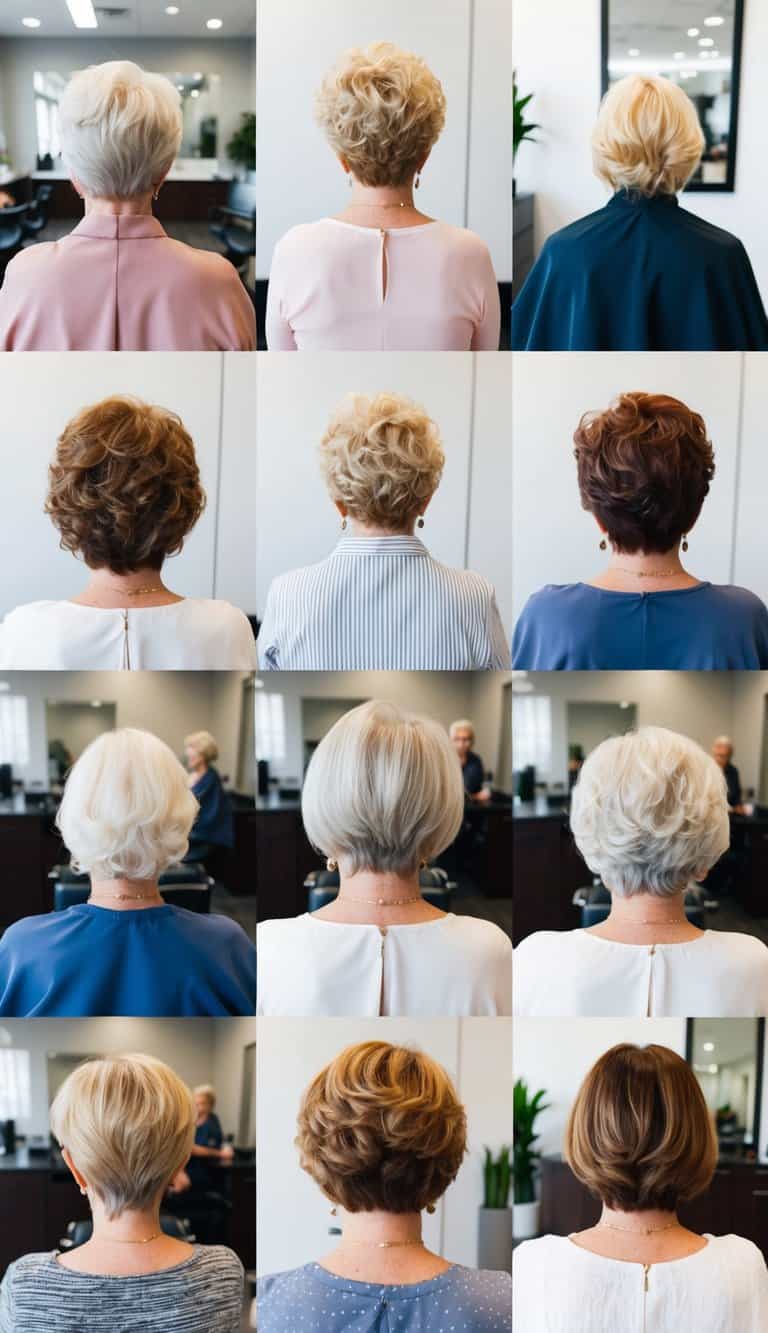
The layered bob is the most universally flattering short style for women over 60. Layers remove weight and let the hair move naturally. Polished without being stiff.
Best for: Fine or medium hair that loses volume. Layers give lift a blunt bob can’t match.
Styling tip: Blow dry with a round brush, lifting at the roots. Light volumizing mousse beforehand adds body that lasts all day.
2. Soft Pixie Cut

The soft pixie has less defined edges and a rounder, more natural finish. It frames the face without harsh lines that can read as severe on mature skin.
Best for: Women who want minimal styling. A wash-and-go cut when texture cooperates.
Maintenance: Trim every 5–6 weeks. Tolerates growing out better than a classic pixie.
3. Chin-Length Bob
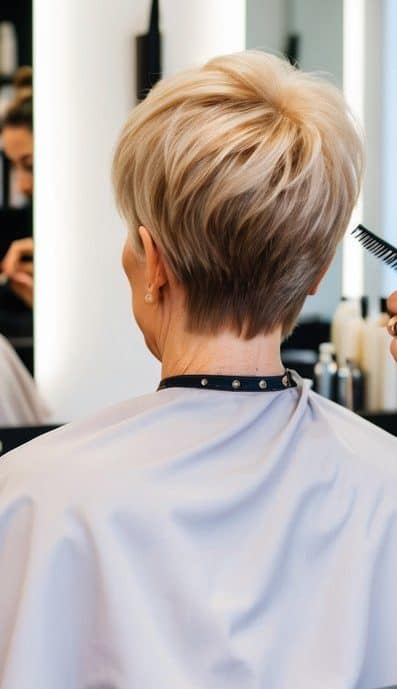
The chin-length bob elongates the neck and lifts the jawline visually. Long enough to tuck behind the ear, short enough to stay manageable, versatile for straight or wavy styling.
Best for: Round and square face shapes. Creates a slimming, elongating effect.
Styling tip: Medium heat flat iron and light smoothing serum gives a sleek finish in under five minutes.
4. Curly Shag

The curly shag works with natural curl pattern rather than against it. Layers remove bulk and allow curls to spring properly. On mature hair that’s become wavier with age, this is a revelation.
Best for: Women with naturally curly or wavy hair ready to stop straightening.
Styling tip: Curl cream wet, scrunch in sections, diffuse on low. Skip the brush once dry.
5. Wavy Lob

The lob sits at shoulder length or just above. The wave gives movement that a straight version lacks. Long enough to pull back, short enough to stay manageable — texture means days between washes without looking flat.
Best for: Women not quite ready for short hair but wanting something easier than full length.
Styling tip: Wrap sections around a large-barrel iron, let cool, tousle with fingers. Light spray holds the wave without stiffness.
6. Voluminous Blowout

A good blowout transforms how fine hair reads. Hair blown out with a round brush for maximum body and smooth movement — this is the style that makes people ask if you just had a trim.
Best for: Fine, limp hair needing a serious volume boost. Ideal for special occasions.
Styling tip: Volumizing shampoo, root-lifting spray before drying, finish with cool air to set the shape.
7. Classic French Twist

The French twist ages nobody. Structured and graceful, particularly beautiful on silver and grey hair. Creates height at the back, elongates the neck, and frames the face cleanly.
Best for: Formal occasions and evenings. Also excellent for coarser hair easier to control in an updo.
Styling tip: Light-hold pomade before twisting controls flyaways without looking overdone.
8. Short Undercut
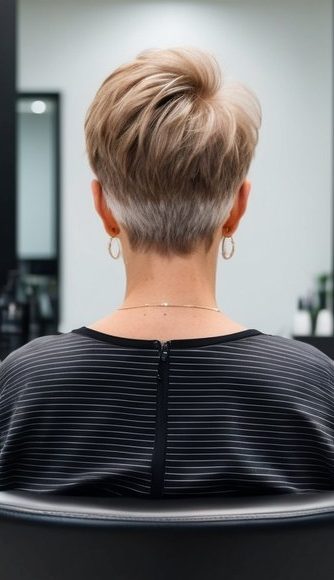
The undercut on a woman over 60 almost always pays off. The contrast between closely clipped sides and the longer top creates visual interest and effortless edge. On silver or white hair, the structure reads as genuinely striking.
Best for: Women with strong personal style who want something distinctive.
Maintenance: Clipped sections need touching up every 3–4 weeks. The top can go on its own schedule.
9. Asymmetrical Bob
One side longer, one shorter — the asymmetrical bob creates a diagonal line that’s inherently modern and slimming. The longer side falls forward and frames the face while the shorter side exposes the neck for a clean, contemporary finish.
Best for: Round face shapes where the diagonal line creates an elongating effect.
Styling tip: Let the longer side air-dry into its natural direction. The asymmetry is the look — don’t fight it.
10. Messy Low Bun

The low bun is almost infinitely adjustable — tight and sleek for formal settings, loose and undone for everyday. A bun at the nape rather than on top of the head is more elongating and flattering on mature features than a high topknot.
Best for: Shoulder-length or longer hair. Works on almost every face shape when kept low.
Styling tip: Pull a few face-framing pieces loose before you set the bun. Those small pieces soften the face and keep the style from looking severe.
11. Classic Beehive

The beehive is having a real revival. In an updated, less structured version, it works beautifully for special occasions. The height at the crown is elongating, the shape is sculptural, and on silver or platinum hair the visual impact is significant.
Best for: Medium to thick hair with some natural texture. Fine hair needs extra product support to hold the shape.
Styling tip: Backcomb gently at the roots before building the shape, finish with a light flexible spray. Avoid heavy lacquers — they make it look dated.
12. Braided Crown

A braided crown keeps hair completely off the face and neck, particularly flattering in warmer months. On silver or two-toned hair, the braid pattern picks up the color variation beautifully.
Best for: Medium to long hair with some natural texture. Completely smooth hair can make the braid look too tight and formal.
Styling tip: Use a dry texture spray before braiding — it gives the braid more grip and makes it easier to loosen for a softer finish.
13. Voluminous Pompadour

The pompadour — volume swept back and upward from the forehead — is one of the most face-lifting styles available. The height at the front draws the eye upward and adds elegance that low, flat styles don’t have. In a softer modern version, it’s genuinely wearable day-to-day.
Best for: Fine hair needing volume. Also excellent for high foreheads — work with the feature rather than minimize it.
Styling tip: Blow-dry the front forward and up with a round brush, push back slightly and set with light flexible spray.
14. Subtle Highlights

Sometimes the most impactful change is color, not a cut. Subtle highlights placed close to the base tone add dimension and depth to hair that can look one-dimensional as natural pigment fades. They catch light differently from the base and create the appearance of movement.
Best for: Anyone whose hair has gone flat in color but isn’t ready for a full color overhaul.
Maintenance: Subtle highlights fade gracefully — the grow-out is much less noticeable than bold color. Touch up every 12–16 weeks.
15. Elegant Chignon

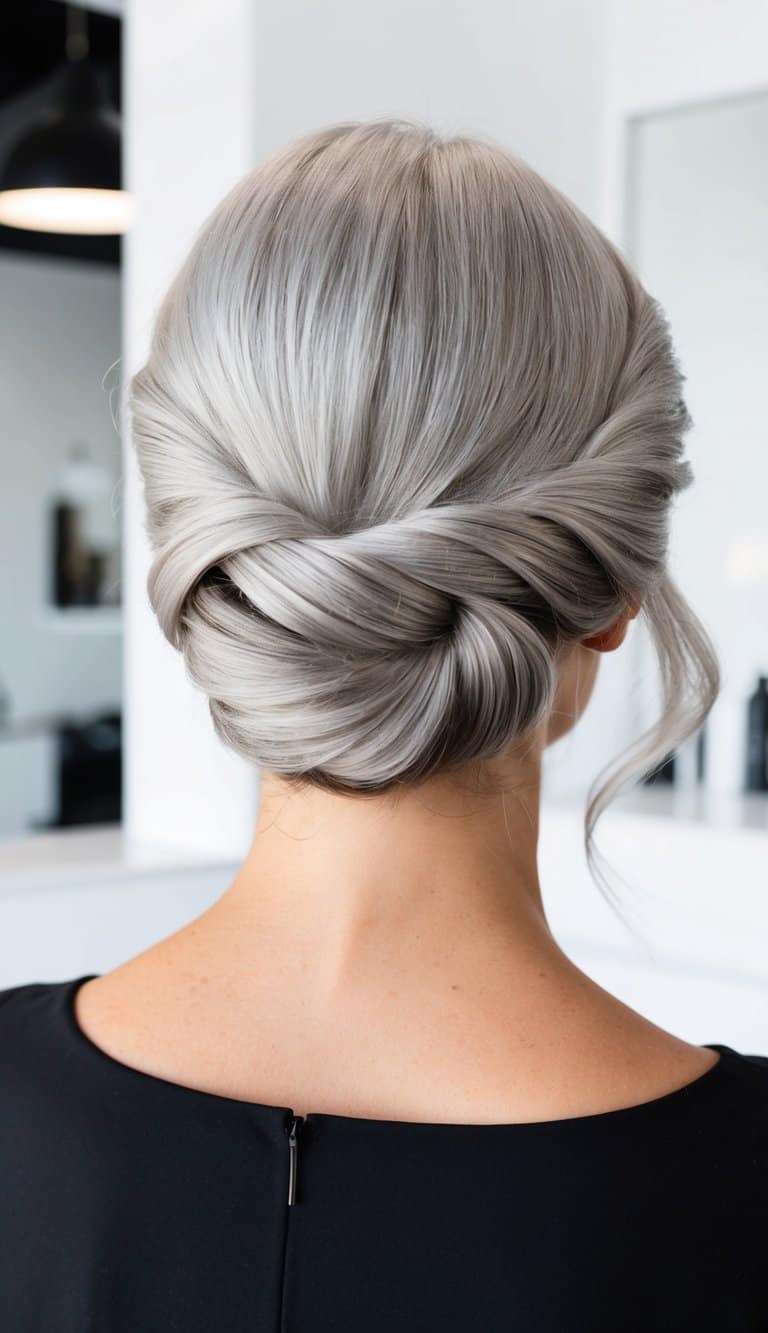
The chignon — a smooth, low bun with a refined finish — is one of the most classically flattering styles for mature women. It keeps everything clean and controlled, shows off the neck and cheekbones, and works equally well at a dinner party and in a professional setting.
Best for: Medium to long hair. Beautiful on silver and grey — the smoothness makes the color look intentional and polished.
Styling tip: Apply a light smoothing cream before pinning. Use bobby pins that match your hair color to keep the structure invisible.
16. Romantic Curls

Soft, loose curls on medium or longer hair add warmth and movement to a mature face. The curls shouldn’t be tight — think gentle waves that flow rather than spring. The result is youthful without being trying-too-hard.
Best for: Most face shapes. Longer curls are particularly flattering on long and narrow faces where the width of the curl pattern balances proportions.
Styling tip: Large-barrel curling iron, wrap loosely, let the curl drop. Tousle gently with fingers once cool. The goal is movement, not definition.
17. Curly Pixie Cut

On women over 60, a curly pixie does something remarkable: it makes the most of natural curl texture that often becomes more pronounced with age. The cut is short enough to be completely manageable, and the natural curl creates volume and life without any hot tools.
Best for: Naturally curly or wavy hair. If your curl pattern has gotten stronger with age, this might be the cut that finally makes you appreciate it.
Styling tip: Finger-coil any pieces that need definition while still wet. Air dry or diffuse. Done.
18. Half-Up Twist

The half-up twist keeps the front section back and off the face while leaving the back and length down. It solves a practical problem — hair falling forward — while looking intentional and feminine. The twist element gives it elegance that a simple half-ponytail doesn’t have.
Best for: Medium to long hair. Particularly flattering on women with beautiful cheekbones or jawlines worth showing off.
Styling tip: Leave the twist slightly loose rather than pulling it tight. A loose, slightly undone twist reads modern; a tight one reads dated.
19. Loose Ponytail

The ponytail works best on women over 60 when positioned at the nape or middle of the head rather than high. A low, loose ponytail with some texture in the hair and a few pieces pulled forward at the face is relaxed, flattering, and requires almost no effort to look put-together.
Best for: Shoulder-length or longer hair. Works on almost every face shape when kept low.
Styling tip: Wrap a small section of hair around the elastic and pin underneath. That one detail elevates the ponytail from casual to polished instantly.
20. Silver Layered Bob

Silver hair embraced rather than colored-over is one of the most striking decisions a woman in her 60s can make. The silver layered bob celebrates that tone — the layering creates movement and the silver catches light in a way colored hair simply doesn’t.
Best for: Women ready to transition away from color. Also those who’ve been silver for a while but haven’t found the right cut to make it feel intentional.
Maintenance: Purple or blue shampoo weekly keeps the silver bright. A gloss treatment every 6–8 weeks adds shine.
21. Side Parted Bob

The side part changes the dynamics of a bob completely — it adds asymmetry, gives more volume on one side, and creates a face-framing sweep that a center part doesn’t offer. On a jaw-length bob, a deep side part is one of the most effortlessly flattering finishing details available.
Best for: Round face shapes where the diagonal line is most slimming. Also excellent for fine hair — volume falls to one side and appears fuller.
Styling tip: Set the part while hair is still slightly damp and blow-dry in that direction. Holds much better than switching the part on dry hair.
Hair Care for Women Over 60
- Volume is the priority: Volumizing shampoo, lightweight conditioner (avoid the roots), and a root-lifting product before blow-drying. Avoid heavy oils on the scalp — they weigh fine hair down further.
- Moisture without weight: Hair at this stage can be dry without being thick. Look for hydrating but lightweight formulas — heavy masks leave fine hair limp. Apply from mid-length to ends only.
- Gentle heat: Hair is more fragile now than at 30. Use heat tools on medium, always with a heat protectant. The difference in damage over months is significant.
- Scalp care: A gentle scalp massage with a light oil (jojoba, argan) once a week stimulates circulation without clogging follicles.
- Color care: Whether maintaining color or embracing silver, a color-safe or color-depositing shampoo extends the life of the tone and prevents the yellow shift that makes grey hair look dull.
Frequently Asked Questions
What haircut is most flattering for women over 60?
The layered bob consistently comes up as the most universally flattering cut. It adds volume through the layers, frames the face cleanly, and works on most face shapes and textures. That said, “most flattering” depends on your specific face shape, hair texture, and lifestyle. A short pixie is more flattering than any bob on the right person — find what works for your features specifically.
Should women over 60 avoid long hair?
No — but long hair requires more maintenance and more careful styling at this stage. Fine hair can look stringy at long lengths; thick hair can look heavy. Keep long hair well-cut with regular trims, add some layering for movement, and make sure the style is being worn thoughtfully. Long hair looks great at any age when it’s intentional.
How do I add volume to thinning hair over 60?
Volumizing shampoo and lightweight conditioner, root-lifting spray before blow-drying, blow-drying with a round brush while lifting at the roots, and a shorter cut with internal layers. Going shorter is often the single most effective thing for visibly thinning hair — length is heavier and pulls volume down.
Should I go silver or keep coloring my hair after 60?
Completely personal and there’s no wrong answer. Silver hair that’s well-cut and properly cared for can be genuinely stunning. Color, if it makes you feel more like yourself, gives no reason to stop. The decision should be about what makes you feel good, not what’s age-appropriate. What matters is that whatever you choose is intentional and well-maintained.
Final Thoughts
Hair in your 60s is about finding what works now — for your texture, your face, and the amount of effort you want to put in on any given morning. Some of these styles take five minutes; some take a salon appointment every few weeks. The range is the point.
Take two or three of these to your next salon consultation and talk through what specifically appeals to you about each one. Your stylist can translate the general inspiration into what’s going to work with your specific hair and face — and that’s always more useful than showing up with a single photo and hoping for the best.