27 Neutral Ombre Hair Ideas: Chic Earthy Tones for a Subtle Makeover
Neutral ombre hair occupies a uniquely versatile position in the color spectrum — it draws from earthy, organic tones rather than vivid fantasy colors or stark contrasts, creating gradients that feel genuinely natural rather than obviously dyed. Caramels, hazelnuts, taupes, creams, and muted bronzes transition into one another in ways that mirror how sunlight actually affects hair over time. The result is a polished, dimensional color that works across seasons, occasions, and personal styles without demanding constant maintenance or dramatic commitment.
These 27 neutral ombre hair ideas cover the full range of earthy, chic tones — from warm caramel-to-ash fades to cool, misty rosewood transitions.
27 Neutral Ombre Hair Ideas
1. Caramel To Ash Transition

The caramel-to-ash transition is one of the most sophisticated neutral ombre combinations — a warm, golden-brown root gradually cooling into a muted ash tone at the ends. The shift from warm to cool within the same neutral palette creates a depth and complexity that purely warm or purely cool ombres lack. The transition point, where the caramel and ash tones meet and blend, is where the color is most interesting — a brief, warm-cool harmony before the ash takes over at the ends.
Best for: Neutral and cool skin tones. Medium brown base hair.
Color tip: The ash ends require a blue or violet toner applied over lightened sections — without toning, the bleached mid-lengths will appear warm gold rather than cool ash.
2. Muted Bronze Blend
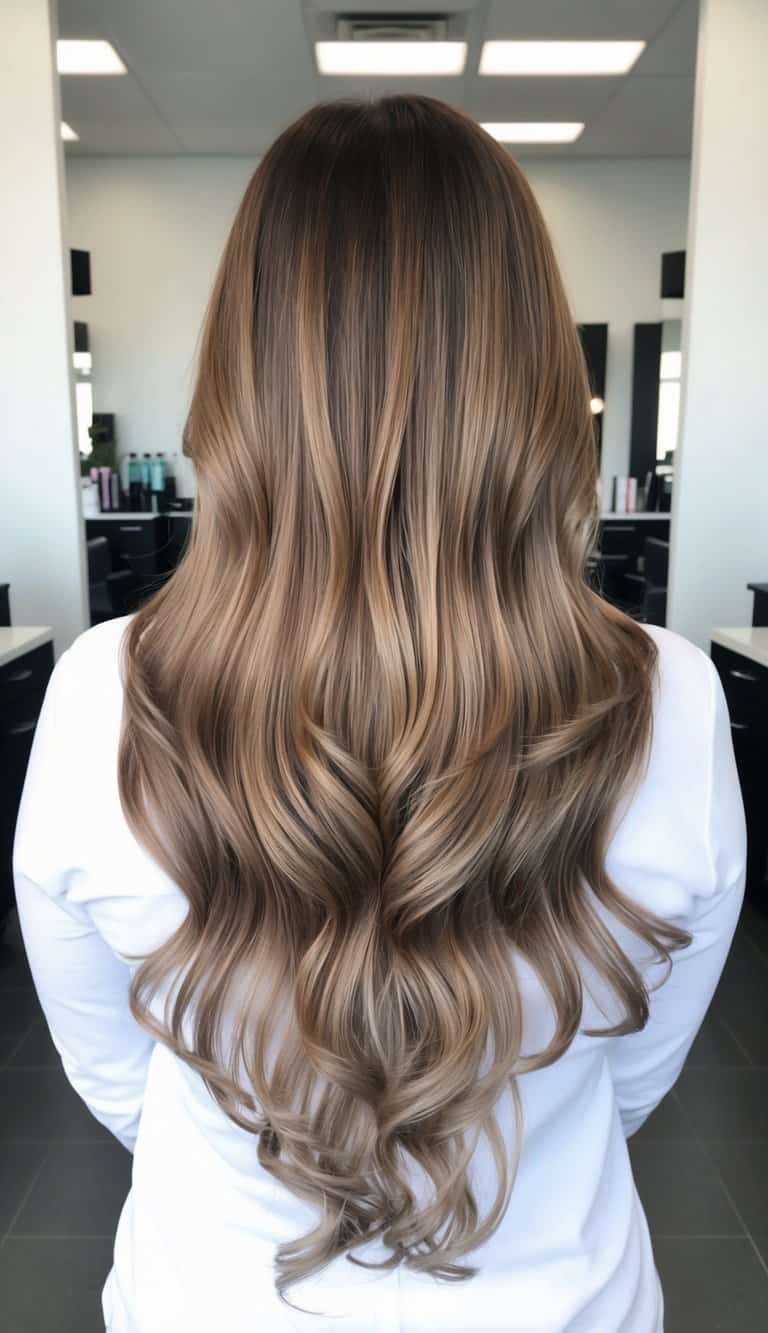
Muted bronze blend takes the warmth of copper and bronze tones and desaturates them slightly, creating a color that reads as warm but not vivid — sophisticated rather than bold. The muted quality comes from mixing the bronze pigment with a neutral or slightly ashy tone before application, reducing the orange intensity while maintaining the warmth. Applied as an ombre, muted bronze creates a graduated warmth that’s autumnal and rich without being overwhelming.
Best for: Warm and olive skin tones. Medium to dark brown base hair.
Styling tip: Straight or slightly wavy styling maximizes the visibility of the bronze gradient — the metallic quality of the muted bronze reads most clearly on a smooth, elongated surface.
3. Sterling Silver Gradient

Sterling silver gradient places the silver tone within the neutral ombre family by pairing it with warm, beige-grey roots rather than the harsh dark roots typical of more dramatic silver ombres. The neutral quality of this gradient comes from the seamless, muted transition — the roots are neither fully dark nor fully silver, existing in a taupe or greige zone that makes the silver at the ends feel like a natural extension rather than a sharp departure. The result is cool, modern, and elegantly understated.
Best for: Cool and neutral skin tones. Works particularly well on naturally grey or salt-and-pepper hair transitioning to full silver.
Maintenance tip: A purple toning shampoo used twice weekly maintains the sterling quality by preventing the silver sections from warming toward yellow.
4. Buttercream Glaze

Buttercream glaze is one of the warmest, creamiest interpretations of neutral ombre — the color transitions from a medium natural root into a soft, warm cream-blonde that reads as neither gold nor cool, but as a perfectly balanced, buttery neutral. The glaze quality refers to the high-shine finish that this color achieves when properly toned and glossed — a smooth, reflective surface that makes the cream tone appear luminous rather than flat.
Best for: Warm and golden skin tones. Light to medium brown base hair where the buttercream tone achieves maximum contrast.
Color tip: A warm beige toner (level 8–9, tone 3 or 4) over a pale blonde base creates the exact buttercream quality — cooler toners push it toward ash, warmer toners push it toward gold.
5. Silky Satin Blend

Silky satin blend describes both the quality of the color and the texture it creates — a smooth, mid-sheen neutral ombre that falls between matte and high-gloss. The satin quality comes from the even, seamless blending of the ombre tones and the application of a medium-shine finishing gloss that adds reflectivity without the mirror-like intensity of a full gloss treatment. The color itself is typically a balanced neutral brown transitioning into a warm, sandy tone at the ends.
Best for: All skin tones. Works across hair textures — the satin finish is particularly flattering on fine hair, adding the appearance of density and shine.
Styling tip: A blowout with a paddle brush and a drop of lightweight serum creates the smooth, satin surface that defines this look.
6. Latte Swirl Ombre

Latte swirl ombre draws its color palette directly from the coffee drink — a warm espresso brown at the roots transitioning through a creamy milk-brown mid-length to a soft, creamy blonde at the ends. The swirl element comes from the technique: rather than a linear gradient, the colors are blended in soft, curving motions that create variation in the transition point throughout the hair. Each section has a slightly different gradient, just as each swirl in a latte has its own pattern.
Best for: Warm skin tones. Medium to dark brown base hair. All lengths.
Color tip: The key to achieving the authentic latte quality is working with three formulas rather than two — a dark espresso base, a warm milk-brown mid-tone, and a creamy blonde end tone — blended where they meet to eliminate any visible boundaries.
7. Rustic Wood Ombre

Rustic wood ombre takes its color cues from natural wood grain — deep, warm dark brown at the roots (like walnut or mahogany) transitioning through mid tones of warm oak and chestnut before arriving at a lighter, golden-blonde tone at the ends. The rustic quality comes from the irregularity and warmth of the color palette — these are organic, imperfect warm browns rather than the clean, uniform tones of more polished ombre interpretations.
Best for: Warm skin tones. Dark brown to medium brown base hair.
Styling tip: Natural texture — whether air-dried waves or defined curls — suits rustic wood ombre better than sleek, straight styling. The organic quality of the color is enhanced by equally organic-looking texture.
8. Rich Hazelnut Sweep

Rich hazelnut sweep uses the warm, nutty depth of hazelnut brown as the primary highlight tone, sweeping it through a darker base in broad, generous sections. The hazelnut tone sits in the warm-neutral zone — neither red-leaning like chestnut nor gold-leaning like caramel — which makes it universally compatible with a wide range of base colors and skin tones. The sweep placement creates a natural-looking dispersion of warmth through the hair.
Best for: All skin tones. Medium to dark brown base hair. One of the most universally flattering neutral ombre variations.
Maintenance tip: Hazelnut tones fade gracefully toward a warm, lighter brown rather than going brassy — the natural fade cycle of this color is an asset rather than a problem.
9. Frosted Chestnut Flow

Frosted chestnut flow adds a cool, slightly icy quality to a warm chestnut ombre — the “frost” comes from a light ash toner applied over the lighter chestnut sections, reducing their warmth and creating a cooler, more muted interpretation of the classic chestnut brown. The flow element describes the long, sweeping transition from the darker roots through progressively lighter and cooler chestnut tones to the frosted ends. It’s a winter-appropriate take on a traditionally autumn-associated color family.
Best for: Cool and neutral skin tones. Medium to dark brown base hair.
Color tip: Apply the ash toner selectively to the ends only — allowing the mid-lengths to retain more warmth creates a natural transition from the warm dark root through a warm mid-length to a cool, frosted end.
10. Maple Spice Ombre

Maple spice ombre blends the golden warmth of maple syrup with the deeper, slightly reddish warmth of autumn spices — cinnamon, nutmeg, clove. The color transition moves from a deep, spiced brown root through a warming maple mid-tone to a lighter, golden-honey end. The result is an undeniably warm, autumnal color that works particularly well in the cooler months when the richness of the spice palette harmonizes with seasonal wardrobe choices.
Best for: Warm skin tones. All brown base colors.
Styling tip: Loose, romantic waves and curls enhance the warmth of maple spice ombre — the color’s richness reads as most beautiful against the movement and volume of styled hair.
11. Toffee Ripple Blend

Toffee ripple blend uses the warm, amber-caramel tone of toffee candy applied in a rippling, irregular pattern through the hair rather than a standard linear gradient. The ripple technique creates variation in the transition point — in some sections the toffee appears earlier (higher up the shaft), in others later — mimicking the natural way sunlight creates uneven lightening through the hair’s layers and surface. The result looks genuinely sun-kissed rather than salon-colored.
Best for: Warm and neutral skin tones. Medium brown base hair.
Maintenance tip: Toffee ripple blend has a particularly forgiving grow-out pattern because the irregular placement means there’s no single visible root line to manage — the next salon visit is genuinely optional until the overall tone fades.
12. Smoky Quartz Melt

Smoky quartz melt takes its color inspiration from the gemstone — a cool, slightly brown-tinted grey with a translucent, mineral quality. Applied as a neutral ombre, smoky quartz creates a gradient that moves from a deeper, charcoal-influenced root through progressively lighter and cooler grey-brown mid-tones to a pale, translucent smoky quartz at the ends. The color reads as distinctly modern and fashion-forward while remaining within the neutral, earth-tone family.
Best for: Cool and neutral skin tones. Works on medium to dark base hair.
Color tip: Achieve the smoky quartz quality with a combination of grey and beige toners — a pure grey toner creates a flat result, while mixing in a small beige component gives the translucent, mineral depth of actual smoky quartz.
13. Cashmere Cream Gradient

Cashmere cream gradient is the softest, most luxurious-feeling neutral ombre in this collection — the color transitions from a warm, medium neutral root into a pale, creamy blonde that has the warmth and softness of cashmere fabric. The cream quality comes from a precisely balanced warm-neutral toner applied over a pale blonde base, avoiding both the coolness of platinum and the warmth of golden blonde to arrive at a perfectly balanced, sophisticated cream. The gradient is typically long and gradual, with the transition spanning most of the hair’s length.
Best for: Fair to medium skin tones. Light to medium brown base hair.
Styling tip: A polished blowout with loose bends at the ends enhances the cashmere quality — the smooth, soft movement of the style complements the soft, refined color.
14. Dune Drift Ombre

Dune drift ombre draws from the palette of desert sand dunes — warm, dusty beige and golden tan tones that carry natural warmth without brightness. The color transitions from a deeper, earthy mid-brown root through sandy mid-tones to a warm, sun-bleached beige at the ends. The dusty quality comes from a slight desaturation in the lighter tones — they read as warm but soft, more sand than gold. The overall effect is natural, sun-kissed, and effortlessly wearable.
Best for: Warm and golden skin tones. Light to medium brown base hair.
Color tip: A warm beige or sandy toner (level 8, warm undertone) over a level 8–9 blonde base creates the exact dune quality — too light and the beige disappears, too warm and it reads as caramel rather than sand.
15. Elegance in Pearl

Elegance in pearl neutral ombre creates a color with the iridescent, cool-neutral quality of a freshwater pearl — the lightest sections have a subtle shimmer and a color that’s neither blonde nor grey nor white, but something between all three. The pearl quality requires a very precise toning process: a sheer, slightly cool-neutral toner over a near-white base creates the opalescent, multi-tonal quality that distinguishes pearl from simple platinum or ash blonde.
Best for: Fair skin with cool or neutral undertones. Pre-lightened hair at a near-white base.
Maintenance tip: Pearl tones are among the most fade-prone — the sheer, neutral quality is easily disrupted by yellow undertones as the toner fades. A pigmented pearl or blonde conditioner used weekly maintains the color between appointments.
16. Nutmeg Twist Melt

Nutmeg twist melt uses the warm, slightly orange-brown tone of freshly ground nutmeg as its highlight color, applied in a twisting, irregular pattern similar to the toffee ripple technique. The nutmeg tone sits in an interesting position in the neutral-warm spectrum — warmer than hazelnut but less red than cinnamon, with a specific quality of warmth that reads as spicy rather than sweet. On dark brown base hair, nutmeg twist creates a sophisticated, dimensional warmth.
Best for: Warm and olive skin tones. Medium to dark brown base hair.
Color tip: Mix a copper tone with a brown at approximately a 1:3 ratio to achieve the authentic nutmeg quality — pure copper is too vivid, but the 1:3 mix creates the muted, earthy warmth of the spice.
17. Linen Ombre Sweep

Linen ombre sweep takes its color from natural linen fabric — a warm, slightly beige, off-white that’s softer than platinum and warmer than ash. Applied as an ombre sweep through medium brown hair, the linen tone creates a light, airy end color that has the effortless quality of sun-bleached fabric left to dry in the sun. The color reads as warm enough to suit golden skin tones but neutral enough to avoid the brassiness of yellow-leaning blondes.
Best for: Warm and neutral skin tones. Light to medium brown base hair.
Styling tip: Loose, natural-looking waves or an easy blowout complement the casual, relaxed quality of linen ombre — the color’s effortless character is best expressed with equally effortless styling.
18. Oakwood Drift

Oakwood drift ombre uses the honey-brown warmth of oak wood as its primary tone, drifting from a darker, more saturated root down through progressively lighter and more golden sections. Oak wood’s natural color sits in a warm-golden-brown zone that’s distinctly warm without being amber or orange — it’s a particularly flattering neutral warm tone that suits a wide range of complexions. The drift quality describes the long, gradual transition that makes the color appear as though it drifted naturally from dark to light.
Best for: All skin tones. Medium brown base hair. One of the most broadly flattering neutral ombre variations.
Maintenance tip: Oakwood drift grows out naturally and attractively — the warm-neutral quality of the tone means the grow-out phase simply deepens the gradient rather than creating an obvious contrast.
19. Tender Tawny Ombre

Tender tawny ombre uses a warm, brown-orange tawny tone — the color of a tawny owl’s feathers or autumn leaves in late October — applied gently through a darker base in a soft, blended gradient. The tenderness in the name refers to the softness of the application: no harsh lines, no visible demarcation, just a gradually warming shift from the natural root color through increasingly warm tawny sections. The result is cozy, autumnal, and deeply flattering on warm skin tones.
Best for: Warm and olive skin tones. All brown base colors.
Color tip: Tawny tones lean slightly orange — if the result appears too warm, a diluted neutral brown toner can be applied over the sections to mute the orange and bring the color toward a more balanced tawny.
20. Vanilla Blonde Streak

Vanilla blonde streak introduces a warm, soft blonde tone as a deliberate, visible streak within a darker neutral ombre — rather than a seamless, invisible blend, the vanilla blonde is placed as a visible but soft highlight that creates a focal point within the gradient. The vanilla quality comes from a warm-neutral blonde toner (not golden, not ash) that reads as creamy and natural. On brown base hair, the vanilla streak has a face-brightening, sun-kissed quality.
Best for: Fair to medium skin tones. Light to medium brown base hair.
Styling tip: Face-framing placement of the vanilla streak creates the most flattering and natural-looking result — the lighter tone around the face mimics the way sunlight would naturally brighten the hair closest to the skin.
21. Mellow Blonde Blend

Mellow blonde blend is one of the most easygoing and universally wearable neutral ombre interpretations — a gradual transition from a natural medium brown root to a soft, mellow blonde at the ends that reads as naturally sun-lightened rather than color-treated. The mellow quality comes from the blonde tone being neither warm nor cool but perfectly balanced, and from the gradual, diffused nature of the transition. This is the ideal choice for those who want a natural-looking color refresh without obvious change.
Best for: All skin tones. Light to medium brown base hair. Ideal for those new to ombre or those who prefer subtle color work.
Maintenance tip: Mellow blonde blend grows out over 6–9 months without any obvious change in appearance — it’s one of the lowest-maintenance ombre options available.
22. Whispering Sand Ombre

Whispering sand ombre uses the softest, most neutral interpretation of the sand tone — barely warmer than grey, barely lighter than the root, the color whispers rather than announces. The transition is exceptionally gentle, moving from the natural root color to a barely-there sandy tone at the ends in a gradient so seamless it’s almost imperceptible. This is the most understated neutral ombre in the collection, ideal for those who want dimension without any visible color work.
Best for: All skin tones. All brown base colors. Those who want the most natural-looking, invisible color enhancement possible.
Color tip: Whispering sand is achieved with a very diluted toner — mix the sandy blonde color with conditioner at a 1:3 or 1:4 ratio for the most transparent, whisper-like result.
23. Café au Lait Ombre

Café au lait ombre is the perfectly balanced coffee-and-cream color combination — a warm medium brown root (the coffee) transitioning into a creamy, warm-neutral light brown or blonde at the ends (the milk). The balance between the coffee and cream tones creates a harmonious, naturally warm color with the effortless appeal of a well-made coffee drink. It’s simultaneously sophisticated and casual, appropriate for every setting and season.
Best for: Warm and neutral skin tones. Medium brown base hair.
Styling tip: This color looks beautiful in both straight and wavy styling — straight for a polished, café-sophisticate look, or in loose waves for a more casual, weekend-appropriate version of the same palette.
24. Champagne Blonde Ripple

Champagne blonde ripple uses a cool-neutral, slightly golden blonde — the color of champagne wine — applied in a rippling pattern that creates variation in the gradient similar to the toffee ripple technique but in a lighter, cooler palette. The champagne tone occupies a specific niche in the blonde family: warmer than platinum, cooler than honey, more neutral than gold. In a ripple application, champagne blonde creates a dimensional, light-catching effect with a celebratory, luminous quality.
Best for: Fair and neutral skin tones. Light brown to dark blonde base hair.
Color tip: A champagne or warm-neutral toner (level 9, tone 3) creates the exact shade — the neutrality of the tone is what separates champagne from the warmer gold and the cooler ash blondes.
25. Tender Earthy Tones

Tender earthy tones is the most natural and organic interpretation of neutral ombre — a multitonal blend of soft, muted earth tones (warm clay, sand, dry grass, pale stone) that creates a color with genuine natural-world roots. The tenderness in the name refers to the softness and muted quality of the palette — no vivid or saturated tones, only the gentle, weathered colors of natural materials. The result looks as though the hair has spent a season outdoors.
Best for: Warm and neutral skin tones. All brown base colors.
Maintenance tip: Tender earthy tones fade particularly gracefully because the muted palette doesn’t depend on precise pigment levels to maintain its character — as the color ages, it simply becomes even more naturally muted.
26. Mystic Stone Flow

Mystic stone flow draws from the cool, mineral palette of polished stones — grey, slate, pale taupe, and cool beige — in a flowing gradient that moves from darker stone tones at the root to lighter, more translucent stone tones at the ends. The mystic quality comes from the depth and complexity of the color, which shifts between warm and cool depending on the lighting. In natural light, mystic stone appears cool and mineral; in warm light, the beige undertones emerge and warm the color significantly.
Best for: Cool and neutral skin tones. Medium to dark brown base hair.
Color tip: A cool beige-grey toner applied over lightened sections captures the dual warm-cool quality of polished stone better than a purely grey or purely beige toner would.
27. Dusky Rosewood Fade
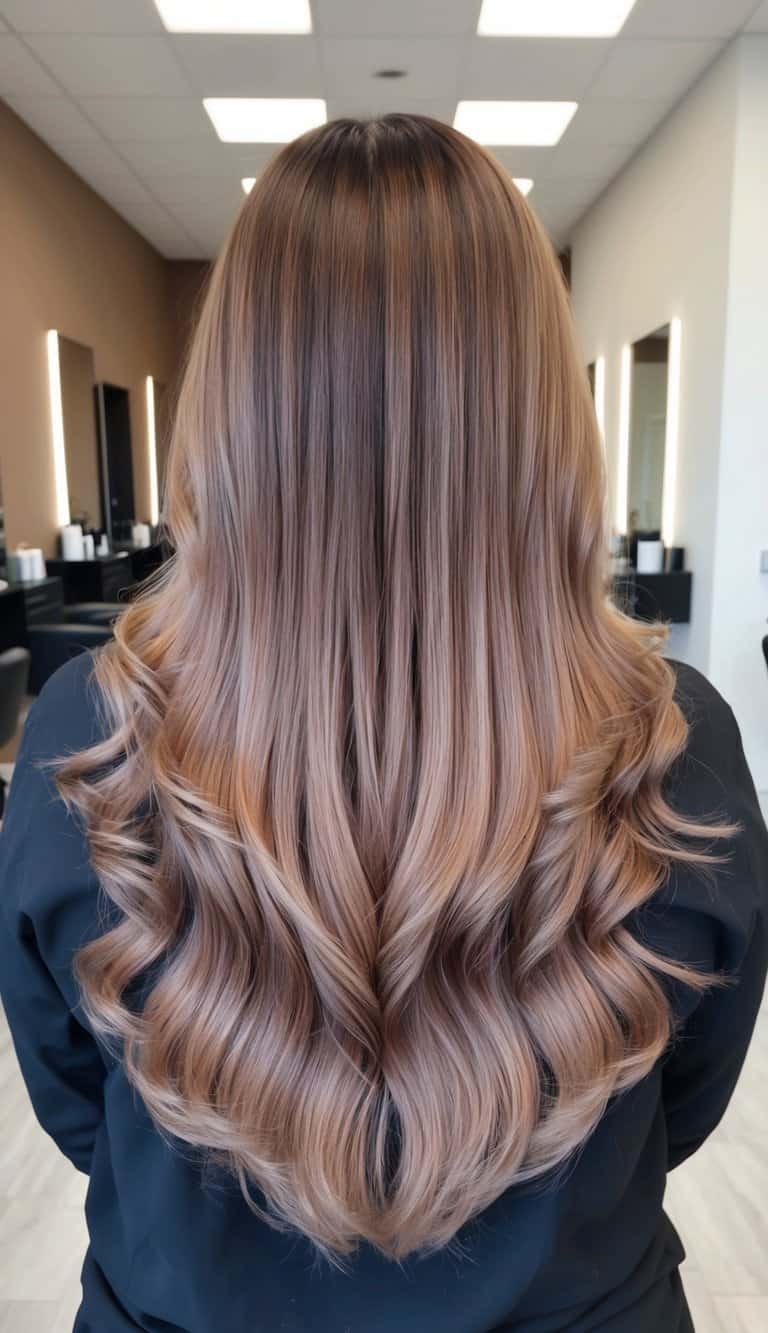
Dusky rosewood fade closes the collection with the most complex and nuanced neutral tone — a muted, dusty rose-brown that sits at the intersection of pink, brown, and grey without belonging fully to any of them. The rosewood quality comes from a subtle pinkish-brown that reads as sophisticated rather than playful, and the dusky, muted application keeps it firmly within the neutral palette. As a fade, the rosewood tone typically appears at the ends, transitioning gradually from a darker, more neutral brown at the roots.
Best for: Cool and neutral skin tones. All base colors — the dusty, muted quality of the rosewood makes it compatible with a surprisingly wide range of natural hair tones.
Color tip: Achieve dusky rosewood by mixing a small amount of pink and ash-brown direct dye into a neutral conditioner and applying over lightened ends — the exact ratio determines how pink or how brown the result appears.
Frequently Asked Questions
What is neutral ombre hair?
Neutral ombre hair refers to color gradients that use earthy, muted, and balanced tones — caramels, taupes, creams, sandy blondes, hazelnuts, and muted bronzes — rather than vivid colors or stark contrasts. The neutral quality means the colors don’t lean dramatically warm or cool but sit in a balanced zone that reads as natural and organic. The ombre technique creates a gradient from darker roots to lighter ends (or darker ends in some interpretations) using these balanced, earthy tones.
Does neutral ombre work on dark hair?
Yes, though the degree of lightening required depends on how much contrast is desired. Low-contrast neutral ombres like rustic wood or tender earthy tones can be achieved on dark brown hair with minimal lightening. Higher-contrast options like cashmere cream or buttercream glaze require lifting the ends to a light blonde before toning. Even on very dark hair, many neutral ombre looks are achievable — the warm-neutral tone family is compatible with most natural hair colors.
Which neutral ombre suits warm skin tones?
Warm skin tones are most flattered by neutral ombres with warmth in the highlight tones — caramel to ash transition (warm roots), rustic wood, latte swirl, maple spice, toffee ripple, nutmeg twist, tender tawny, and café au lait all work particularly well. The warm undertones in these colors harmonize with golden and olive complexions rather than contrasting against them, creating a cohesive, naturally glowing look.
How long does neutral ombre last?
The structural ombre (the gradient from root to end) lasts until the hair is cut. The tone of the lighter sections fades over 6–10 weeks depending on the specific shade and maintenance routine. Neutral tones generally fade more gracefully than vivid colors, moving through attractive intermediate stages rather than going suddenly flat or brassy. Most neutral ombres can go 3–4 months between toning appointments with proper color-protecting product use.
Final Thoughts
Neutral ombre hair achieves something that more dramatic color techniques can’t — it looks like the best possible version of natural hair rather than an obvious color treatment. The earthy, balanced tones in this collection draw from materials and natural environments that human hair already resembles, creating gradients that feel organic rather than applied. Whether the preference is for the warmth of rustic wood and maple spice or the cool restraint of smoky quartz and mystic stone flow, the neutral ombre family offers a color for every complexion, every season, and every occasion.


