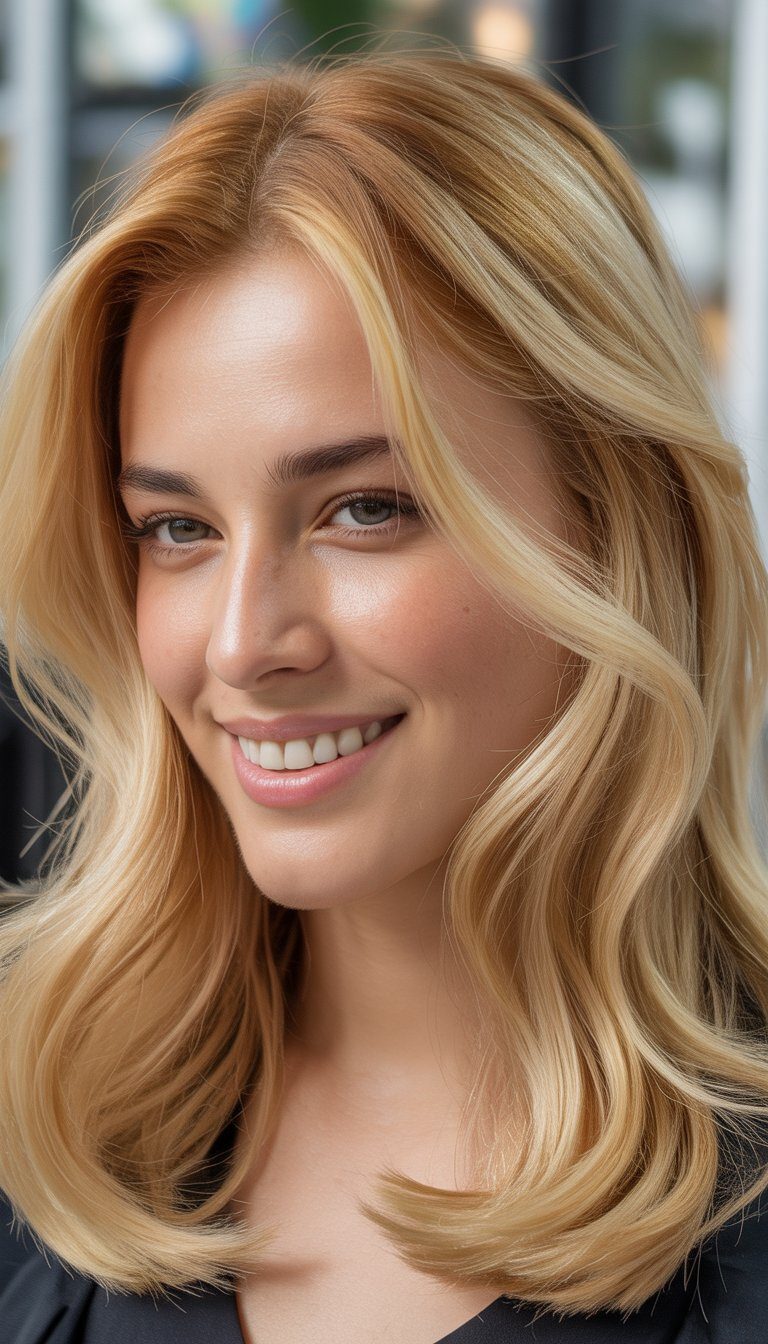
34 Caramel Highlight Ideas That Add Warmth and Dimension
Caramel highlights are the most universally flattering hair color technique available — the warm, golden-brown tone of caramel complements virtually every natural hair color and every skin tone, adding a sun-kissed luminosity that makes hair appear healthier, more dimensional, and more interesting than a single flat color. The appeal of caramel highlights lies in their versatility: at their most subtle, they add just enough warmth to make natural color glow; at their most dramatic, they create a high-contrast, head-turning result. In all their variations, caramel highlights add the warmth and movement that make hair look genuinely beautiful rather than simply well-groomed.
These 34 caramel highlight ideas span the full range of the technique — from barely-there low-contrast highlights on warm brown hair to bold caramel streaks on dark brunette and black bases — with something specifically suited to every hair type, length, and commitment level.
34 Caramel Highlight Ideas
1. Caramel Balayage on Dark Brown Hair

Caramel balayage on dark brown hair is one of the most striking and requested highlight looks — the contrast between the deep, rich dark brown base and the warm, luminous caramel balayage creates a gradient that reads as simultaneously natural and dramatically beautiful. The balayage technique places the caramel in a freehand sweep that mimics sun-lightened hair, concentrating the color at the mid-lengths and ends where sunlight naturally strikes most strongly. The result has a sun-kissed authenticity that foil highlights often lack, particularly when applied by a skilled colorist who understands how light falls on dark hair.
Best for: Dark brown (level 3–5) base hair. Warm and olive skin tones where caramel creates a particularly flattering warmth.
Color tip: On dark brown hair, caramel balayage typically requires lightening the targeted sections to a level 7–8 before toning with a warm golden-caramel formula. Attempting caramel on inadequately lightened dark hair results in a brass or orange tone rather than true caramel.
2. Face-Framing Caramel Highlights

Face-framing caramel highlights are the most targeted and impactful of all highlight placements — a few strategic caramel pieces placed around the hairline and at the temples create warmth and brightness precisely where they’re most visible and most flattering. The face-framing placement works with the principles of light and shadow: the warm caramel sections at the front of the hair direct light onto the face, creating a brightening effect that’s genuinely flattering on every complexion. This is the highlight technique for those who want maximum impact with minimum commitment.
Best for: All hair colors and lengths. All skin tones — face-framing caramel is specifically positioned to flatter the face rather than simply color the hair. Those who want a low-maintenance introduction to highlights.
Maintenance tip: Face-framing highlights require only partial appointments for maintenance — only the front sections need refreshing, making this one of the most time and cost-efficient highlight options.
3. Soft Waves With Caramel Highlights

Soft waves and caramel highlights are one of the most natural and beautiful pairings in hair color — the movement created by waves allows caramel highlights to show their multidimensional character at its best. As waves move, each section alternately catches and falls into shadow, creating a constantly shifting, luminous quality that flat, straight hair simply can’t replicate. The caramel highlights appear brighter on the sections catching the light and warmer in the shadows, giving the hair a depth and richness that appears to come from within rather than from a salon.
Best for: Medium to long hair. All base colors — caramel waves create a particularly flattering result on dark brown and medium brown hair where the contrast enhances the wave pattern.
Styling tip: Apply a few drops of a luminizing serum through waves before diffusing or air-drying — the serum enhances the light-catching quality of the caramel sections, amplifying the dimensional effect.
4. Layered Cut With Caramel Highlights
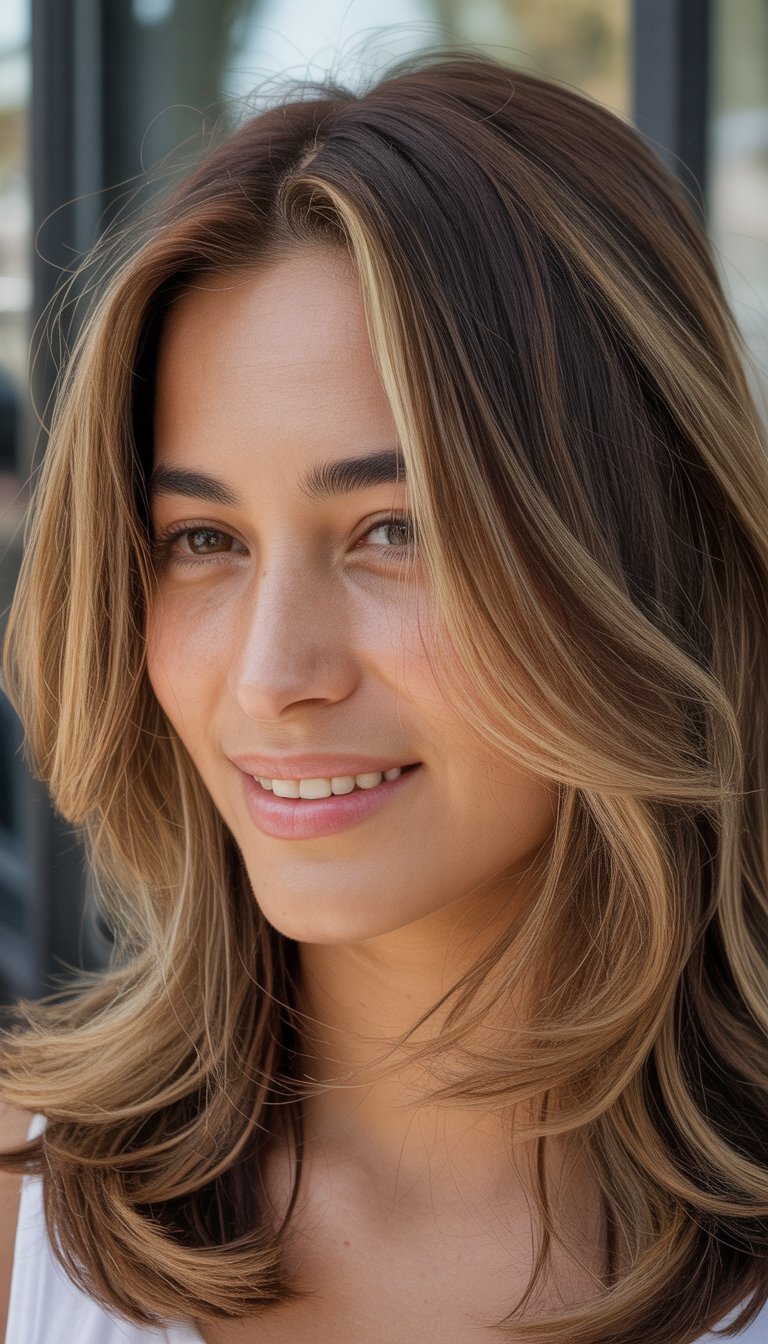
Caramel highlights and a layered cut create a mutually enhancing combination — layers reveal the hair’s color dimension at multiple planes simultaneously, so a viewer can see the full gradient of caramel through the base color from every angle. A blunt cut with caramel highlights shows the color primarily at the ends; a layered cut shows it throughout, because each layer reveals a different portion of the color at a different depth. The result is hair that appears significantly more dimensional and interesting than either the cut or the color would achieve independently.
Best for: Medium to long hair. All base colors. Those who want maximum dimensional impact from their caramel highlights.
Color tip: Ask your colorist to concentrate the lightest, most saturated caramel highlights at the longest layers — these sections are most visible and the brightest caramel creates the most dramatic contrast with the natural base.
5. Caramel Highlights for Long Hair
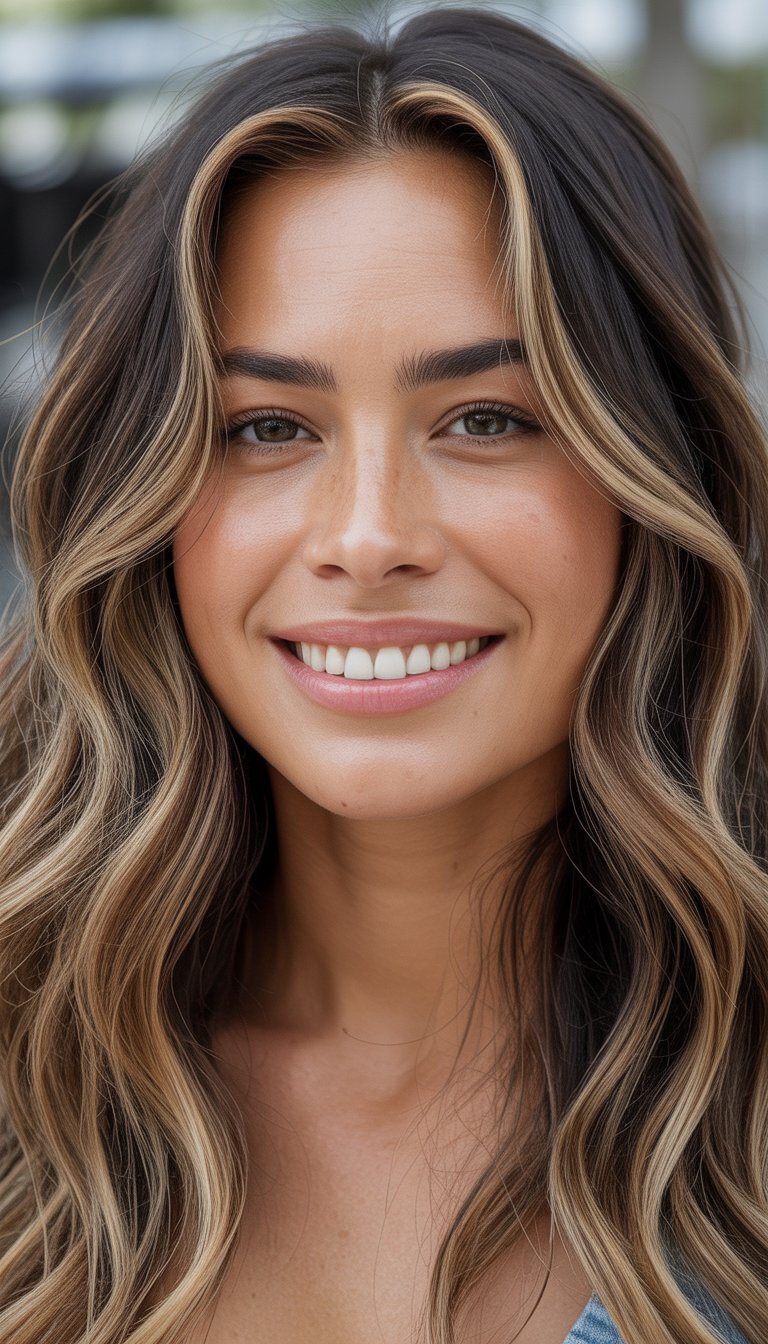
Long hair provides the most generous canvas for caramel highlights — the extended length allows the full gradient from natural root to caramel-lightened end to be visible simultaneously, creating a color journey that short or medium hair can’t achieve. On very long hair, caramel highlights create a particularly dramatic effect as the color appears to intensify toward the ends, with the longest sections often showing the warmest, most saturated caramel tone. The hair appears to contain multiple colors when viewed from a distance but reads as cohesive and natural up close.
Best for: Hair at or below shoulder length. All base colors.
Maintenance tip: Long hair shows fading most dramatically because the longest, oldest sections have been through more washing and UV exposure. Keep long caramel highlights looking fresh with a warm toning gloss every 8–10 weeks and UV-protective products for outdoor use.
6. Dramatic Caramel Balayage
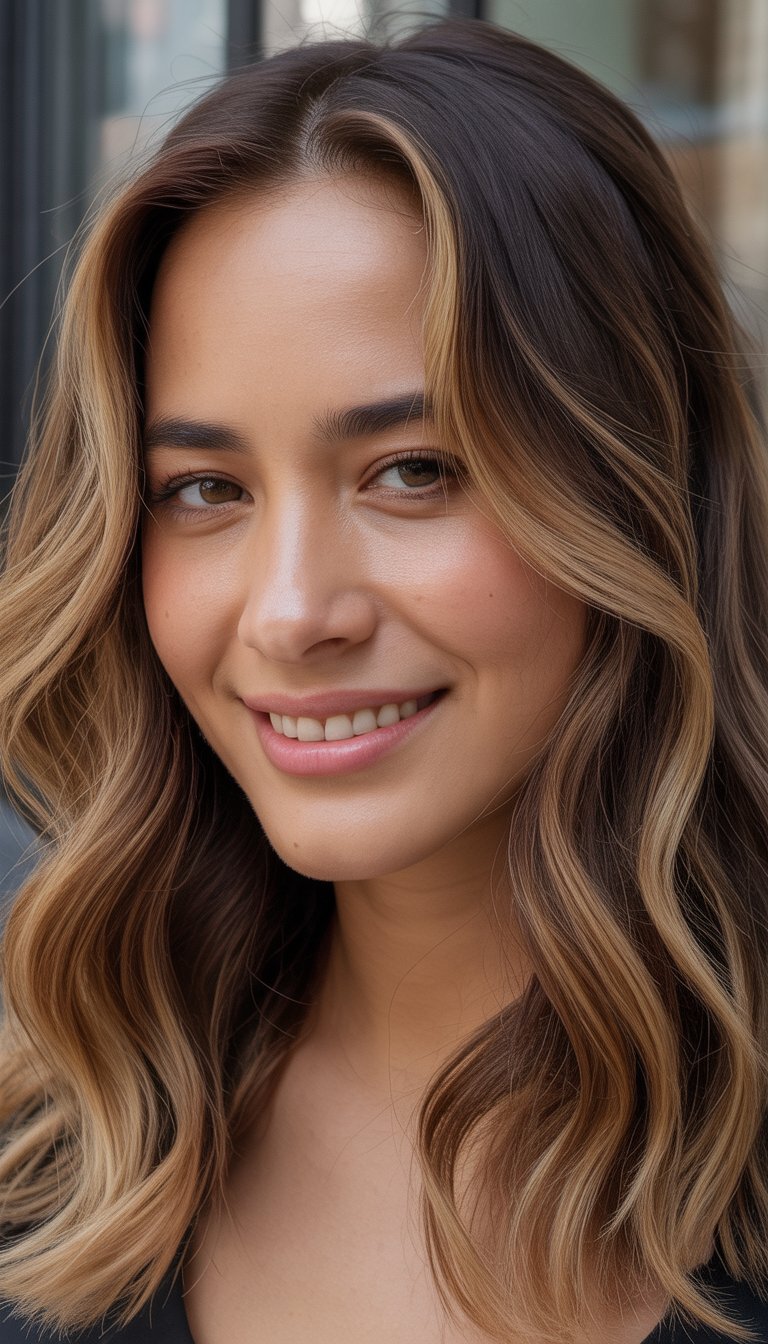
Dramatic caramel balayage pushes the contrast and saturation of standard caramel balayage to its maximum — more sections lightened, lighter target tone, and a more vivid caramel toner applied over a very pale base. The result is a balayage that reads as genuinely dramatic from across a room: the caramel sections are bright, warm, and abundant enough to visually compete with the base color rather than simply adding dimension to it. This is the balayage for those who want to make a genuine statement with their hair color.
Best for: Dark to medium brown base hair. Warm and olive skin tones. Those who want maximum visual impact from their balayage.
Color tip: Dramatic caramel balayage on dark hair typically requires lightening the targeted sections to a level 8–9 before toning — at this level of lightness, a warm caramel toner produces a truly vivid, saturated golden-caramel that reads as dramatic rather than subtle.
7. Thick Caramel Highlights
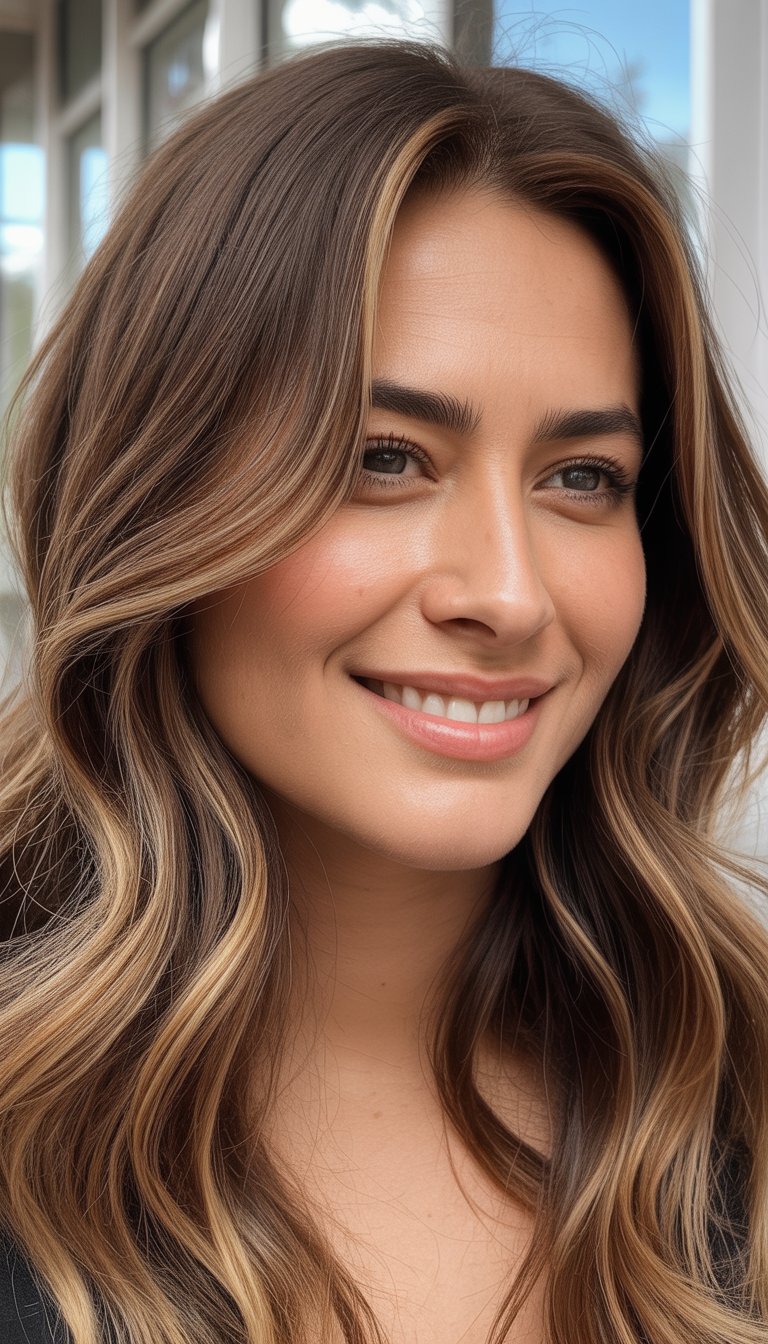
Thick caramel highlights are a modern, fashion-forward interpretation of traditional foil highlights — instead of the fine, scattered sections of classic highlights, thick caramel highlights use broad sections of color that create visible, defined warm panels within the base color. The chunky quality of the thick highlights reads as intentional and bold, referencing the more graphic highlight techniques that have re-emerged as a counterpoint to the soft, diffused balayage that dominated hair color for the previous decade. This is highlights as a design element rather than simply a dimension-adding tool.
Best for: Those who prefer a more deliberate, visible highlight effect. Light to medium brown base hair where the thick caramel sections create clear contrast.
Styling tip: Thick caramel highlights look particularly striking on straight or slightly wavy hair where the defined sections are most visible — heavy texture can obscure the graphic quality of the broad highlight panels.
8. Caramel Highlights With Dark Roots

Caramel highlights with intentional dark roots is the combination that delivers maximum natural-looking beauty with minimum maintenance — the dark root is an essential part of the design rather than a sign of neglect, grounding the caramel highlights in a rich, deep foundation that makes the warm sections appear even more luminous by contrast. The grow-out of a natural dark root into maintained caramel highlights is essentially invisible, allowing gaps of 3–5 months between salon visits without any visible demarcation or awkward grow-out phase.
Best for: Naturally dark-rooted individuals who want to embrace rather than disguise their grow-out. All caramel highlight styles — the dark root improves the natural quality of every caramel technique.
Maintenance tip: With deliberate dark roots, only the mid-length and end sections of the caramel highlights require maintenance — the root area is left entirely natural, reducing both the time and cost of highlight appointments.
9. Caramel Highlights on a Light Auburn Base
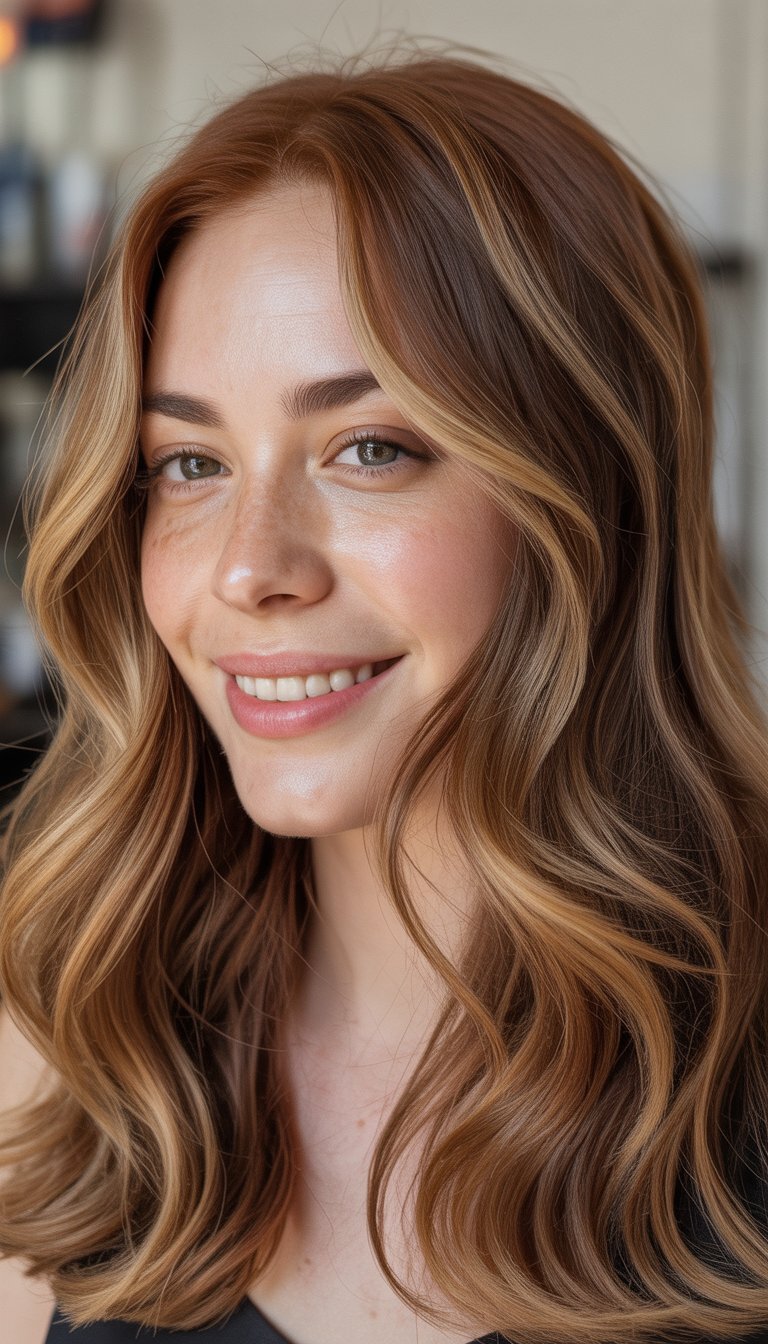
Caramel highlights on a light auburn base create one of the warmest and most richly dimensional combinations in this collection — the red-warm quality of auburn and the golden-warm quality of caramel occupy adjacent zones on the warm color spectrum, creating a harmonious, autumnal palette. The caramel sections appear particularly warm and luminous against the auburn base because both colors contain warm red and golden tones, making the transition between them natural and seamless. The result reads as beautiful and sun-kissed in every lighting condition.
Best for: Natural or colored auburn hair. Warm, golden, and olive skin tones. Those who want warmth rather than contrast in their highlights.
Color tip: On auburn hair, a caramel toner with slight red or copper undertones creates the most seamless and flattering result — a purely golden caramel can look slightly disconnected from a red-toned base.
10. Caramel Highlights on Dramatic Waves

Dramatic waves amplify caramel highlights to an extraordinary degree — the deep crests and valleys of pronounced waves create a constantly shifting relationship between the caramel sections and the natural base color, producing a color that appears to change with every movement of the head. At the crest of each wave, the caramel catches the light and appears bright and luminous; in the valley, the natural base color dominates and appears rich and deep. The visual complexity created by this interplay of color and wave structure makes dramatically waved caramel highlights one of the most stunning looks in this collection.
Best for: Medium to long hair. Dark to medium brown base where the wave-and-highlight interaction creates maximum contrast.
Styling tip: Deep-set waves created with a large curling iron or heated rollers — rather than soft, loose curls — create the defined wave structure that best amplifies the dimensional quality of caramel highlights.
11. Softly Blended Caramel Highlights
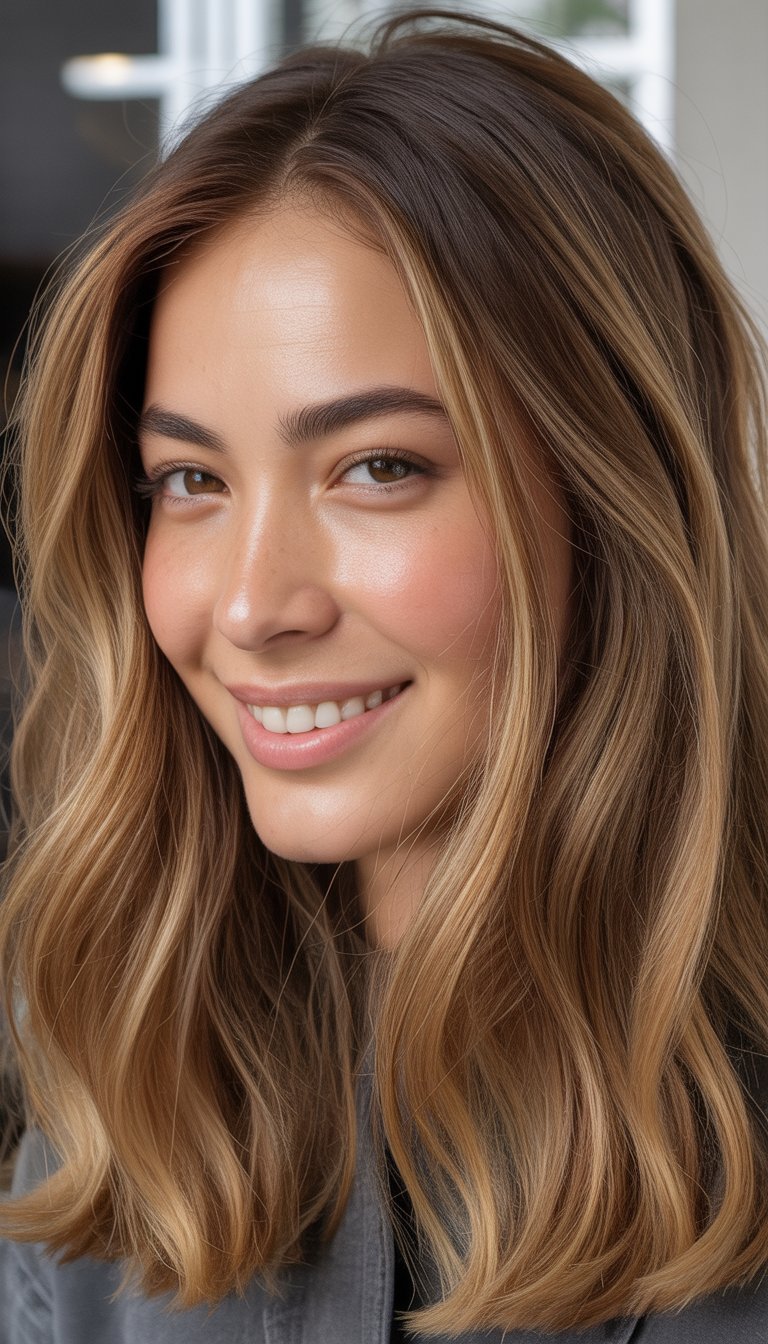
Softly blended caramel highlights are the technique that produces the most natural-looking highlight result — rather than defined sections or panels of caramel, the color is feathered and blended so thoroughly into the base that no individual highlight strand is visible. The overall effect is a warming and brightening of the hair’s general tone rather than specific visible highlights, creating color that reads as the hair’s own natural variation rather than applied color. This is the highlight technique for those who want improved color without looking like they’ve visited a salon.
Best for: Those who prefer the most natural, unprocessed-looking color enhancement. Light to medium brown base hair where soft blending creates the most seamless result. Those with fine hair where defined highlights can look overly dramatic.
Maintenance tip: Softly blended highlights are among the lowest-maintenance options — the seamless blending means grow-out is virtually invisible for 4–6 months.
12. Blunt Bob With Caramel Highlights

A blunt bob with caramel highlights is a study in intentional contrast — the clean, geometric precision of a blunt cut provides the structure, while caramel highlights introduce warmth, softness, and dimension into what could otherwise be a severe look. On a blunt bob, caramel highlights are most visible at the ends (the blunt line) and at the surface, where they catch the light most directly. The combination creates a haircut that appears both polished and warm, structured and soft.
Best for: Bob-length hair (chin to shoulder). All base colors — the geometric precision of a blunt bob makes the caramel highlights appear particularly intentional and refined.
Styling tip: A sleek blowout with a round brush creates the smooth surface on a blunt bob that best showcases caramel highlights — the smooth finish allows the light to travel evenly across the highlights, maximizing their luminosity.
13. Caramel Streaks on a Dark Brunette Base

Caramel streaks on a dark brunette base are a more graphic, deliberate interpretation than standard balayage — the caramel appears in visible, defined streaks rather than a diffused gradient, creating a high-contrast look that’s bold and fashion-forward. The dark brunette base makes each caramel streak read as particularly vivid and warm, the contrast creating a visual drama that’s absent when the same streaks are applied to lighter base colors. This is the caramel highlight approach for those who want their color to make a clear, confident statement.
Best for: Dark brunette (level 3–5) base hair. Warm skin tones. Those who want visible, defined highlights rather than a blended, natural look.
Color tip: On a dark brunette base, caramel streaks require significant pre-lightening to achieve a true warm caramel rather than brassy orange. Discuss the exact target tone and the lightening process required with your colorist before committing to this look.
14. Caramel Highlights and Soft Layering

Soft layering and caramel highlights work together to create movement and dimension simultaneously — the layers add physical movement to the hair, while the highlights add visual movement through the warm-cool contrast of caramel and base color. The combination creates hair that appears to move and shift even when it’s still, because the layered structure and the highlighted color both contribute different types of dynamic quality. This is one of the most versatile and broadly flattering combinations in this collection.
Best for: All hair lengths sufficient for layering. All base colors. All face shapes — soft layers can be cut to flatter any face shape, and caramel highlights enhance rather than complicate any layered cut.
Styling tip: Air-dry with a diffuser or blowout with a medium-barrel round brush to allow the layers to settle naturally — this creates the most organic, dimensional result from the layered-and-highlighted combination.
15. Natural Waves With Caramel Highlights

Natural waves with caramel highlights is the most effortlessly beautiful look in this collection — the highlights enhance the hair’s natural wave pattern by adding warm tonal variation, so each wave crest appears to be naturally lighter than the valley below. The result looks precisely like what summer sun does to wavy hair, creating the appearance of naturally sun-kissed hair that’s been growing in the sun all season. This look requires minimal styling because the hair’s natural texture does most of the visual work.
Best for: Naturally wavy (type 2a–2c) hair. All base colors. Those who want to enhance their natural texture rather than fight it.
Color tip: When applying caramel highlights to naturally wavy hair, ask your colorist to consider the wave pattern when placing highlights — sections that will sit at the crest of a wave benefit most from concentrated color, while sections that will fall in the wave valleys need lighter coverage.
16. Low-Contrast Caramel Highlights
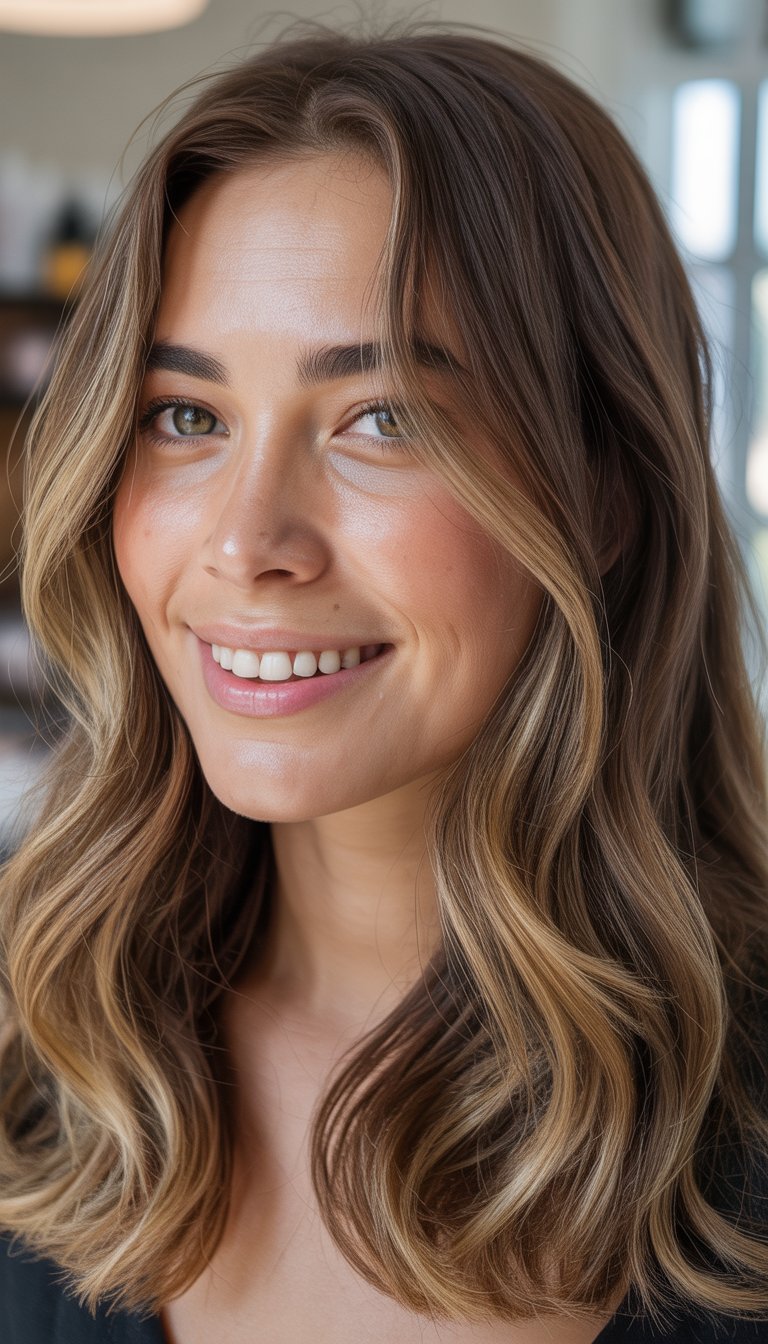
Low-contrast caramel highlights are applied on a base color that’s already relatively close to caramel — light brown, warm medium brown, or honey blonde — so the highlights add refinement and shimmer rather than dramatic contrast. The result is hair that appears to have a natural golden warmth throughout, with the highlights visible primarily in direct light as a subtle brightening and warming effect. This is caramel highlights in their most understated form, ideal for those who want enhancement rather than transformation.
Best for: Light brown to honey blonde base hair. All skin tones — the low-contrast approach avoids the risk of over-highlighting for any complexion. Those who prefer subtle, natural-looking color enhancement.
Maintenance tip: Low-contrast highlights are the most forgiving to maintain — because the highlight tone is close to the base color, grow-out is virtually imperceptible and appointments can be spaced 5–6 months apart.
17. Dark Hair With Caramel Highlights

Dark hair with caramel highlights is the highest-contrast version of the caramel highlight concept — the depth of very dark hair makes each caramel section read as extraordinarily warm and luminous, creating a look with genuine drama and visual impact. The specific appeal of this combination is the way it retains the richness and depth of dark hair while adding the warmth and movement that caramel provides — neither quality is sacrificed for the other. The result reads as rich, sophisticated, and deeply flattering on the warm, olive, and dark skin tones that most commonly have naturally dark hair.
Best for: Level 2–4 (very dark to dark brown) base hair. Warm, olive, and dark skin tones. Those who want to add warmth and dimension without significantly lightening their overall hair color.
Color tip: Dark hair requires the most pre-lightening to achieve true caramel — the targeted sections must be lifted to at least a level 7–8. This typically requires a professional colorist and potentially two sessions for the darkest hair levels.
18. Layered Bob With Caramel Highlights
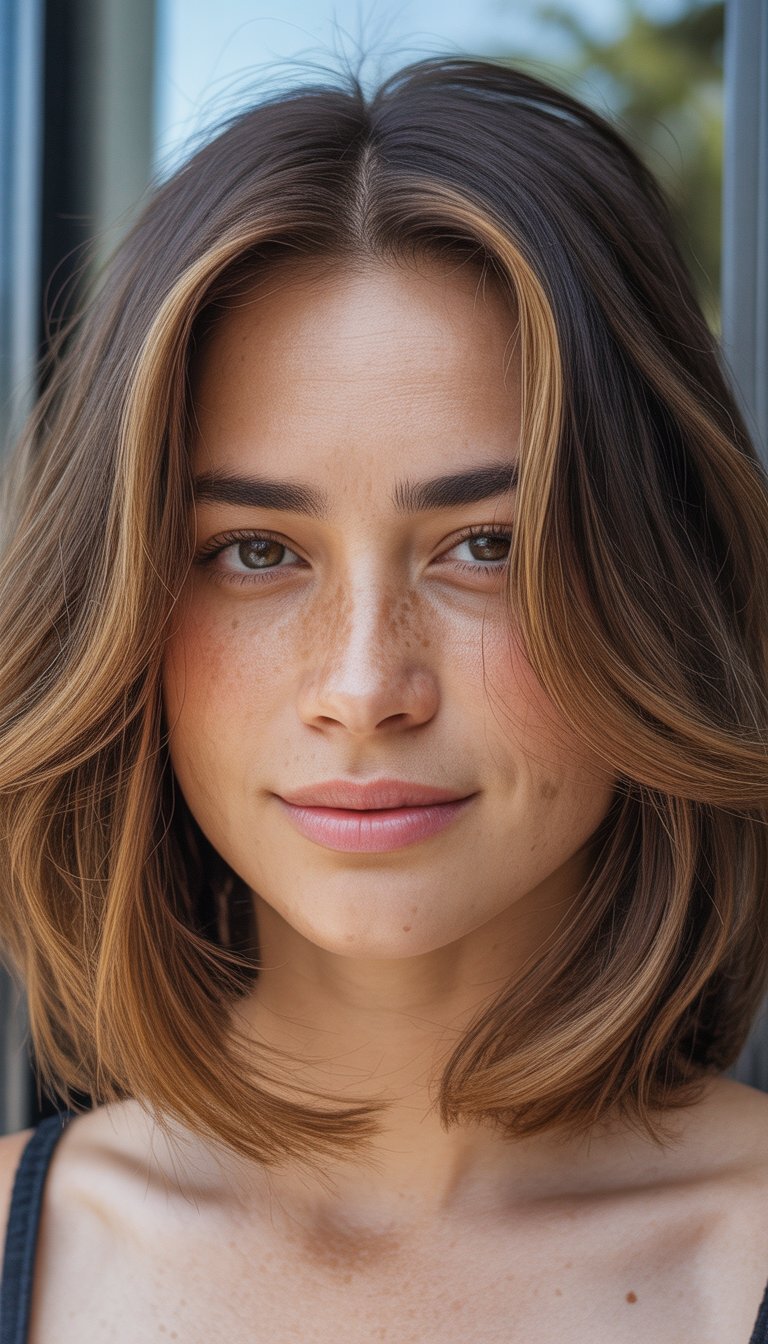
A layered bob with caramel highlights combines the movement of layers with the precision of a bob cut, creating a short style that has genuine visual complexity and warmth. Unlike a blunt bob where the color is visible primarily at the ends, a layered bob reveals the caramel highlights at multiple depths throughout the cut — the shorter layers near the crown may show the color at a different intensity than the longer sections at the jaw, creating a naturally dimensional result that moves beautifully. The caramel highlights also prevent the layered bob from appearing flat or one-dimensional at any angle.
Best for: Bob length (chin to just-below-ear). All base colors. Those who want a short cut with maximum color dimension.
Styling tip: A round-brush blowout or styling with a flat iron in alternating directions creates the movement that best showcases the layered bob’s caramel highlights — static, unmoving styles conceal the dimensional quality that makes this combination so effective.
19. Warm Brown Hair With Caramel Highlights

Warm brown hair with caramel highlights is one of the most harmonious and naturally beautiful color combinations available — the warm undertones already present in warm brown hair and the warm golden tone of caramel are perfectly complementary, creating a monochromatic warm palette that reads as genuinely luminous. The highlights don’t create contrast so much as depth — the caramel lightens and brightens specific sections of the warm brown, creating the impression that the hair’s own warmth is concentrated in certain places. This is hair color that appears to come from within rather than from outside.
Best for: Warm medium brown (level 5–7) base hair. Warm and golden skin tones. Those who want to deepen and enhance their existing hair’s natural warmth.
Color tip: Ask your colorist for a warm caramel toner (one with golden rather than ashy undertones) — on a warm brown base, an ashy caramel can appear disconnected from the base’s warmth rather than harmonious with it.
20. Sun-Kissed Caramel Highlights

Sun-kissed caramel highlights are the technique that most closely replicates what the sun actually does to naturally dark or medium hair over a long summer — a gradual, irregular lightening of the sections most exposed to UV light, concentrated at the surface and ends rather than evenly distributed through the hair. The sun-kissed quality depends on irregular, natural-feeling placement: no two sections are exactly the same tone, the transition from base to highlight is completely gradual, and the caramel appears most concentrated at the points where sunlight would realistically have the most impact. The result looks like a life lived outdoors rather than a salon appointment.
Best for: All base colors. All skin tones. Those who want the most naturally authentic-looking highlight result.
Technique tip: Sun-kissed caramel requires a colorist who specializes in balayage or freehand painting — the irregular, organic placement that creates the sun-kissed quality cannot be achieved with foils or systematic sectioning.
21. Caramel Highlights and Curtain Bangs

Caramel highlights and curtain bangs are a perfect pairing — the caramel provides warmth and dimension, while curtain bangs provide the face-framing softness that makes both the highlights and the face appear more beautiful. Caramel highlights placed specifically in the curtain bang sections brighten and warm the entire face area, enhancing the flattering effect that curtain bangs already provide. The two elements together create a look that softens every face shape while adding a warmth and golden quality that makes the overall look more romantic and feminine.
Best for: All hair lengths. All face shapes — curtain bangs flatter every face shape, and caramel highlights enhance their flattering effect. Those who want to maximize the face-brightening quality of their highlights.
Styling tip: Dry curtain bangs with a round brush, curving them away from the center part — this positions the caramel-highlighted sections of the bangs to catch the maximum amount of light and create the most flattering face-brightening effect.
22. Lived-In Caramel Highlights

Lived-in caramel highlights are specifically designed to look beautiful at every stage of grow-out — at their freshest appointment, they look intentionally warm and dimensional; six months later, the grown-out roots and slightly faded caramel continue to look deliberate and attractive rather than neglected. The lived-in quality is achieved through careful placement (concentrated toward the ends, lighter toward the roots) and through the use of a slightly muted, warm caramel tone that fades gracefully rather than washing out to an unflattering pale. This is caramel highlights for those who want freedom from tight salon scheduling.
Best for: Those who can’t or don’t want to visit the salon frequently. All base colors. Those who value long-term, low-maintenance color.
Maintenance tip: A warm toning gloss at 4–6 months keeps lived-in caramel looking its best between color appointments — the gloss refreshes the caramel warmth without requiring a full highlight service.
23. Caramel Highlights for Round Faces

Caramel highlights for round faces uses strategic placement to create the visual elongation and definition that most flatter a round face shape. The key technique is concentrating the brightest, most saturated caramel at the crown and at the ends of the hair rather than along the sides — highlights at the sides of the face draw attention to the width, while highlights at the crown draw the eye upward, creating the illusion of length. Face-framing caramel pieces that start at the temples rather than the hairline also avoid emphasizing the width of the face.
Best for: Round face shapes. All base colors and hair lengths.
Color tip: Avoid placing heavy caramel highlights at the widest points of the sides — concentrate the color at the top sections and the ends, where it elongates rather than widens the face’s perceived shape.
24. Long Swoopy Layers With Caramel Highlights

Long swoopy layers with caramel highlights create one of the most movement-filled and romantically dimensional looks in this collection — the swooping quality of long, sweeping layers creates a hair silhouette that appears to move even when still, and caramel highlights add tonal movement to the physical movement of the layered cut. Each sweeping layer reveals the caramel highlight at a different depth and angle as the hair moves, creating a constantly evolving color display that rewards close attention with its complexity and beauty.
Best for: Long hair (below shoulder). All base colors. Those who want maximum movement and dimensional quality from their highlights.
Styling tip: Blow dry long swoopy layers by directing the airflow downward and outward rather than straight down — this creates the sweeping, flowing quality that best showcases caramel highlights’ dimensional character.
25. Caramel Highlights and Bangs

Caramel highlights and bangs work together by addressing the same concern from different directions: bangs frame and define the face, while caramel highlights add warmth to the face-framing sections, creating a combined effect that’s more flattering than either element alone. Caramel highlights in the bang area specifically — lighter caramel pieces woven through the bang sections — create a brightening effect that makes the fringe read as warm and luminous rather than heavy and obscuring. The result is a bang style that appears to enhance rather than dominate the face.
Best for: Any bang style — blunt, wispy, side-swept, or curtain. All base colors. Those whose bangs feel heavy or dominating and want to add lightness.
Color tip: Keep the caramel in the bang sections lighter and more diffused than the highlights in the rest of the hair — heavy, saturated caramel in a short bang section can read as patchy rather than luminous.
26. Caramel Highlights for Thick Hair

Thick hair benefits from caramel highlights in a specific way — the density of thick hair can make it appear flat or one-dimensional even when it’s beautifully healthy, and caramel highlights create the visual variation that makes thick hair appear to have the lightness and movement of naturally dimensional hair. The highlights essentially create visual weight variation throughout the hair’s mass, preventing the thick hair from reading as a solid, monolithic block of color. On thick hair, generous coverage of caramel highlights (more sections, wider distribution) is usually needed to achieve the same visible effect that fewer highlights would create on thinner hair.
Best for: High-density hair. All base colors. Those whose thick hair tends to look heavy or flat in photographs.
Color tip: Request fuller coverage than usual — on thick hair, highlights placed too sparsely become invisible within the hair’s volume and density, requiring generous application to achieve visible dimensional effect.
27. Radiant Caramel Highlights

Radiant caramel highlights are applied and finished specifically to maximize the light-reflective, luminous quality of the caramel tone — the target is a color that appears to glow from within rather than simply catching light at the surface. This luminous quality comes from the combination of precise highlighting, a warm caramel toner that contains golden pigments specifically chosen to reflect warm light, and a high-shine gloss treatment applied at the end of the service. The result is highlights that appear genuinely radiant in every lighting condition, from natural sunlight to indoor ambient light.
Best for: All base colors and hair lengths. All skin tones — the warm, luminous quality of radiant caramel is particularly flattering on warm and golden skin tones but enhances every complexion.
Color tip: Request a glossing service at the end of your highlight appointment — this seals the cuticle and amplifies the shine of both the caramel and the natural base color, creating the radiant quality that distinguishes this look from standard highlights.
28. Caramel Highlights With Textured Ends

Caramel highlights with textured ends combines the dimensional color of caramel highlights with a deliberately textured, slightly undone end styling that creates a casual, effortlessly beautiful result. The textured ends — achieved through point-cutting, razor-cutting, or sea salt styling products — allow the caramel highlights to reveal themselves in a more irregular, organic pattern than smooth ends would permit. The combination reads as genuinely effortless rather than high-maintenance, suggesting hair that’s naturally beautiful rather than carefully constructed.
Best for: Medium to long hair. All base colors. Those who prefer a casual, undone aesthetic rather than sleek, polished styling.
Styling tip: Apply a sea salt or texture spray to slightly damp hair and allow to air-dry — the resulting natural texture enhances the organic, organic quality of both the textured ends and the caramel highlights.
29. Caramel Highlights on Black Hair
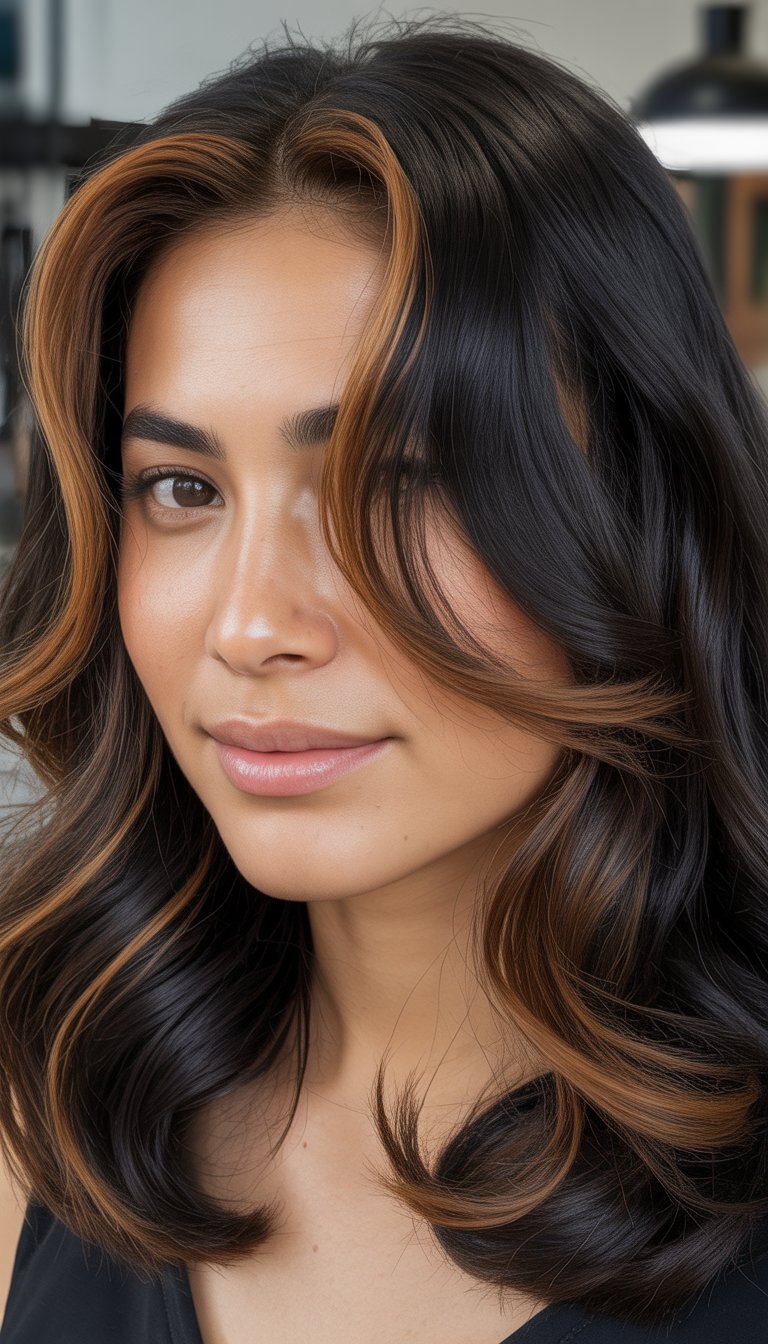
Caramel highlights on black hair create the most dramatic contrast possible in the caramel highlight family — the depth of natural black hair (level 1–2) makes even a moderate amount of caramel appear exceptionally vivid and warm. The contrast is not just light versus dark but warm versus cool: natural black hair has a cool, blue-black quality that makes the warm golden-brown of caramel appear almost luminescent by comparison. This is the highest-commitment caramel highlight option and the one that delivers the most dramatic visual transformation.
Best for: Natural black or very dark brown hair. Warm and olive skin tones where the caramel warmth is particularly complementary. Those willing to invest in the lightening process required.
Color tip: Black hair requires significant lifting before any caramel toner can achieve its true warm quality — the targeted sections must be lifted to at least a level 7 (ideally 8) to avoid the highlights reading as orange or brassy rather than caramel. This process typically requires a professional colorist.
30. Mid-Length Cut With Caramel Highlights

A mid-length cut (collarbone to shoulder) with caramel highlights occupies the sweet spot of hair color visibility — long enough to show a meaningful portion of the highlight gradient, short enough to maintain the color’s saturation and freshness more easily than very long hair. At mid-length, caramel highlights are most visible at the ends (concentrated around the collarbone) and at the face-framing sections, creating a look that’s dimensional and warm without requiring the extensive lightening that longer, darker hair would need. The mid-length cut is the ideal caramel highlight starting point for those new to highlights.
Best for: Collarbone to shoulder-length hair. All base colors. Those new to highlights who want maximum impact without maximum commitment.
Maintenance tip: Mid-length hair typically requires highlight maintenance every 3–4 months — shorter than very long hair (which grows out faster visibly) but longer than very short hair (where growth is immediately obvious).
31. Fine Caramel Highlights on Brown Hair

Fine caramel highlights on brown hair use very thin sections — sometimes called micro-highlights or baby lights — to create a diffused, shimmering warmth throughout the hair rather than visible individual highlighted strands. The thinness of the sections means no single highlight is large enough to appear as a discrete section, but the cumulative effect of many fine highlights creates a beautiful, sun-kissed glow throughout the hair. This technique works particularly well on fine-textured hair where thicker highlights would appear too obvious or heavy.
Best for: Fine-textured hair. Light to medium brown base hair. Those who want the most natural and refined highlight effect possible.
Color tip: Fine caramel highlights (baby lights) are time-intensive to apply — expect a longer salon appointment than standard highlights, as many more sections are processed. The investment in time is worthwhile for the exceptionally natural result.
32. Caramel Highlights With Curly Bob

A curly bob with caramel highlights is a combination that makes the most of natural curl texture — the curls create natural variation in how the caramel highlights are exposed to light, with the outer surface of each curl catching more light than the inner section, creating a beautiful, naturally dimensional effect. Applied to the surface and outer sections of the curls specifically (mimicking where sunlight would strike the curl pattern), caramel highlights enhance the curl pattern’s own natural three-dimensionality. The result is a curly bob that appears simultaneously structured and effortlessly warm.
Best for: Naturally curly or tightly wavy hair at bob length. All base colors.
Color tip: Ask your colorist to apply the caramel highlights using a diffused, balayage approach that follows the curl pattern rather than standard foil sections — foils can disrupt the curl’s natural shape during processing.
33. Shoulder-Length Cut With Caramel Highlights

A shoulder-length cut with caramel highlights is one of the most practical and versatile hair color combinations — the length is ideal for showing caramel highlights at their most visible (concentrated at the ends and shoulder level, where they frame the face and collarbone) while remaining manageable and easy to style. Caramel highlights at shoulder length create a particularly flattering result when the hair is worn down, as the highlights sit precisely at the level of the face and collarbone, adding warmth to the skin tones in the most visible area. This is the all-round best length for showcasing caramel highlights.
Best for: Shoulder-length hair. All base colors. All skin tones. The most universally flattering caramel highlight length.
Styling tip: Shoulder-length caramel highlights look particularly beautiful with a slight bend or wave — a large-barrel curling iron used to create soft, loose waves allows the caramel sections to catch the light as the hair moves.
34. Long Wavy Hair With Caramel Highlights

Long wavy hair with caramel highlights is the most classically beautiful combination in this collection — the combination of extended length, natural wave movement, and warm caramel dimension creates hair that reads as genuinely extraordinary. On long wavy hair, caramel highlights are visible throughout the hair’s length and from every angle: the front sections frame the face with warmth, the side sections catch light as the hair moves, and the back sections create a dramatic, dimensional sweep that’s stunning from behind. This is the caramel highlight look that most fully realizes the technique’s potential.
Best for: Long (below shoulder blade) wavy hair. All base colors. Those who want the most dramatic and beautiful caramel highlight result possible.
Maintenance tip: Long wavy hair with caramel highlights requires regular deep conditioning in addition to toning maintenance — the length means the oldest, most processed sections are at the ends, which need extra moisture to maintain the healthy appearance that makes caramel highlights look their best.
How to Achieve Caramel Highlights
- Choose the right technique for your look: Balayage creates the most natural, sun-kissed caramel; foil highlights create more defined, higher-contrast sections; baby lights create a diffused, shimmering overall warmth. Discuss which technique suits your goal with your colorist before the appointment.
- Pre-lighten appropriately: On dark or black hair, the highlight sections must be lightened to at least a level 7–8 before a caramel toner will read as warm golden-brown rather than orange or brassy. This is the most critical and technically demanding step.
- Tone with a warm formula: The difference between caramel and standard blonde highlights is the toner — a warm, golden-brown toner transforms pre-lightened sections into caramel, while a neutral or ashy toner creates blonde. Specify “warm caramel” to your colorist.
- Maintain with warm-specific products: Purple shampoos are designed for cool, ashy blonde — they will neutralize caramel’s warmth. Instead, use a color-safe, sulfate-free shampoo and a warm toning gloss every 8–10 weeks to maintain the caramel quality.
Frequently Asked Questions
How long do caramel highlights last?
The highlight placement (the lightened sections) is permanent — it remains until the hair grows out or is cut. The warm caramel tone applied over those sections typically remains vibrant for 6–10 weeks before beginning to fade toward a lighter, slightly less warm blonde. With a warm toning gloss every 8–12 weeks, caramel highlights can be maintained at their best color quality for many months between full highlight appointments.
Do caramel highlights work on all hair colors?
Yes, but the process and result vary significantly by base color. On light to medium brown hair, caramel highlights require moderate lightening and create a natural, harmonious result. On dark brown or black hair, more extensive lightening is required and the result is higher-contrast and more dramatic. On red or auburn hair, caramel highlights add warmth and dimension that harmonizes beautifully with the red base. On naturally blonde hair, caramel highlights add depth and a warm, golden quality.
What’s the difference between caramel highlights and balayage?
Caramel describes the color — a warm, golden-brown tone — while balayage describes the application technique (freehand painting rather than foils). Caramel highlights can be applied via balayage, foils, or baby lights, and balayage can be applied in caramel or in many other tones. Most people requesting “caramel balayage” want both: the warm caramel color applied using the freehand balayage technique, which produces the most natural-looking caramel result.
Final Thoughts
Caramel highlights remain one of the most requested and most consistently flattering hair color techniques for a simple reason: the warm, golden-brown tone of caramel enhances rather than competes with every natural hair color, adds warmth and luminosity to every complexion, and creates dimensional movement that makes hair look more beautiful regardless of how it’s styled.
The 34 ideas here demonstrate the full range of what caramel highlights can achieve — from the barely-perceptible warmth of low-contrast highlights on warm brown hair to the dramatic transformation of bold caramel streaks on black hair, from the effortless beauty of sun-kissed balayage to the intentional graphic quality of thick highlight panels. Whatever the starting color, the hair length, or the desired level of drama, caramel highlights offer a version perfectly suited to the goal.