24 Haircut Ideas for Long Hair: Fresh Styles to Transform Your Locks
Long hair gives you more to work with than any other length — more layering options, more styling versatility, more ways to shift between polished and undone. The challenge is that long hair without the right cut can look heavy, shapeless, or simply unchanged year after year. The right haircut for long hair isn’t about removing length; it’s about adding shape, movement, and intention to what’s already there.
These 24 ideas cover the full range of what long haircuts can do, from sleek precision cuts to layered shags, from curtain-bang fringe to dramatic V-cuts. Each style is a different answer to the same question: what does long hair look like when it’s working at its best?
24 Haircut Ideas for Long Hair
1. Blunt Cut Straight Ombré

A blunt perimeter cut on long straight hair creates a clean, graphic silhouette that ombré color makes even more striking. The sharp edge at the ends draws the eye downward, emphasizing the length, while the ombré transition from darker roots to lighter ends adds depth and dimension that flat single-process color can’t achieve. Together, the precision cut and the tonal shift create a look that’s deliberately modern.
Best for: Naturally straight or straightened hair. Those who want length with an edge.
Styling tip: A flat iron used in a single downward pass creates the glassy finish that makes this style most impactful. A drop of shine serum through the lengths before styling adds the final polish.
2. Classic Face-Framing Layered Cut

Face-framing layers are one of the most universally flattering additions to long hair. Shorter pieces around the face draw attention to the eyes and cheekbones, soften the jawline, and create a sense of movement and lightness that blunt long hair lacks. The rest of the length can remain long and uninterrupted — the framing layers do all the structural work without sacrificing any of the overall length.
Best for: All face shapes. Particularly effective at softening square and angular features.
Maintenance: Trims every 10–12 weeks keep the face-framing pieces at the right length. They grow out gradually and gracefully.
3. Subtle Layers with Soft Waves

Internal layers — cut through the mid-lengths and ends rather than at the face — remove weight from dense long hair without changing the overall silhouette. The result is hair that moves more freely, holds waves better, and feels lighter without looking shorter. This is the haircut for those who love their length but feel like their hair sits flat and heavy.
Best for: Thick, heavy long hair. Those who want more movement without sacrificing length.
Styling tip: Soft waves created with a large-barrel curling iron showcase subtle layers far better than straight styles — the wave pattern reveals the different lengths working together.
4. Blunt V-Cut Straight Long Hair

The V-cut creates a pointed perimeter that draws the eye to the center back of the hair, emphasizing length and creating a dramatic shape that blunt cuts don’t have. On straight hair, the V is especially crisp and geometric — the lines are clean and the point is precise. It’s a deliberately sculptural haircut that works particularly well on those with thick, straight hair where the point can hold its shape.
Best for: Straight to slightly wavy hair. Those who want a distinctive long hair silhouette.
Styling tip: The V-cut is most visible when hair is worn down and straight. A blowout with a flat iron keeps the lines sharp and the point defined.
5. Blowout Layers with Tapered Finish

Layers cut specifically to hold and enhance a blowout — slightly longer underneath, shorter on top — create the cascading, voluminous finish of a salon blowout that’s achievable at home. The taper at the ends prevents the hair from looking blunt or heavy at the perimeter, instead creating a natural, feathered finish that moves with every step. This is the haircut that makes at-home blowouts look professional.
Best for: Straight to wavy hair. Those who regularly blow-dry their hair.
Styling tip: A large round brush pulled downward during blow-drying creates the tension and smoothness that makes this style’s layers visible and beautiful.
6. Butterfly Cut Layers

The butterfly cut takes the concept of curtain bangs and extends it throughout the length — shorter layers at the crown and face create a distinctive silhouette that’s shorter at the top and longer at the bottom, like wings. The style has a retro 70s quality that works beautifully on both straight and wavy hair, and the dramatic crown layers create volume and movement that standard long hair cuts simply don’t.
Best for: Straight to wavy hair. Those who want a more editorial, fashion-forward long cut.
Styling tip: Air-drying with a curl cream or beach spray emphasizes the butterfly shape by letting the shorter layers curl and wave independently of the longer lengths.
7. Voluminous Wavy Cut

A cut designed specifically for wavy hair works with the natural texture rather than against it — layers are placed where the waves naturally break, and the perimeter is cut to complement the wave pattern rather than fight it. The result is more volume, more defined waves, and a style that looks good with minimal effort. Wavy hair cut incorrectly goes flat; cut correctly, it’s the most effortlessly beautiful of all textures.
Best for: Naturally wavy hair (2a–2c wave patterns).
Styling tip: Apply a curl-enhancing cream to damp hair and scrunch gently. Air-dry or diffuse — don’t brush through once dry or the waves separate into frizz.
8. Dimensional Layers with Volume

Multiple lengths of layers cut throughout the hair — crown, mid-length, and ends — create a three-dimensional effect that’s visible when the hair moves. Each layer catches the light differently, giving long hair a depth and richness that single-length cuts lack. This is the cut for hair that needs to look full and alive rather than flat and hanging.
Best for: Fine to medium long hair that tends to look flat.
Styling tip: A volumizing spray at the roots before blow-drying, followed by a round brush lift at the crown, maximizes the three-dimensional quality of this cut.
9. Long Voluminous Curls with Light Layers

Light internal layers on long curly hair remove just enough weight to allow the curls to spring up and take their full shape, without taking so much that the curl pattern collapses or the hair loses its length. The result is curly hair that’s both long and fully voluminous — something that’s difficult to achieve without the right cut because the weight of long hair often pulls curls down and makes them lose their shape.
Best for: Medium to loose curl patterns (2c–3b).
Maintenance: Curly hair should always be cut dry so the stylist can see the actual curl pattern and place layers correctly.
10. Soft Layered Ombré Blowout

Layers and ombré color work together to create a blowout style that has both movement and dimension. The layers give the blowout its bounce and shape, while the ombré ensures that every layer is a slightly different shade — darker closer to the root, lighter at the tips — which makes the layering visible and adds richness to the overall look. It’s a more sophisticated take on the classic blowout.
Best for: Straight to wavy hair. Medium to long lengths.
Styling tip: Blow-dry in sections, lifting each layer at the roots for volume. The ombré color will show through each lifted section, making the layers visually distinct.
11. Elegant Half-Up Cascading Curls

A half-up style on layered long curly hair shows off both the cut and the curl pattern simultaneously — the upper section gathers the curls and gives them height, while the lower section cascades freely, showing the full length of the curl from root to end. The right cut makes this style effortless: layers that are placed at the face and through the mid-lengths fall naturally into the cascade shape without needing to be arranged.
Best for: Medium to loose curls on long hair.
Styling tip: Define curls fully before pinning the upper section up. Well-defined curls make the cascade look deliberate; undefined frizzy curls look unfinished.
12. Sleek Deep U-Cut

The U-cut is softer than the V-cut but more dramatic than a blunt perimeter — the gentle curve at the back creates a rounded point that’s elegant rather than sharp. On sleek, straight hair, the U-cut has a clean, architectural quality that reads as deliberately styled. The curved perimeter also tends to be more flattering than a blunt straight edge on most body types, as the curve creates a natural diagonal line.
Best for: Straight and sleek hair. Most face shapes and body types.
Styling tip: The U-cut is most visible when hair is worn down and smooth. A flat iron used from roots to ends followed by a shine spray makes the curve sharp and the surface glassy.
13. Messy Waves

Messy waves on long hair are the result of a cut that allows the hair to move freely — layers that are long enough to maintain the wave pattern but graduated enough that no single section dominates. The “messy” quality is intentional: the undone, tousled look requires hair that’s been cut to fall naturally rather than hair that’s been styled to look undone on top of a poor cut. The difference is immediately visible.
Best for: Naturally wavy or slightly wavy hair. A relaxed, effortless aesthetic.
Styling tip: Scrunch with a sea salt spray on damp hair, then air-dry without touching. The less you intervene, the better the messy wave looks.
14. Long Layered Blowout

The long layered blowout is a classic for good reason — layers that cascade from the crown downward create volume and movement that a round brush blowout can fully realize. This is hair that moves like it’s in slow motion: each layer lifts slightly and falls back, creating a constantly shifting, light-catching quality that’s both glamorous and wearable.
Best for: Straight to wavy long hair. Those who blow-dry regularly.
Styling tip: Work in sections from the bottom up when blow-drying. The lower layers set first while the upper layers are still drying create the foundation for volume at the crown.
15. Feathered Shag

The modern feathered shag is a softer, more current version of the 1970s original — lots of layers through the crown and mid-lengths, with feathered, piece-y ends that have lightness and texture rather than blunt weight. It’s the long hair cut for those who want maximum movement and a slightly rock-and-roll edge. The shag works particularly well on naturally textured hair that tends to get heavy at long lengths.
Best for: Straight to wavy, thick hair. A more editorial, textured aesthetic.
Styling tip: Rough-dry with fingers and a diffuser for a naturally tousled shag finish. Avoid brushing — it separates the feathered layers and eliminates the texture that makes the style distinctive.
16. Sleek Layers with Subtle Shape

Subtle layering on sleek long hair is the art of adding shape without adding obvious texture — the layers are minimal, placed strategically to give the ends some movement and prevent the hair from looking flat, but not so prominent that they disrupt the sleek overall silhouette. This is the preferred cut for those who love the look of long, smooth hair but find that a single blunt length feels too heavy and lifeless.
Best for: Fine to medium straight hair that blows out well.
Styling tip: A round brush blowout followed by a flat iron through the lengths creates the smoothness that makes subtle layers visible and beautiful without any texture interrupting the finish.
17. Textured Voluminous Long Curls
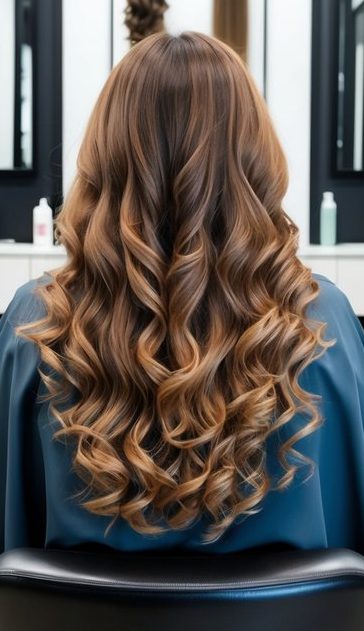
Textured layers on long curly hair create a more defined, piece-y curl pattern that has individual character rather than a single uniform mass of curls. The layering separates the curls at different lengths so that some curl tighter, some fall looser, and the overall effect is a rich, varied texture that looks genuinely natural. This is the cut that transforms long curly hair from something to be managed into something to be celebrated.
Best for: All curl patterns on long hair. Particularly impactful on 3a–3c curls.
Styling tip: Apply a curl-defining cream section by section, using the praying hands method to smooth the product over each curl without disturbing the pattern. Diffuse on low heat.
18. Tousled Waves

Tousled waves sit between fully defined curls and flat straight hair — loose, undone, with some sections more wave-y than others. The key to achieving this look is a cut with enough layering to allow the waves to form at different lengths, creating variation rather than uniformity. The tousled quality comes from a combination of the right cut and a styling approach that doesn’t over-control the final result.
Best for: Naturally wavy to slightly curly hair.
Styling tip: A lightweight mousse applied to damp hair, followed by air-drying or diffusing on low, creates the most genuine tousled wave. Over-styling with heat tools produces waves that look curled rather than tousled.
19. Butterfly Layers with Dimensional Highlights

When butterfly cut layers meet dimensional highlights, the result is a style with extraordinary depth and movement. The highlights emphasize each layer by making them visually distinct — the shorter crown layers catch lighter tones, while the longer underlayers show the deeper base. Every time the hair moves, a different combination of tones and lengths is visible. It’s a high-impact style that works because of how the cut and color reinforce each other.
Best for: Straight to wavy long hair. Those who want maximum visual impact.
Styling tip: Let the hair air-dry naturally after applying a light wave spray — the butterfly layers settle into their natural position and the dimensional highlights become visible without any additional heat styling.
20. Defined Spiral Curls

Long hair with tightly defined spiral curls requires a cut that removes weight while maintaining curl integrity — too much length causes the spirals to elongate and lose their coil, too much layering causes them to shrink unpredictably. The right cut finds the balance: enough length to show the full spiral, enough layering to allow the curl to spring up without pulling flat. The result is long hair that looks genuinely, beautifully curly.
Best for: Tighter curl patterns (3b–4a) at long lengths.
Styling tip: The shingling method — applying gel section by section and smoothing each curl individually — creates the most defined spiral result on long curly hair.
21. Soft Ombré Sleek Cut

A soft ombré on a clean, sleek long cut creates a color story that’s subtle rather than dramatic — the transition from darker to lighter is gradual and gentle, covering the length of the hair in a way that reads as natural rather than processed. The sleek cut provides the clean canvas that makes soft ombré most beautiful; any texture or frizz interrupts the smooth color transition that’s the focal point of this style.
Best for: Straight to slightly wavy long hair. Those who want color without obvious highlights.
Maintenance: A toning gloss every 8–10 weeks keeps the lighter ends fresh and prevents brassiness.
22. Fringe and Layers

Adding fringe — whether curtain bangs, wispy fringe, or a heavier blunt bang — to layered long hair transforms the entire look by adding a new focal point at the face. The bangs draw attention upward while the layers create movement through the length. Curtain bangs are the most versatile fringe option for long hair: they part naturally, grow out gracefully, and work with almost every face shape and hair texture.
Best for: All hair types and textures. Most face shapes benefit from some form of fringe.
Maintenance: Curtain bangs need trimming every 6–8 weeks to maintain the right length. Between trims, a round brush and a blow-dryer keep them shaped and in place.
23. Chic Waves

Chic waves are the polished, deliberate version of beach waves — the movement is there, but the finish is smoother and more controlled. This style requires a cut with enough internal layering to hold the wave pattern without looking heavy, and styling technique that creates consistent waves rather than random ones. The result is long hair that looks like it’s been styled by someone who knew exactly what they were doing.
Best for: Straight to wavy long hair.
Styling tip: A medium-barrel curling iron, curling sections away from the face and alternating direction slightly, creates the most natural-looking chic wave. Finger-comb once cool, then set with a light-hold spray.
24. Precision Straight Long Cut

The precision straight cut is the purest expression of long hair — no layers, no texture, no fringe, just perfectly even length from all sides. It sounds simple but requires significant skill to execute correctly: any unevenness in the perimeter is immediately visible on straight hair, and the blunt weight line must sit exactly where it needs to for the overall proportion to work. When done correctly, it’s one of the most striking and timeless long hair cuts available.
Best for: Very straight, fine to medium hair. Those who love a clean, minimal aesthetic.
Maintenance: Trims every 8–10 weeks are essential — split ends are highly visible on a precision cut, and any unevenness at the perimeter becomes apparent quickly.
How to Choose the Right Long Haircut
- Fine hair: Avoid blunt one-length cuts that emphasize thinness. Subtle layers and face-framing pieces add the appearance of fullness without removing length.
- Thick hair: Internal layers remove bulk without changing the silhouette. Blunt cuts on thick hair create a heavy, triangular shape — layering corrects this.
- Straight hair: Precision cuts, V-cuts, U-cuts, and sleek layered styles work best. Texture-focused cuts like the shag tend to fall flat on very straight hair without significant styling effort.
- Wavy hair: Cuts designed for movement — butterfly cut, subtle layers, textured ends — work with the wave rather than fighting it. Blunt perimeters can make wavy hair look boxy.
- Curly hair: Always cut dry by a stylist who understands curl patterns. Light internal layers are almost always beneficial. Avoid heavy blunt cuts that weigh down the curl.
- Face shape: Face-framing layers flatter almost every face shape. Curtain bangs soften strong foreheads. V-cuts and U-cuts elongate round faces. Blunt cuts work best on oval faces.
Frequently Asked Questions
How often should long hair be trimmed?
Long hair should be trimmed every 10–12 weeks to prevent split ends from traveling up the hair shaft and causing breakage. Those who use heat styling tools frequently may need trims every 8 weeks. Waiting longer than 12 weeks between trims doesn’t help hair grow longer — split ends break off unpredictably, often higher than the original split, resulting in uneven length that’s harder to correct later.
What is the best haircut for long fine hair?
Face-framing layers and subtle internal layers are consistently the most flattering choices for long fine hair. They add the appearance of volume and movement without removing significant length. Blunt one-length cuts on fine hair tend to look limp and flat, while too many heavy layers can make thin hair look stringy. The goal is strategic layering that creates the illusion of density.
Do layers make long hair look shorter?
Layers don’t make long hair look shorter — they make it look fuller and more shaped. The overall length impression is defined by the longest layers, which are maintained with a layered cut. What layers do change is the silhouette: instead of a straight, heavy perimeter, layered long hair has movement and shape that reads as intentional rather than simply grown out.
What long haircut is lowest maintenance?
A single-length blunt cut requires the fewest appointments (trims every 12 weeks) but demands consistent styling to look intentional. Subtle layers with a soft perimeter are arguably the lowest-maintenance option overall because they grow out gracefully and look good at multiple stages between trims. Cuts that require very precise perimeters — V-cuts, precision straight cuts — need more frequent trims to stay sharp.
Final Thoughts
The best long haircut is the one that works with your specific hair texture, face shape, and styling habits rather than against them. A cut that fights your natural texture requires daily effort to maintain; a cut that works with it looks good whether you spend two minutes or twenty on styling.
Talk to your stylist about your hair’s natural tendencies before committing to a specific style — the 24 ideas here are starting points for that conversation, not rigid prescriptions. The right long haircut should feel like an upgrade to your existing hair, not a departure from it.