18 Brunette to Blonde Ombre Ideas: Sun-Kissed Locks for Effortless Style
Brunette to blonde ombre is one of the most requested and most flattering hair color transformations available — it takes the depth and richness of brunette’s darkest roots and gradually opens them up toward warm, luminous blonde ends, creating a gradient that reads as simultaneously natural and breathtakingly beautiful. The appeal of this specific ombre direction lies in its authenticity: this is exactly what happens to dark hair exposed to summer sun over many seasons, making brunette to blonde ombre the most convincingly organic of all color transformations. From barely-there sun-kissed fades to dramatic dark-to-bright transformations, the range of interpretations within this single concept is extraordinary.
These 18 brunette to blonde ombre ideas cover the full creative spectrum — from soft, caramel-infused honey melts to bold molten gold touches and delicate ivory strand balayage.
18 Brunette to Blonde Ombre Ideas
1. Sun-Kissed Waves

Sun-kissed waves is the most naturally authentic interpretation of the brunette to blonde ombre concept — the blonde sections are concentrated exactly where the sun would realistically strike the hair most strongly, at the surface of each wave and at the lengths and ends. The combination of the wave styling and the ombre placement creates a particularly beautiful and natural-looking result, as the lighter sections appear to be exactly where the sunlight has been most intense. This is the hair color that makes people ask whether you’ve just returned from a beach holiday.
Best for: Medium to long wavy hair. Warm and golden skin tones. Those who want the most naturally sun-kissed result.
Styling tip: Apply a luminizing oil through the waves after styling — the oil enhances the light-catching quality of the blonde sections and creates the warm, glow-from-within quality that defines authentic sun-kissed hair.
2. Golden Honey Melt
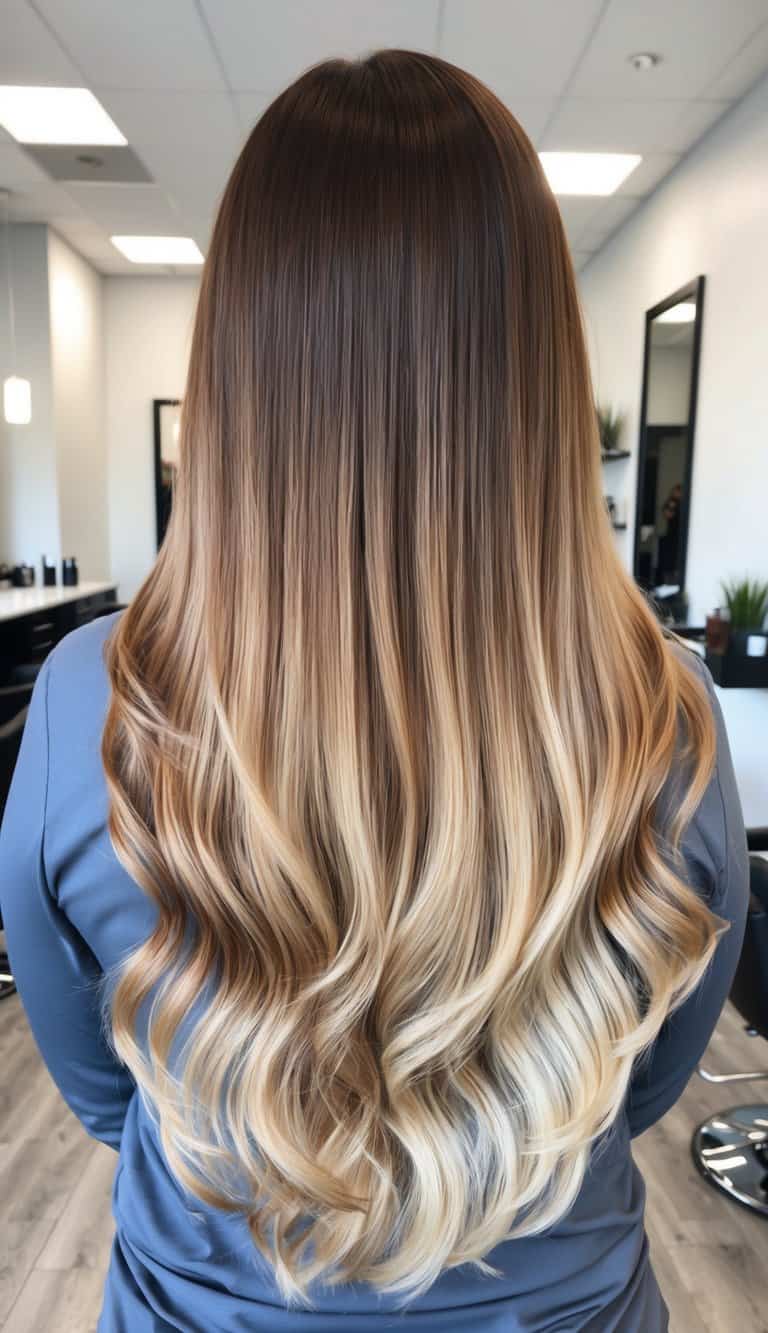
Golden honey melt creates a particularly warm and luminous brunette to blonde transition — the “honey” quality refers to the specific warm golden tone of the blonde end color, which has the rich, amber-warm quality of liquid honey rather than the cooler, lighter quality of standard blonde. The melt technique ensures there are no visible lines or harsh transitions, just a continuous, flowing gradient from the brunette root through increasingly golden tones to the honey blonde ends. This is one of the warmest and most flattering brunette to blonde transitions, particularly beautiful in photographs.
Best for: Warm and olive skin tones. Medium brown base hair where the warm blonde creates a harmonious, natural-looking transition. All hair lengths.
Color tip: A golden toner (level 8, warm undertone) over properly pre-lightened ends creates the specific honey quality — cooler or ashy toners produce standard blonde rather than the rich honey warmth.
3. Dark Caramel Delight

Dark caramel delight sits at the darker, richer end of the brunette to blonde spectrum — the “blonde” end color here is actually a deep, warm caramel that’s closer to dark golden blonde than standard blonde, creating a transition that’s dramatic without being high-contrast. The dark caramel quality means the lightest sections of the hair are still deep, warm, and rich rather than pale or light, making this one of the most wearable and universally flattering interpretations of the brunette to blonde ombre concept. The delight quality comes from the warmth and richness of the caramel that makes the hair appear genuinely luminous.
Best for: Dark brunette base hair. Warm and golden skin tones. Those who want a subtle, natural-looking transition rather than a dramatic dark-to-light statement.
Color tip: Dark caramel requires lightening the target sections to only level 7–8 — no need for pale blonde pre-lightening, which makes this one of the less damaging brunette to blonde ombre options.
4. Warm Chestnut Fade

Warm chestnut fade moves through one of the most beautiful intermediate zones in the brunette to blonde transition — chestnut is the warm reddish-brown that sits between dark brunette and golden brown, and as a fade it creates a gradient that glows with internal warmth at every point from root to end. The warm quality permeates every zone of this ombre: the brunette root is warm, the chestnut mid-tone is warm, and the blonde end is warm. Nothing about this gradient reads as cool or ashy, creating hair with an unmistakably sun-warmed quality that flatters warm and golden complexions particularly well.
Best for: Medium to dark brunette base hair. Warm and olive skin tones. Those who want a warm, natural-looking fade without stark contrast.
Maintenance tip: Warm chestnut fades age extremely gracefully — the warm tones at every level mean even as the color fades, it continues to look warm and flattering rather than washed out.
5. Hazelnut Frost

Hazelnut frost introduces a cooler, slightly frosted quality to the brunette to blonde transition — the root is a warm, rich hazelnut brown, but as the gradient progresses toward the ends, the blonde becomes increasingly cool and frosted rather than warm and golden. The contrast between the warm hazelnut root and the cool frosted ends creates a particularly interesting and sophisticated color that reads as dimensional from every angle. The frost at the ends adds a brightness and modernity that distinguishes this from warmer, more conventional brunette to blonde ombres.
Best for: Cool and neutral skin tones. Medium brown base hair. Those who want a brunette to blonde ombre with a cooler, more contemporary feel.
Color tip: A cool, slightly ashy blonde toner (rather than warm gold) applied to the ends creates the frosted quality. The contrast between warm root and cool ends is what makes this look distinctive.
6. Sweet Almond Highlights
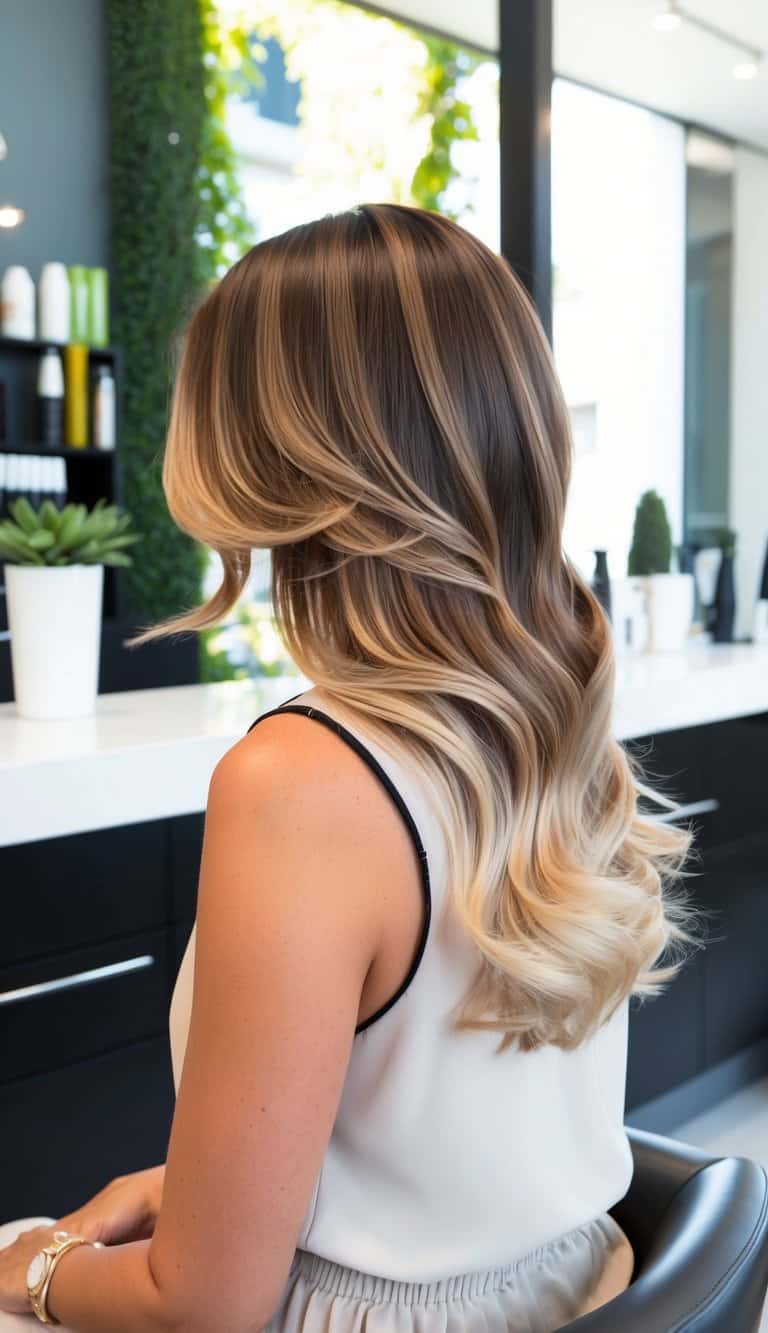
Sweet almond highlights use the balayage technique to place warm, nutty almond-toned blonde throughout a brunette base rather than as a strict gradient — the result reads more like a complex highlighting than a traditional ombre, with warm almond blonde visible at multiple points throughout the hair rather than concentrated only at the ends. The sweet quality adds a slightly lighter, more golden tone to the almond that makes the combined effect more luminous and sun-kissed than the cooler beige of standard almond. This is one of the most natural-looking brunette to blonde transitions in the collection.
Best for: All brunette base colors. Warm and golden skin tones. Those who want the dimensional quality of a highlight look within the brunette to blonde ombre concept.
Styling tip: Loose, natural-looking waves best showcase sweet almond highlights — the irregular wave pattern ensures the almond sections are visible from multiple angles simultaneously.
7. Spiced Latte Flow

Spiced latte flow draws from the coffee shop palette — the brunette root has the warm, slightly spiced quality of a cinnamon-dusted espresso, while the blonde ends arrive at the creamy, milky warmth of a well-made latte. The flow quality describes the seamless, continuous movement of the gradient from spiced dark to creamy light, with each zone blending perfectly into the next. The spice element in the brunette root adds a slightly reddish-warm quality that makes the dark sections more interesting and dimensional than plain flat brunette.
Best for: Warm skin tones. Medium to dark brown base hair. Those who love warm, coffee-inspired color palettes.
Color tip: A warm-red brunette toner at the roots (applied as a gloss rather than a permanent color) creates the spiced quality — it intensifies the brunette’s warmth without significantly changing its depth.
8. Molten Gold Touch

Molten gold touch applies the brightest, most saturated gold possible at the ends of a brunette to blonde ombre — the “molten” quality suggests liquid metal, a color so warm and luminous it appears to glow with its own light source. This is one of the most vivid and striking entries in the collection: the gold at the ends is genuinely warm-golden rather than standard blonde, with a richness and saturation that reads as genuinely extraordinary in direct light. The contrast between the deep brunette root and the molten gold ends creates a color transformation that’s both dramatic and beautiful.
Best for: Those who want maximum warmth and visual impact. Warm skin tones. Dark brunette base hair where the contrast amplifies the gold’s luminosity.
Color tip: True molten gold requires a specifically warm toner — request a golden-amber formula at level 8–9. Standard blonde toners produce a more neutral result that lacks the molten quality.
9. Creamy Fudge Harmony

Creamy fudge harmony creates one of the most indulgent and warm brunette to blonde transitions — the fudge quality at the root is a deep, dense, slightly caramel-warm brunette that transitions through progressively lighter and creamier tones toward the warm, creamy light blonde at the ends. The harmony element is the most important quality of this look: every tone in the gradient belongs to the same warm, dessert-inspired palette, ensuring the transition appears completely seamless and intentional. This is brunette to blonde ombre at its most cohesive and harmonious.
Best for: Warm skin tones. Medium to dark brunette base hair. Those who want a cohesive, warm palette throughout the entire gradient.
Styling tip: This look is particularly beautiful on straight or slightly wavy hair where the full gradient is visible as a continuous, flowing color journey from root to end.
10. Vanilla Swirl

Vanilla swirl uses a swirling application technique at the transition zone — rather than a linear horizontal boundary between brunette and blonde, the color is blended in soft, swirling motions that create a more organic, irregular transition. The vanilla quality at the blonde end is soft, warm, and slightly creamy rather than bright or vivid, reading as the most gentle and natural-looking end color in the collection. The swirl technique adds visible variation at the mid-lengths that makes the gradient appear more complex and dimensional than a standard linear ombre.
Best for: All brunette base colors. Warm and neutral skin tones. Those who want a particularly organic, natural-looking ombre transition.
Color tip: A very diluted warm blonde toner at the end sections creates the specific soft vanilla quality — full-strength toners produce a more obvious, defined blonde that lacks the soft, vanilla-like quality of this look.
11. Amber Radiance

Amber radiance is one of the most gemstone-inspired brunette to blonde ombres — the amber quality at the lighter end of the gradient has the warm, orange-golden depth of genuine amber stone, rich and luminous with an internal warmth that catches light in an almost jewel-like way. The transition from brunette root to amber end moves through progressively warmer and more golden tones, each zone radiating warmth that earns the radiance part of the name. This is a particularly striking choice for those with naturally warm undertones in both their hair and skin.
Best for: Very warm and golden skin tones. Medium to dark brunette base. Those who want the warmest, richest possible end tone in their ombre.
Color tip: Amber requires a warm-orange-gold toner applied to the ends after pre-lightening to level 8 — it’s warmer and more saturated than standard honey blonde, sitting between caramel and deep gold.
12. Velvet Chocolate Shine
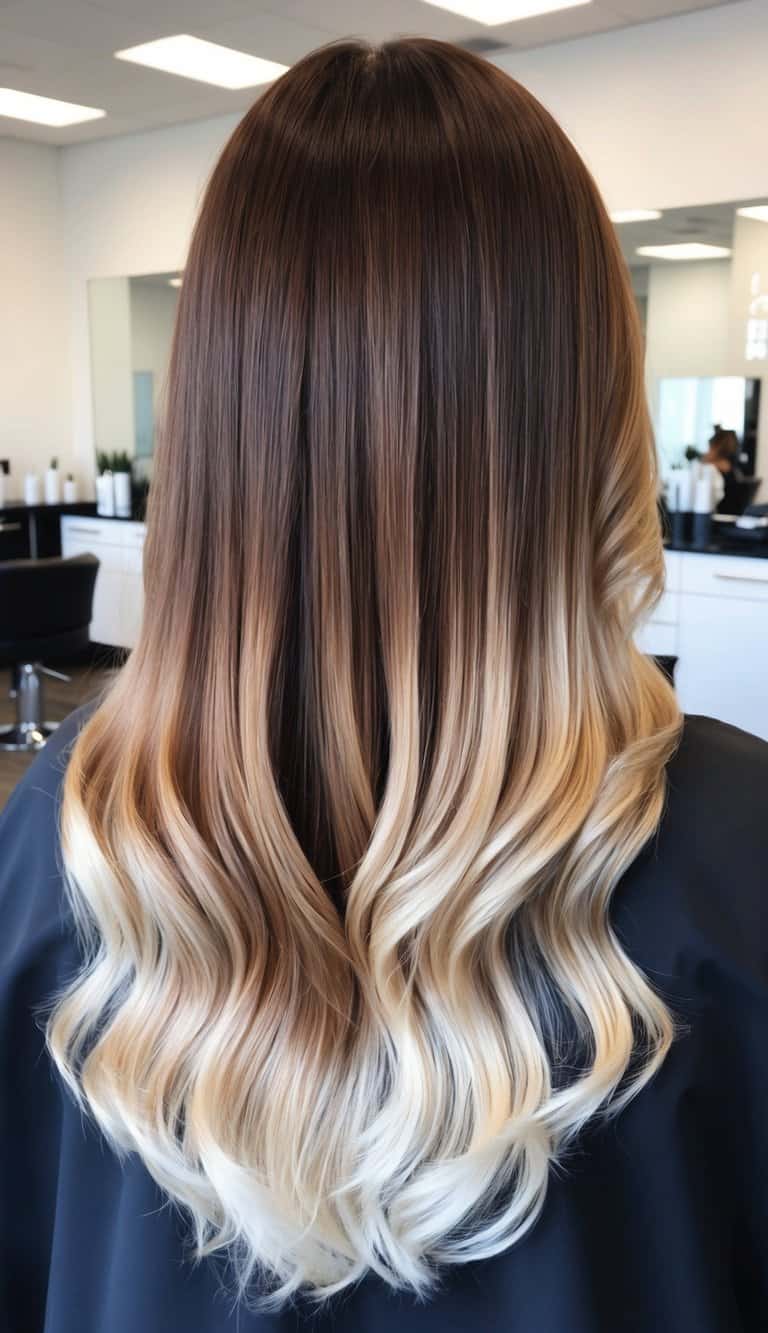
Velvet chocolate shine keeps the ombre gradient closer to the brunette end of the spectrum — the lightest sections of this look are a warm, medium chocolate blonde rather than true light blonde, creating a subtle, dimensional ombre that reads primarily as rich brunette with luminous warmth throughout. The velvet quality describes the depth and richness of the brunette root, while the shine comes from a high-gloss finishing treatment that makes the entire gradient appear exceptionally lustrous. This is brunette to blonde ombre for those who love their dark hair but want to add warmth and luminosity.
Best for: Those who love their brunette hair and want subtle enhancement rather than dramatic lightening. Dark brunette base. All skin tones.
Maintenance tip: A glossing treatment every 6–8 weeks maintains the velvet quality and shine — the gloss refreshes both the brunette depth and the golden warmth of the lighter sections simultaneously.
13. Creamy Caramel Ends

Creamy caramel ends concentrate the most beautiful warm caramel tone specifically at the ends of the hair — the transition from brunette root to creamy caramel end is gradual and natural, but the most defined and saturated color is reserved for the very tips. The creamy quality of the caramel adds a soft, luxurious warmth rather than a sharp, bright blonde, making the end color feel rich and indulgent rather than obviously colored. This end-concentrated approach creates a look that’s subtle at the roots but increasingly beautiful as the eye travels down the length of the hair.
Best for: All brunette base colors. All skin tones. Those who want their color to be most visible at the lengths and ends rather than distributed throughout the hair.
Styling tip: Loose curls or waves concentrated at the ends best showcase creamy caramel ends — the curl pattern at the tips ensures the caramel is visible and eye-catching as the hair moves.
14. Ivory Strand Balayage

Ivory strand balayage uses the freehand painting technique to place very pale, cream-ivory blonde sections specifically through dark brunette hair — each ivory strand reads as a distinct, individual highlight rather than a blended gradient, creating a look that’s high-contrast and striking. The ivory quality of the blonde is specifically pale, warm, and creamy — closer to white than golden — which creates a particularly dramatic contrast against dark brunette. The strand-by-strand balayage application creates irregular, natural-feeling placement that reads as genuinely organic despite being obviously artistic.
Best for: Dark brunette base hair where the ivory creates maximum contrast. Cool and neutral skin tones. Those who want a high-contrast, graphic brunette to blonde effect.
Color tip: Ivory requires lifting the targeted strands to a very pale level (9–10) before applying a warm, creamy toner — on anything less than very pale pre-lightened hair, ivory reads as standard light blonde rather than the specific creamy white of true ivory.
15. Maple Blonde Fusion

Maple blonde fusion blends the warm reddish-brown of maple syrup with the warmth of blonde, creating a transition that moves through particularly rich and appetizing warm tones. The maple quality in the mid-tones — between the brunette root and the blonde ends — is a specific reddish-brown that has more red than standard caramel, creating an autumnal warmth that’s particularly beautiful in fall and winter. The fusion describes how the maple mid-tone blends into both the brunette root and the blonde ends without creating visible boundaries.
Best for: Warm and red-toned skin. Medium brown base hair. Those who want their ombre to have a distinctly warm, autumnal character.
Color tip: Add a small amount of copper or red-toned direct dye to the mid-length toner to create the maple quality — without this red element, the mid-tone reads as standard caramel rather than maple.
16. Coco Blonde Twist

Coco blonde twist takes its color inspiration from the coconut — specifically the transition from the coconut’s dark outer shell to its pale, creamy interior. The “coco” root is a deep, slightly warm dark brown that transitions through mid-tones into a pale, creamy blonde at the ends. The twist element refers to a slightly unexpected quality in the gradient — rather than a simple linear fade from dark to light, the transition has a slight turn or variation that makes the ombre read as more interesting and less predictable. This is a particularly sophisticated and food-inspired brunette to blonde concept.
Best for: Dark brunette base hair. Warm and neutral skin tones. Those who want a high-contrast but natural-looking ombre.
Color tip: The twist can be achieved by varying the length of the transition zone on different sections of the hair — some sections transition over a longer distance, others more abruptly — creating the slightly irregular, interesting quality that defines this look.
17. Fawn Melt

Fawn melt creates one of the most understated and elegant brunette to blonde transitions — fawn is a soft, warm, slightly greyed light brown that sits between brunette and blonde in a particularly muted and sophisticated zone. Applied as a melt over brunette roots, fawn creates an ombre that reads as dimensional and warm without any obvious blonde sections, the color shifting so gradually and subtly that the transition appears completely natural. This is the brunette to blonde ombre for those who want enhancement rather than transformation, dimension rather than drama.
Best for: All brunette base colors. Neutral and cool skin tones where the muted warmth of fawn is more flattering than vivid gold or caramel. Those who prefer subtle color enhancement.
Maintenance tip: Fawn’s muted quality makes grow-out essentially invisible — the soft, slightly greyed tone blends seamlessly with the natural root at every stage of growth.
18. Buttery Blonde Touch

Buttery blonde touch closes the collection with perhaps the most luxuriously warm and inviting entry — buttery blonde has the rich, golden-warm quality of high-quality butter, deeper and more golden than cream but lighter and softer than caramel. As a “touch” rather than a full ombre, the buttery blonde appears at the ends in a concentrated, deliberate way rather than distributed throughout the length, creating a look that reserves the best, warmest tone for the most visible and light-catching section of the hair. The result is hair that appears to have been dipped in warm, golden light at the ends.
Best for: Warm and golden skin tones. All brunette base colors. Those who want their ombre to feel rich and luxurious rather than bright or stark.
Color tip: A warm golden toner at level 8 applied specifically to the final 4–6 inches of the hair creates the concentrated, deliberate touch quality — the limited application zone ensures the buttery blonde reads as the most precious and distinctive part of the look.
How to Achieve Brunette to Blonde Ombre
- Assess your starting point: The darkness of your brunette base determines how many lightening sessions are needed and how much damage to expect. Very dark brunette may require 2–3 sessions to reach the target blonde without breaking the hair.
- Choose your transition zone: The length of the gradient zone — from where the lightening begins to where the blonde is fully developed — is the most important creative decision. A long transition creates a subtle, natural look; a short transition creates a more obvious, high-contrast ombre.
- Tone for warmth: Most brunette to blonde ombres look best with a warm toner over the lightened sections — golden, honey, caramel, or amber toners create the warm, sun-kissed quality that makes this ombre family so attractive. Ashy or cool toners create a different aesthetic that doesn’t suit all complexions.
- Maintain with warm-specific products: Avoid purple shampoos, which neutralize warm tones. Instead, use color-safe sulfate-free shampoo and a warm glossing treatment every 8–10 weeks to maintain the golden, honey quality of the blonde sections.
Frequently Asked Questions
How long does brunette to blonde ombre last?
The ombre placement is permanent — the lightened sections remain until cut away. The toned color over those sections fades over 6–10 weeks, shifting toward a slightly lighter, less saturated version of the original tone. Regular toning glosses every 8–12 weeks maintain the specific warm tone while the underlying lightened sections remain indefinitely. Most people refresh the placement itself once or twice a year while toning more frequently.
Is brunette to blonde ombre damaging?
All lightening processes cause some structural change in the hair, and brunette to blonde ombre is no exception. The degree of damage depends on the darkness of the starting brunette and the target blonde tone — lighter target tones require more aggressive lightening and cause more structural change. With professional technique, bond-building treatments (such as Olaplex), and proper aftercare, brunette to blonde ombre can be achieved with manageable, well-maintained results.
Can I do brunette to blonde ombre at home?
Very subtle brunette to blonde ombres on lighter brunette bases can be achieved at home with careful technique and appropriate products. However, on medium to dark brunette hair where significant lightening is required, professional application is strongly recommended — the risk of uneven lightening, orange brassiness, and hair damage is significantly higher with DIY application. The cost of professional correction of a failed home ombre typically exceeds the cost of a professional appointment from the start.
Final Thoughts
Brunette to blonde ombre occupies a uniquely satisfying position in hair color — it makes the most of brunette’s natural depth while adding the warmth and luminosity of blonde, creating a result that neither color achieves alone. The 18 ideas here demonstrate just how much creative range exists within this one concept: from the barely-there velvet chocolate shine to the vivid molten gold touch, from the autumnal maple blonde fusion to the sophisticated fawn melt, the brunette to blonde family is endlessly versatile and universally appealing.
Whatever the base color, the skin tone, or the desired level of drama, there is a perfect brunette to blonde ombre interpretation in this collection — one that adds warmth, dimension, and the effortless beauty of sun-kissed hair without sacrificing the richness that makes brunette hair so beautiful to begin with.


