13 Braided Hairstyle Ideas: Stunning Styles from Classic to Complex
Braided hairstyles occupy a unique space in the world of hair styling — they are simultaneously one of the most ancient and one of the most contemporary styling choices a person can make. From the simplest three-strand plait to the most complex crown constructions involving multiple braiding techniques layered together, braids have been present across nearly every human culture throughout recorded history, and their enduring popularity in modern hairstyling speaks to something fundamental in their appeal: the way they transform hair into something structured, artistic, and long-lasting all at once.
What makes braiding endlessly fascinating is the sheer variety of techniques available — each producing a distinctly different visual result, each suited to different hair textures, lengths, and styling goals. These 13 braided hairstyle ideas explore that variety from classic French braids to architectural five-strand constructions, offering something for every skill level and occasion.
13 Braided Hairstyle Ideas
1. Five-Strand Braid

The five-strand braid is the architectural achievement of the braiding world — a construction that takes the familiar logic of the three-strand plait and expands it into something more complex, more visually intricate, and more impressive as a finished result. Where a standard braid interlocks three sections in a repeating over-under pattern, the five-strand version manages five separate sections simultaneously, creating a wider, flatter braid with a distinctive woven texture that no three-strand braid can replicate. The pattern has a basket-weave quality — each strand passing over one and under one of its neighbors in a sequence that, once understood, becomes surprisingly intuitive but always looks technically demanding to observers.
The five-strand braid works best on longer hair where the additional width of the braid can be fully appreciated, and the technique rewards practice: the first few attempts may be frustrating as hands learn to manage two extra sections, but the result once mastered is one of the most striking braided styles available. It can be worn as a single braid down the back, as a side braid, or incorporated into updos as a statement element.
Best for: Long, thick hair where the braid’s width reads most dramatically. Formal occasions where an unusually skilled braid will be noticed and appreciated.
Technique tip: Learn by holding three sections in one hand and two in the other, working the outermost strand inward one step at a time rather than trying to manage all five independently.
2. Intricate Double Braid
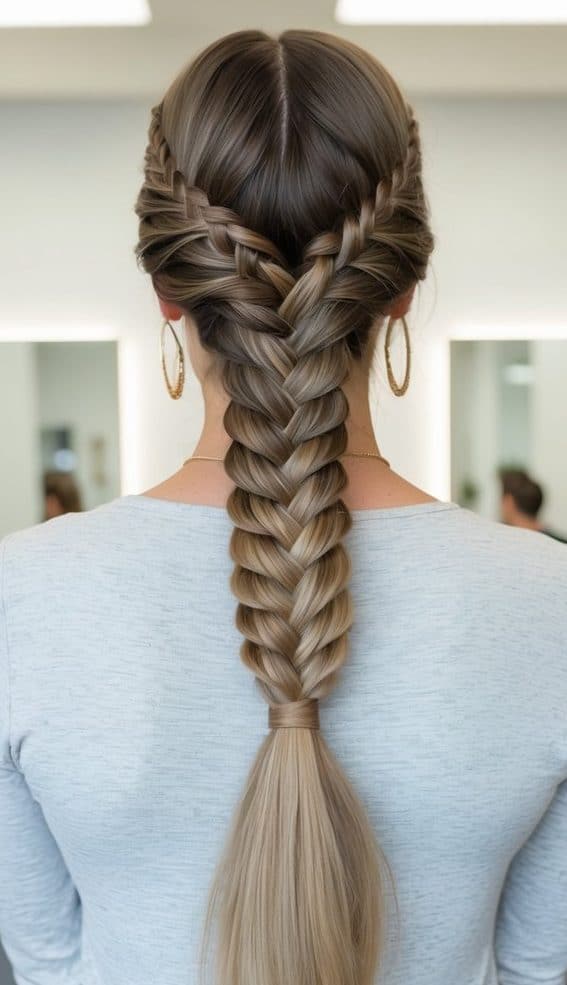
The double braid — two braids worn simultaneously, one on each side — is a style that reads as both symmetrical and abundant, creating a look that frames the face beautifully while also managing the hair in two neat, parallel structures. The intricate version uses more complex techniques than a standard plait for each braid: Dutch braiding, fishtail sections, or incorporated strand patterns that give each individual braid more visual complexity than its simpler counterpart. The symmetry of the double placement means both braids need to be executed with matching tension and thickness for the overall look to succeed.
Double braids are one of the most versatile of the braided styles — they work on casual days (worn loosely with flyaways allowed), formal events (tightly braided, pinned back, or swept up), and everything between. The style also transitions beautifully from day to night: worn down during the day, the braids can be pinned up at the nape or crossed and pinned for a more formal evening look.
Best for: Medium to long hair. Those who want face-framing braided structure. Casual to semi-formal occasions.
Styling tip: Gently tug the sides of each completed braid outward to loosen and widen it slightly — this “pancaking” technique gives each braid more visual substance and makes thin hair appear thicker.
3. Voluminous Fishtail Braid

The fishtail braid is immediately recognizable by its distinctive herringbone pattern — achieved not by the over-under interlocking of a standard braid but by the repeated crossing of small sections from the outer edge of two halves, each tiny crossed section creating one row of the pattern. The result is a braid that looks far more complex than it is to execute but requires patience: the smaller the sections taken from each side, the finer and more intricate the final herringbone pattern; the larger the sections, the bolder and more graphic the result. The voluminous version uses the pancaking technique after completion — gently pulling each side of the braid outward to create a wider, fuller structure with more visual weight.
Fishtail braids are distinctly romantic in quality, with an organic, slightly undone beauty that more structured braids lack. The herringbone pattern catches light differently along its length, creating a dimensional quality that makes fishtail braids particularly photogenic and beautiful in natural light.
Best for: Long hair where the herringbone pattern has sufficient length to fully develop. Those who want a romantic, textured look. Casual to formal occasions.
Technique tip: Secure the completed braid with a small elastic, then hold the tail firmly and use both thumbs to push sections upward along the length of the braid — this creates the voluminous, full effect.
4. Double Braid
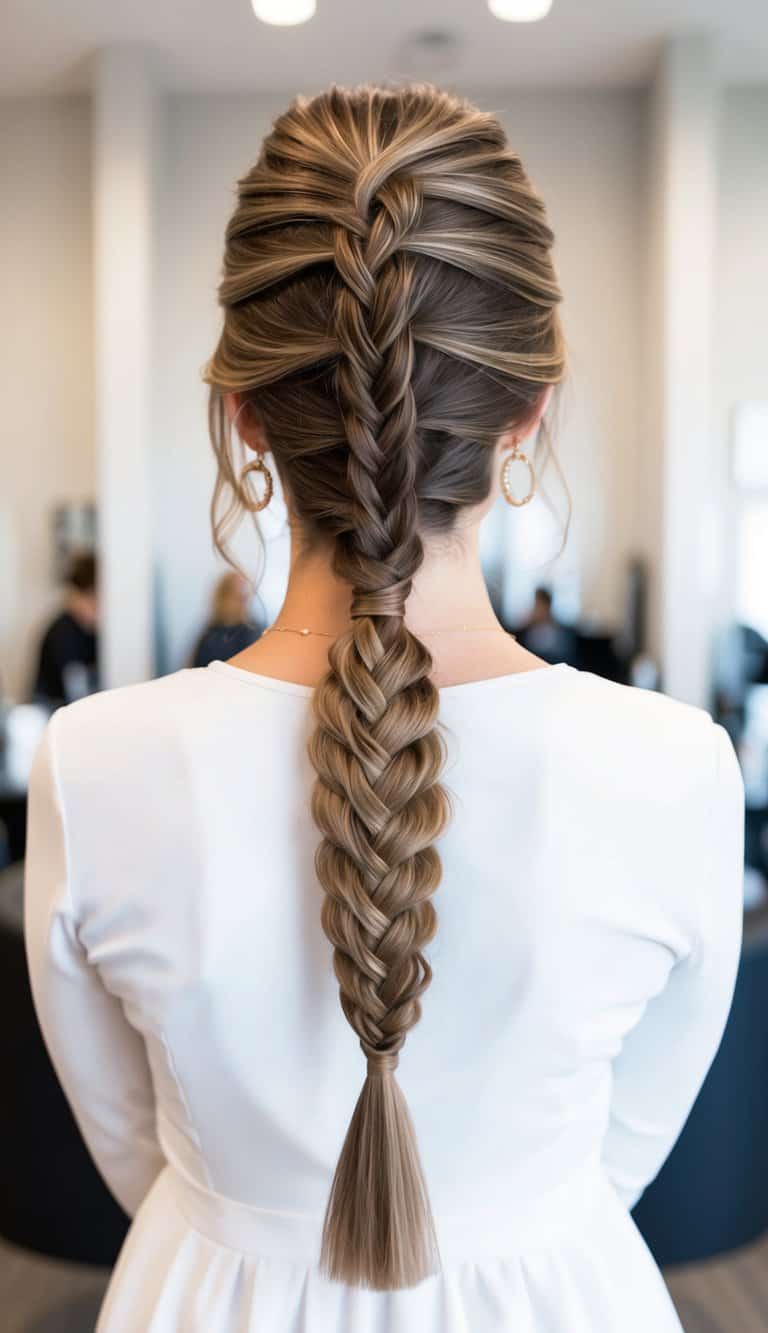
The classic double braid — two standard three-strand plaits, one on each side — is one of the most timelessly beautiful and practically useful hairstyles in the braiding family. Unlike the intricate double braid which uses complex techniques for each plait, the classic version relies on the clean simplicity of the standard braid, allowing the symmetry and the framing effect to do the visual work rather than the complexity of the braiding pattern itself. Classic double braids have been worn across cultures and centuries, which gives them a quality of fundamental rightness — they look natural, proportioned, and effortlessly beautiful in a way that more elaborate styles sometimes cannot achieve.
The style is especially beloved for its combination of practicality and visual appeal: the hair is completely secured and organized, comfortable throughout the day, and still clearly a considered aesthetic choice rather than a purely functional one.
Best for: All hair lengths that can form braids. All ages — the double braid is genuinely timeless in its appeal. Everyday wear through formal occasions.
Styling tip: Begin each braid starting from behind the ear rather than from the top of the head for a more relaxed, modern placement — the higher starting point reads as more girlish, while the lower position reads as more sophisticated.
5. Halo Braid

The halo braid — a single continuous braid that wraps around the entire perimeter of the head, following the hairline from ear to ear across the crown — is one of the most striking and romantically beautiful of all braided updo styles. Its name perfectly captures its visual effect: the circular braid crowns the head like a halo, framing the face from above and creating a look of almost ethereal elegance. The technique typically involves creating a Dutch or French braid that begins behind one ear, continues around the hairline, crosses the forehead, and finishes behind the opposite ear, with the tail secured beneath the braid for a seamless circular appearance.
Halo braids are among the most popular bridal and formal hairstyles for good reason: they’re secure enough to last through a long event, elegant enough for the most formal occasions, and flattering to nearly every face shape — the circular crown draws attention upward and creates the impression of height and grace.
Best for: Medium to long hair. Formal occasions, weddings, and events. All face shapes — the crown placement is universally flattering.
Styling tip: Braid with slightly damp hair for better control and fewer flyaways. Finish with a light hairspray for longevity, and add a few small flowers or pins for an even more bridal effect.
6. Highlighted Dutch Braid
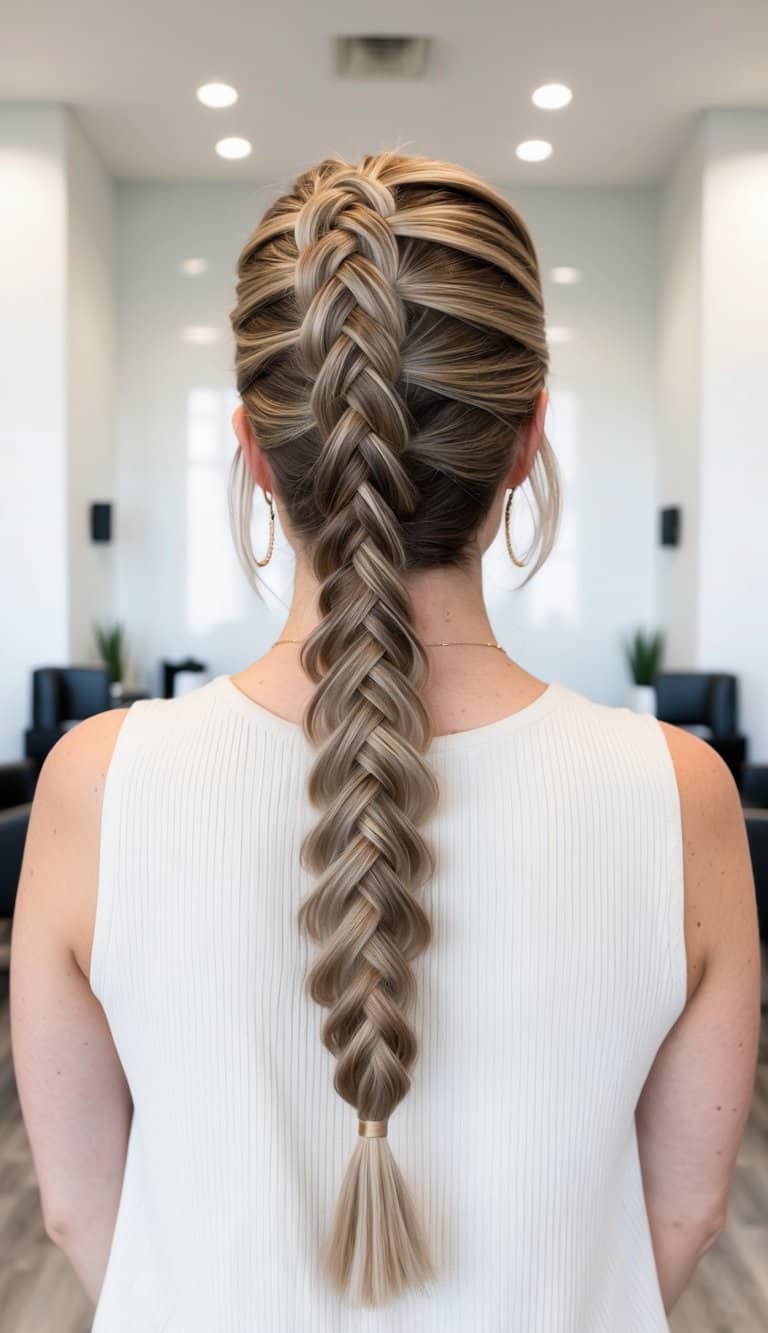
The Dutch braid — sometimes called the reverse French braid or inside-out braid — creates its distinctive raised, three-dimensional appearance by crossing sections under rather than over the center strand, causing the braid to sit on top of the hair rather than lying flat against it. When combined with highlighted hair, the Dutch braid achieves something particularly beautiful: as the braid is formed, different sections of hair with different highlight levels are brought to the surface, creating a color variation within the braid itself that reads as naturally dimensional and beautifully complex. The contrast between lighter highlighted sections and darker base sections creates visual interest throughout the length of the braid.
The combination of Dutch braiding technique and highlighted color is one of the most flattering pairings in modern braided hairstyling — the raised profile of the Dutch braid showcases the color variation most effectively, while the highlights give the braid a luminosity that single-tone hair cannot achieve.
Best for: Highlighted or balayage hair where the color variation within the braid creates maximum visual interest. Medium to long hair. Casual through formal occasions.
Color tip: Face-framing highlights appear most prominently in a Dutch braid — they’ll be pulled to the surface of the braid and visible throughout its length, making them particularly impactful.
7. Four-Strand Braided Ponytail

The four-strand braided ponytail combines two distinct styling elements — the high or mid ponytail and the complex four-strand braid — into a single look that reads as both polished and technically impressive. A four-strand braid produces a slightly different pattern than the standard three-strand version: the additional strand creates a rounder, more cable-like structure with a spiral quality rather than the flat herringbone of the standard plait. Starting from a gathered ponytail means the entire braid length is visible as a single hanging element, allowing the full length of the pattern to be appreciated without the incorporation distraction of a French or Dutch braid’s gathered sections.
The ponytail base makes this style more casual and modern than an incorporated braid while still showcasing significant technical skill in the braiding itself. It works particularly well for athletic and active contexts where a secure, interesting ponytail is needed, or for casual occasions where a standard ponytail would feel too plain.
Best for: Long hair. Active and casual contexts as well as smart-casual occasions. Those comfortable with four-strand braiding technique.
Styling tip: Wrap a small section of hair around the base of the ponytail elastic before braiding to conceal the band — this elevates the overall finish of the look significantly.
8. Dutch Braid

The Dutch braid in its classic single form — running centrally down the back of the head — is one of the most architecturally satisfying of all braided styles. The under-crossing technique creates a braid that stands visually proud from the hair’s surface, its profile clearly visible and its structure immediately apparent. Unlike the French braid which lies relatively flat, the Dutch braid has a sculptural quality that catches shadow and light differently along its length. The center placement gives the style a formal, symmetrical character that works beautifully for polished occasions — it’s clean, precisely centered, and visually impactful without requiring any additional styling elements.
The single center Dutch braid has experienced significant fashion resurgence in recent years, worn by athletes and fashion-forward individuals alike who appreciate both its practicality and its aesthetic distinctiveness. The style keeps hair completely off the face and neck while creating a strong visual statement at the back.
Best for: Medium to long hair. All occasions from athletic to formal. Those who want a clean, structured braided look.
Technique tip: Start the Dutch braid at the very top of the head — at the hairline — for maximum impact, and maintain consistent tension throughout to keep the raised profile clean and even.
9. Micro Braids

Micro braids represent one of the most labor-intensive and technically demanding of all braiding styles — individual braids that are extremely small in diameter, typically no thicker than a pencil and often much finer, created by sectioning the hair into dozens or even hundreds of tiny portions and braiding each one individually. The result is a full head of tiny, uniform braids that together create a remarkable textural effect: the individual braids are small enough that the overall look reads as a textured mass from a distance, but closer inspection reveals the extraordinary detail and craft involved. Micro braids are a prominent protective style in natural hair care, where the technique protects the hair’s ends and reduces manipulation-related breakage.
The style is uniquely versatile once installed: micro braids can be worn loose (where they flow and move like natural hair while being braided), pinned up in various configurations, gathered into ponytails, or styled in countless other ways — all without any additional braiding or manipulation required.
Best for: Natural and textured hair types where the style also functions as protection. Those willing to invest significant time in installation. Long-wearing styles — micro braids can last weeks with proper care.
Care tip: Keep the scalp moisturized with a light oil applied directly to the scalp between braids — the style can create dryness at the scalp if moisture is not actively maintained.
10. Mix of Braids

A mixed braids hairstyle combines multiple braiding techniques within a single look — perhaps Dutch braids at the crown transitioning to a fishtail at the back, or French braid sections meeting at the nape and continuing as a single four-strand braid, or sections of standard plaiting alternating with fishtail within the same overall style. The mixing of techniques creates visual complexity and interest that no single technique alone can produce — each transition from one braiding method to another creates a moment of contrast that draws the eye and rewards observation. Mixed braiding is the approach most favored by professional braiders and editorial stylists, as it demonstrates range and allows the overall look to be customized precisely for the individual’s hair and the occasion.
The mix-of-braids approach also allows for creative problem-solving: different techniques can be used in different areas based on which method works best with the hair’s texture, thickness, or length at each location.
Best for: Long hair with sufficient length and thickness to support multiple braiding techniques simultaneously. Formal and editorial occasions where a maximally impressive braided look is desired. Experienced braiders or professional styling situations.
Design tip: Plan the mixed braid composition before beginning — sketch or visualize where each technique will appear and how the transitions between them will be managed.
11. Dutch Braid Ombre

The Dutch braid ombre is a style that combines the architectural raised-profile technique of Dutch braiding with ombre-colored hair, creating a look where the color graduation from dark roots to lighter ends is visible throughout the braid’s length. As the Dutch braid is formed from root to tip, the darker sections appear predominantly at the beginning and the lighter sections at the end, creating a natural color journey that mirrors the braid’s own construction — both begin at the top and work downward, the braid building as the color lightens. The raised profile of the Dutch braid is particularly well-suited to showcasing ombre color because it brings the hair’s surface texture and color variation into maximum visibility.
The Dutch braid ombre is especially beautiful in natural sunlight, where the lighter sections of the ombre catch and return light while the darker sections provide depth — the interplay creates a dimensional, living quality in the finished braid.
Best for: Ombre or balayage hair where the color transition will be showcased within the braid. Medium to long hair. All occasions.
Color tip: A root-to-tip ombre with clear transition (rather than a very blended, subtle version) creates the most dramatic and beautiful effect within a Dutch braid — the contrast makes the technique most impactful.
12. Thick French Braid

The French braid is perhaps the most universally recognized braiding technique — a three-strand plait that incorporates additional hair from the sides as it progresses downward, gathering more hair with each crossing until all the hair is incorporated. The thick version is executed with generous section sizes: large portions of hair are incorporated with each pass, creating a braid of substantial width and visible boldness. Where a fine French braid has a delicate, intricate quality, the thick version reads as confident and dramatic — a statement of braiding rather than a whisper. The style lies flat against the head, conforming to the skull’s contours in a way that the raised Dutch braid does not, creating a sleek, streamlined profile from the side.
Thick French braids are particularly flattering on thick, abundant hair where the width of the braid matches the volume of the hair being managed — a thick braid on fine hair can look disproportionate, while on genuinely thick hair it reads as a natural celebration of the hair’s abundance.
Best for: Thick, abundant hair where the braid’s width is natural and proportional. Medium to long hair. Casual through formal occasions.
Styling tip: For maximum thickness and the most impressive result, begin with clean, dry hair that has been slightly roughened with a texturizing spray — smooth, freshly washed hair can be too slippery to maintain the thick sections through the braiding process.
13. Four-Strand French Braid

The four-strand French braid combines the hair-incorporating technique of the classic French braid with the more complex over-under pattern of a four-strand construction, creating a style that achieves both the sleek scalp-hugging quality of the French braid and the distinctive textural pattern of the four-strand technique. The result is a braid that lies flat against the head like a French braid but has a more complex surface pattern — the additional strand creates a subtle twist or cable quality within the flat profile. This style sits at the intersection of the familiar and the advanced, recognizable as a French braid from a distance but revealing its additional complexity on closer inspection.
The four-strand French braid is an excellent choice for those who have mastered the standard French braid and want to advance their technique — the additional strand adds complexity without requiring an entirely new mechanical approach, building on existing muscle memory while introducing new challenge.
Best for: Long hair. Formal occasions where a technically impressive yet polished style is appropriate. Those with existing French braiding skill looking to advance their technique.
Technique tip: Master the four-strand braid independently (on a loose ponytail or practice mannequin) before attempting to incorporate hair from the sides — the mechanics of managing four sections while simultaneously adding new hair is significantly more demanding than either technique alone.
Tips for Perfecting Your Braided Hairstyle
- Prepare your hair: Most braiding techniques work best on second-day hair or hair that has been lightly texturized — completely clean, freshly washed hair is often too smooth and slippery for braid sections to hold together cleanly.
- Control tension consistently: The most common braiding error is uneven tension — pulling some sections tighter than others creates lumpy, uneven braids. Practice maintaining the same pull throughout.
- Work in sections: For complex styles, divide the hair into clear sections before beginning and use clips to keep unworked sections out of the way.
- Finish with product: A light serum or finishing spray pressed over the completed braid smooths flyaways and adds a polished quality to any style.
- Practice the technique independently: Before attempting a complex braid on your own head (where you can’t see what you’re doing), practice the mechanics on someone else’s hair or a mannequin head until the movement is automatic.
Frequently Asked Questions
How do I make my braids last longer?
Braids last longest when created with slightly damp or second-day hair, secured with strong elastics, and finished with a light hairspray. Sleeping on a silk pillowcase reduces the friction that causes flyaways and loosening overnight. For styles you want to last multiple days, a light spritz of water and a gentle smoothing of any loose sections each morning can refresh the look significantly.
Can I braid fine hair?
Fine hair can be braided successfully, but requires some adjustments: a texturizing spray or dry shampoo applied before braiding helps sections grip each other, and braiding slightly damp (not wet) rather than completely dry fine hair often produces a more cohesive result. Styles that don’t require thick sections — fishtail braids, micro braids, and intricate double braids — often work better on fine hair than thick French braids or five-strand constructions.
Which braid is easiest for beginners?
The standard three-strand French braid is the ideal starting point for most beginners — it introduces the concept of incorporating additional hair while braiding (which is the fundamental technique underlying most advanced styles) and produces a beautiful, polished result once the mechanics are understood. The standard plait (three-strand braid without incorporation) is even simpler if you’re starting from the very beginning.
Final Thoughts
Braided hairstyles reward patience and practice with results that are genuinely difficult to achieve any other way — the combination of structure, longevity, and visual complexity that braiding produces is unique among hairstyling techniques. Whether you’re mastering the fundamental French braid or advancing to five-strand and mixed-technique constructions, each step in the braiding learning journey opens up new possibilities for creating hair that is simultaneously beautiful, practical, and technically impressive.


